Conrad Bangkok Executive Lounge okonomiyaki night: its Japanese food, judged by two Japanese guests
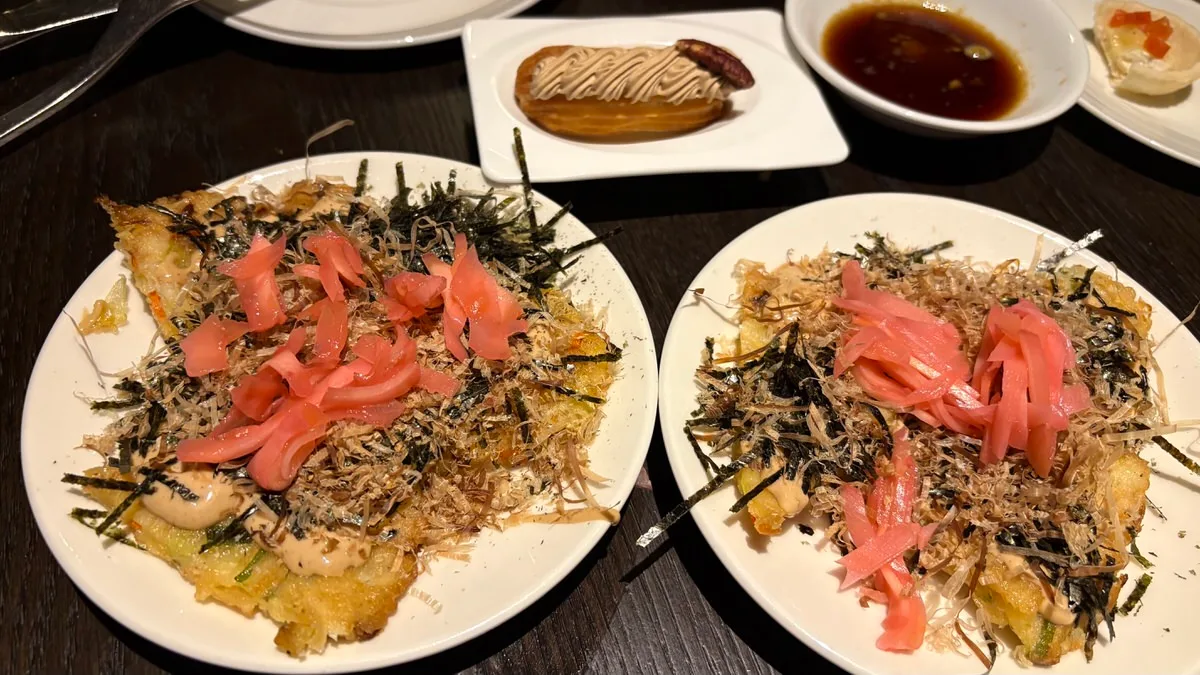
A blog post my wife had found beforehand was hard on the okonomiyaki in the Executive Lounge at Conrad Bangkok: the sauce and the mayonnaise come already mixed together, it said, and the result is so-so. On our fourth evening in the lounge, in April 2026, it was on at cocktail time, cooked to order. We are Japanese, and we ordered it half in doubt. For us it was a hit.
The whole day went that way: soba and natto at breakfast, maki sushi and okonomiyaki in the evening. Here is how the lounge’s Japanese food did, dish by dish. Our first evening in the same lounge is in our Conrad Bangkok cocktail time post.
The okonomiyaki station
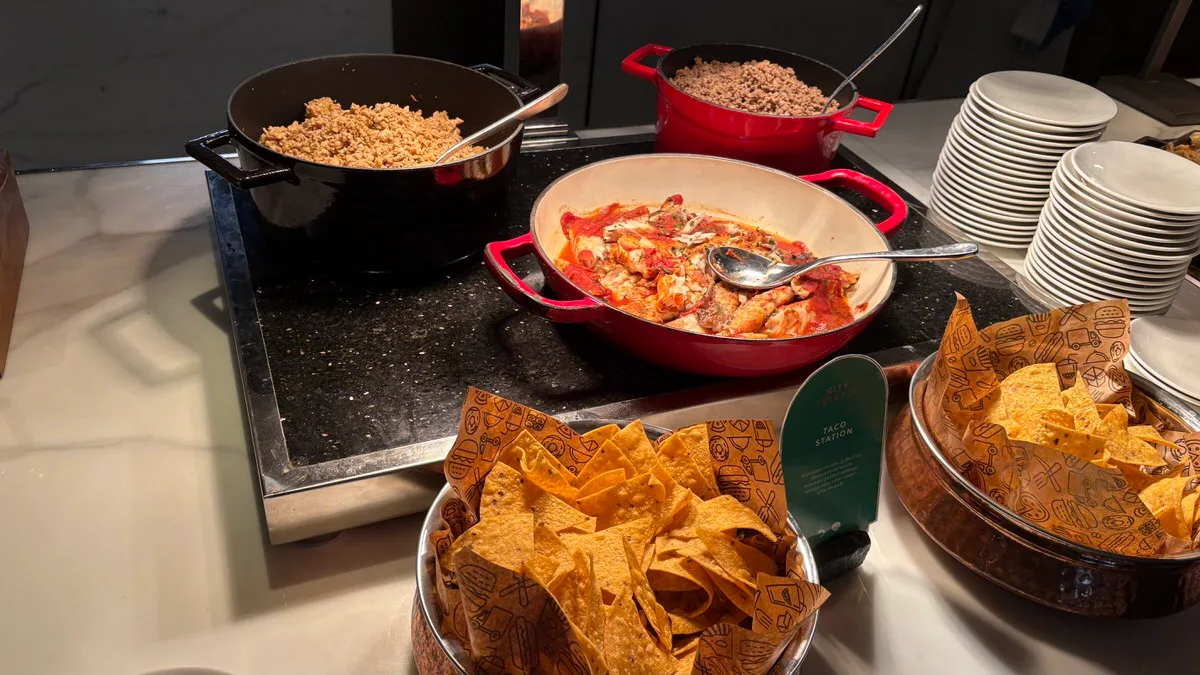
The lounge’s three hot dishes at cocktail time change completely every day. That evening’s three:
- Sweet & Sour Fried Chicken, from Liu (柳), the upscale Chinese restaurant inside the hotel
- Quiche Florentine: spinach, onion and cheese
- Osaka Style Okonomiyaki, seafood or vegetable, from a live station
Okonomiyaki is a savory Japanese pancake. A chef cooking it in front of us, in a lounge in Bangkok: we burst out laughing at the combination.
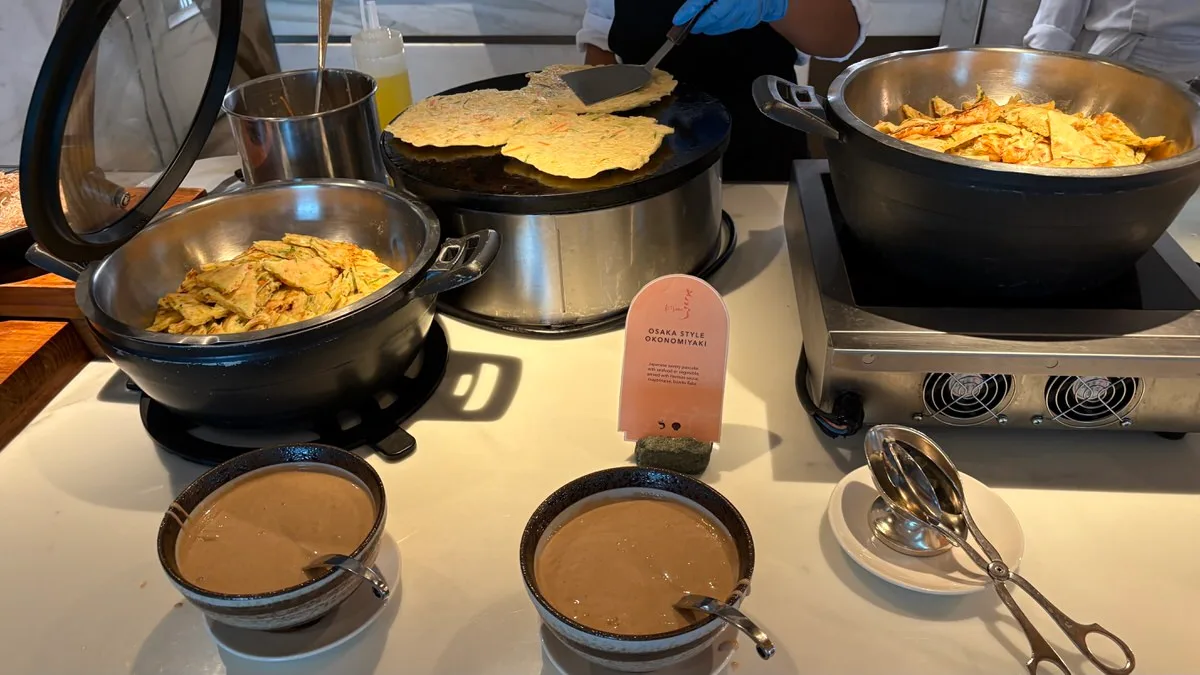
We asked for one seafood and one vegetable. The chef cooked them on the griddle in front of us and finished them with bonito flakes and seaweed.
“Perfectly good. Or rather: good.”
“This isn’t bad enough to write up as so-so, is it?”
“If anything, the sauce and mayonnaise are mixed about right.”
We can’t say what standard the blogger was judging by. For the two of us it was a big hit. The seafood one, under bonito flakes, shredded nori and red pickled ginger, got to the point of tasting like takoyaki, the grilled octopus balls.
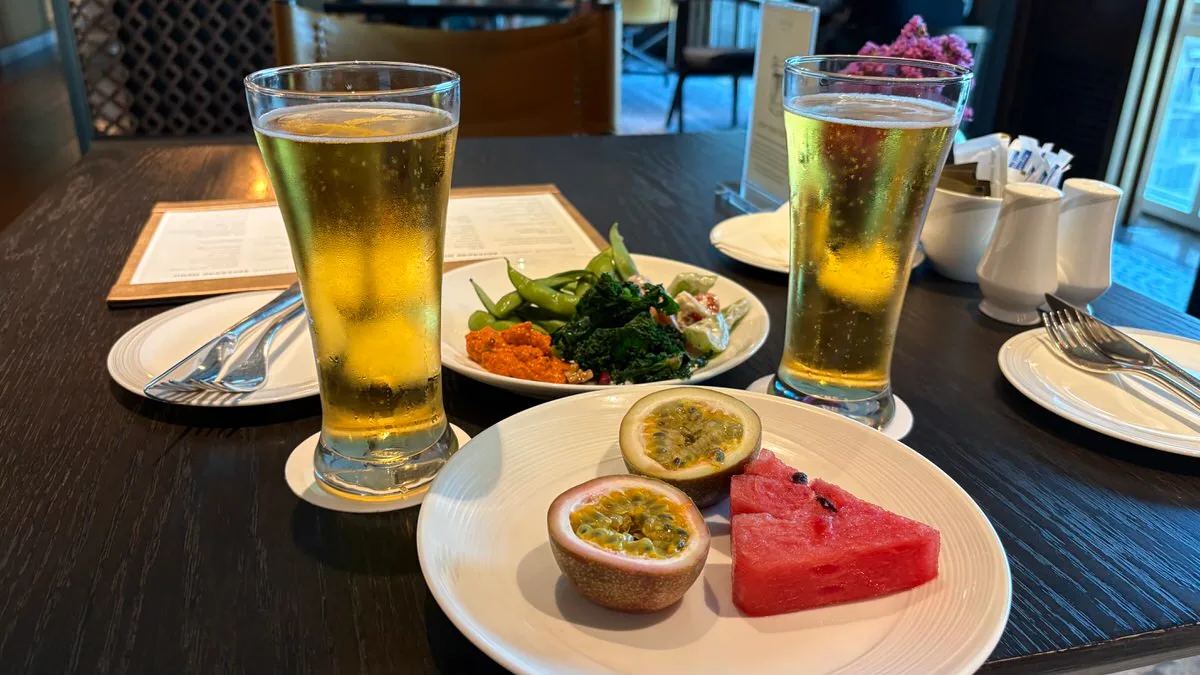
The plan was not to fill up on okonomiyaki alone. It was good enough that we wanted plate after plate, so we held back with edamame, which this lounge simply boils, moved from Singha to sparkling wine, and lost count of the refills.
Thirty minutes before the lounge closed we ordered from the last batch, as planned, a plate each, and changed to red: the Promesa Cabernet Sauvignon. Sauce and mayonnaise against the tannin of the wine was a real match. Okonomiyaki with red wine went on our list for a night in after the trip.
Maki sushi, and the soy sauce you ask for
Soon after we sat down, staff brought the canapé plate, and that evening it included maki sushi. Our first thought was soy sauce. A few days earlier the lounge had served salmon sushi, and the two of us had wandered around looking for soy sauce and asked nobody.
This time my wife was ready. While the other one of us was off getting food, she asked the staff member who had brought the canapés: “Do you have soy sauce?” Neither of us is good at English. It did not matter. By the time we were both at the table again, a few minutes later, the soy sauce was there in a small dish. It had been brought gladly and at once.
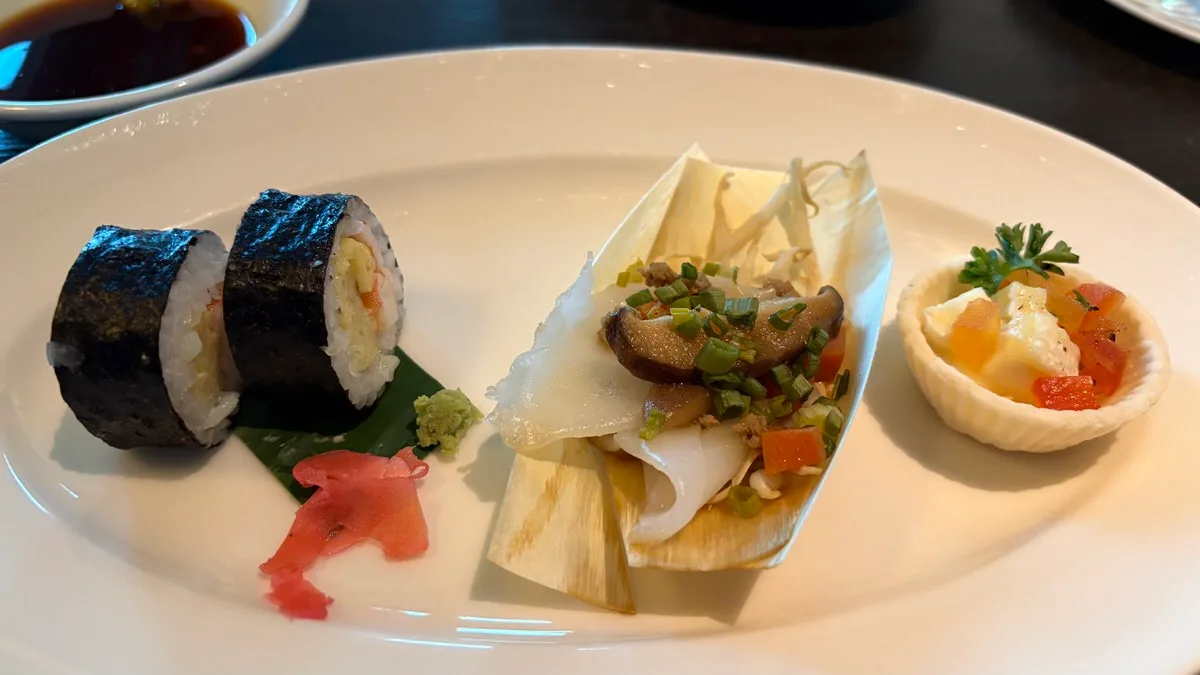
The roll had salmon, avocado, cucumber and mayonnaise inside, the California-roll style of sushi restaurants abroad. Not classic Edomae sushi, and more than good enough with soy sauce in a hotel lounge in Bangkok. It was never a matter of English ability. If you ask, it comes.
Soba and natto at breakfast
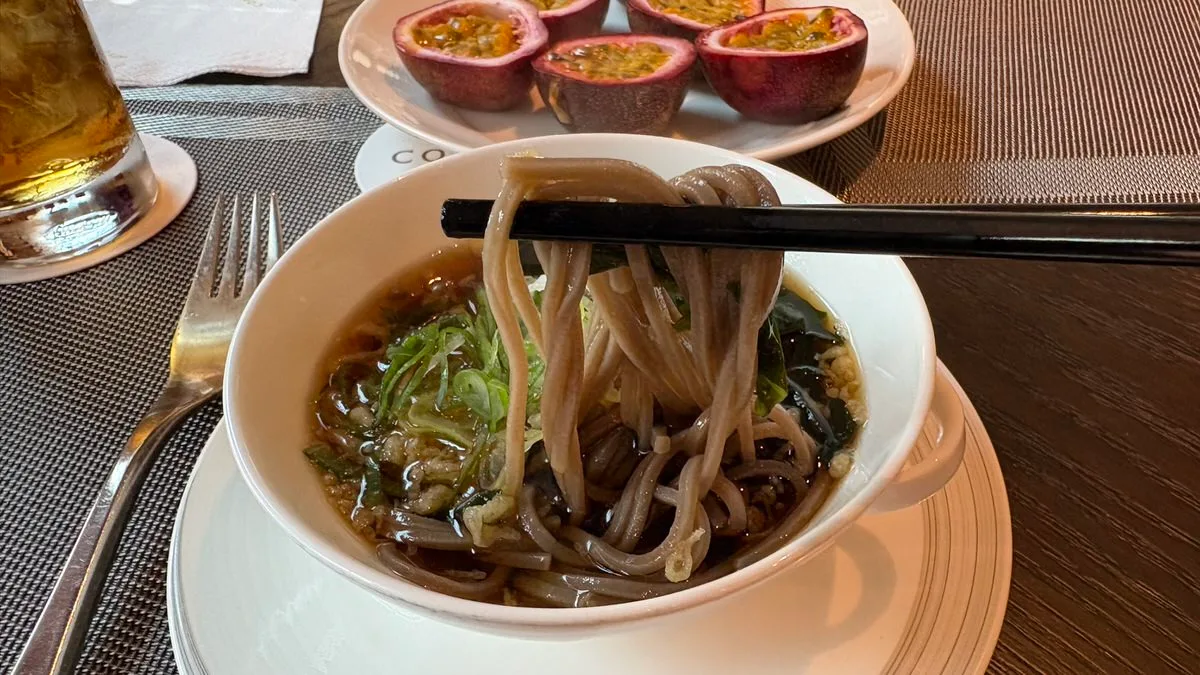
That morning, at our third breakfast in the lounge, the card at the noodle station read “Hot Soba Noodle”. Japanese soba, in Bangkok, at breakfast. We could not walk past it.
All the toppings went in: tempura bits, green onion, wakame seaweed. It tasted completely like soba in Japan, with a proper dashi broth. “If we drink all this broth, we’re finished on salt, aren’t we?” “Yes. I know we shouldn’t.” The broth was drunk to the last drop.
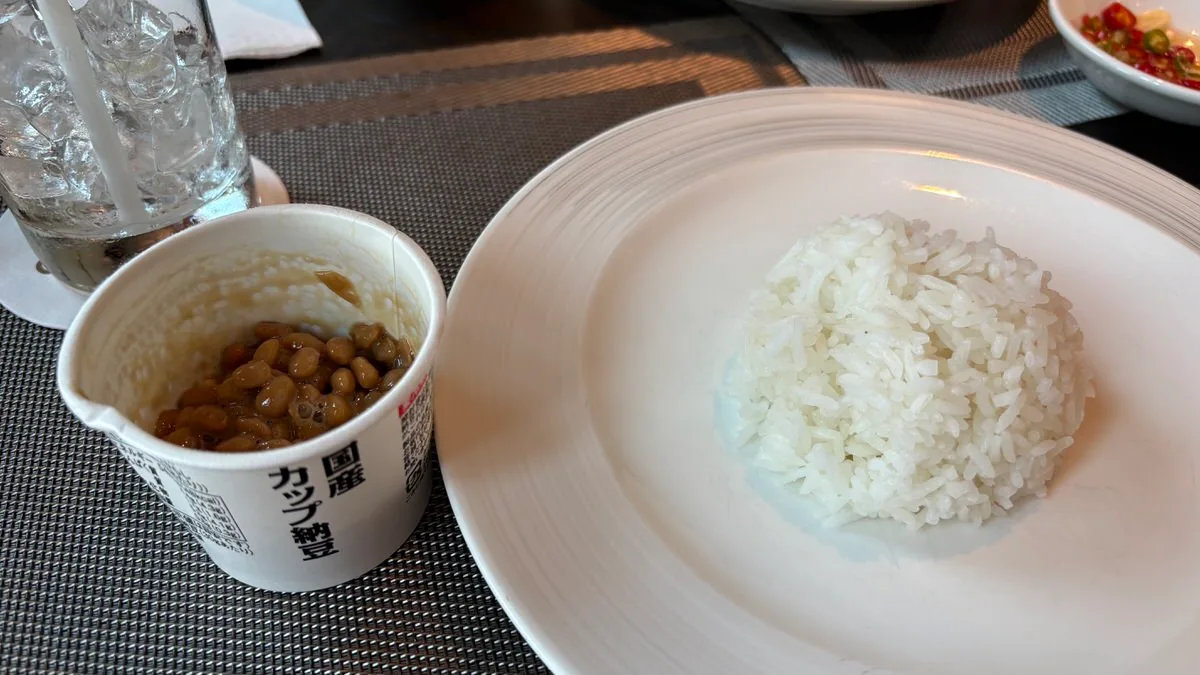
Then the natto, Japan’s fermented soybeans. The lounge puts it out in cups, and for days we had not solved how to eat it in a lounge with no white rice. There is no plain rice on the buffet; steamed rice is ordered at the table. My wife asked for a large one with a short phrase that Gemini, Google’s AI assistant, had recommended before breakfast, “Can I have a large steam rice?”, and added a “please”. Plenty of freshly cooked rice arrived.
With rice on the table, my wife announced that today was the day. Looking into the cup, she noticed where it was made: Ibaraki Prefecture, in Japan. The rice was long-grained, like jasmine rice.
The result: plain good. “The smell of the jasmine rice might fight with the natto a little,” my wife said, and finished all of hers.
What else went on the rice
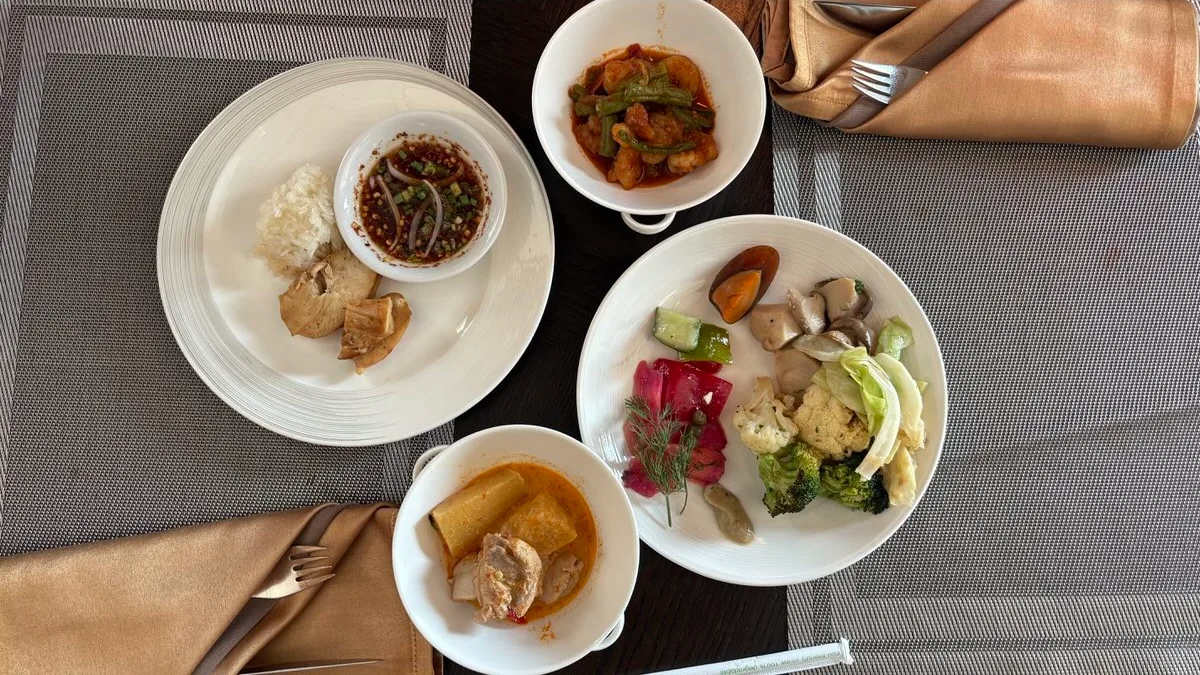
The large rice had a first job before the natto. The Thai section of the breakfast buffet had Pad Krapow Moo that morning, stir-fried minced pork with Thai basil, and it looked exactly like the topping of what Japan calls gapao rice. My wife’s idea: spoon it over steamed rice and make our own. Basil, the savor of the pork and a prick of chili, all in one mouthful: better than we had imagined.
“A specialty restaurant in Japan would take ¥1,400 for this,” one of us said. That figure is breakfast talk in April 2026, not a price we saw.
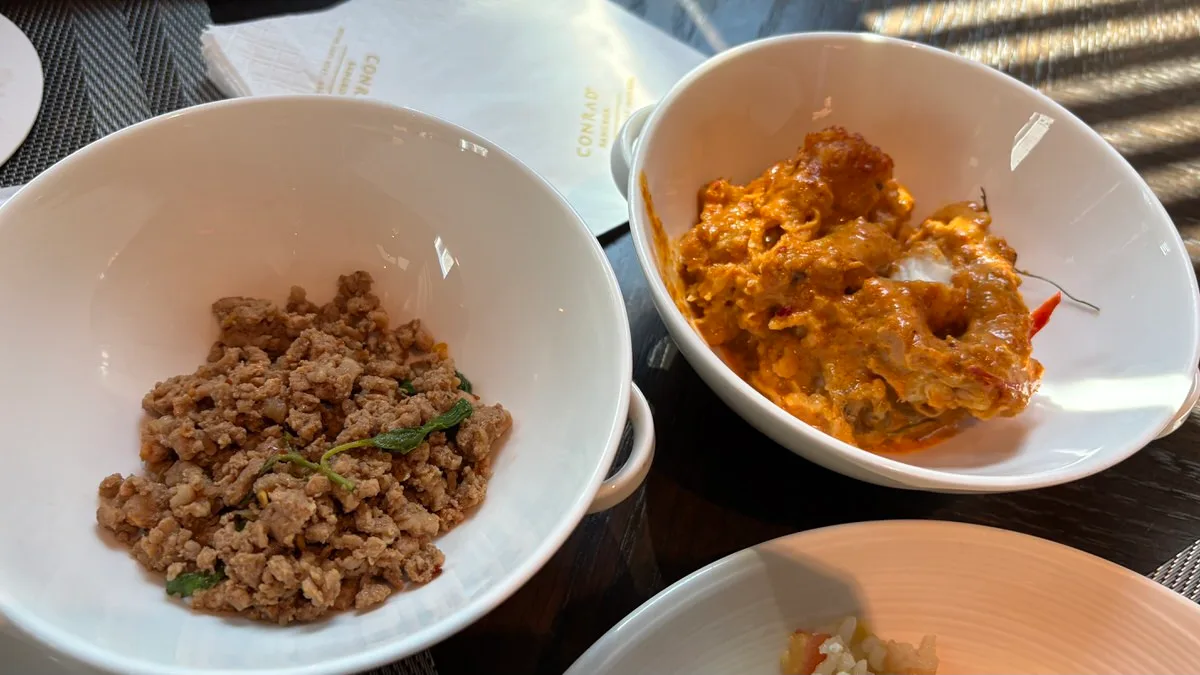
The fish red curry was a hit as well: big pieces of fish, strong seasoning and real heat. And when a little rice was still left after the natto, my wife put a few drops of nam pla, fish sauce, on it. Staff had brought that on request too. She named it: “Nam pla rice. The ultimate Thai meal.”
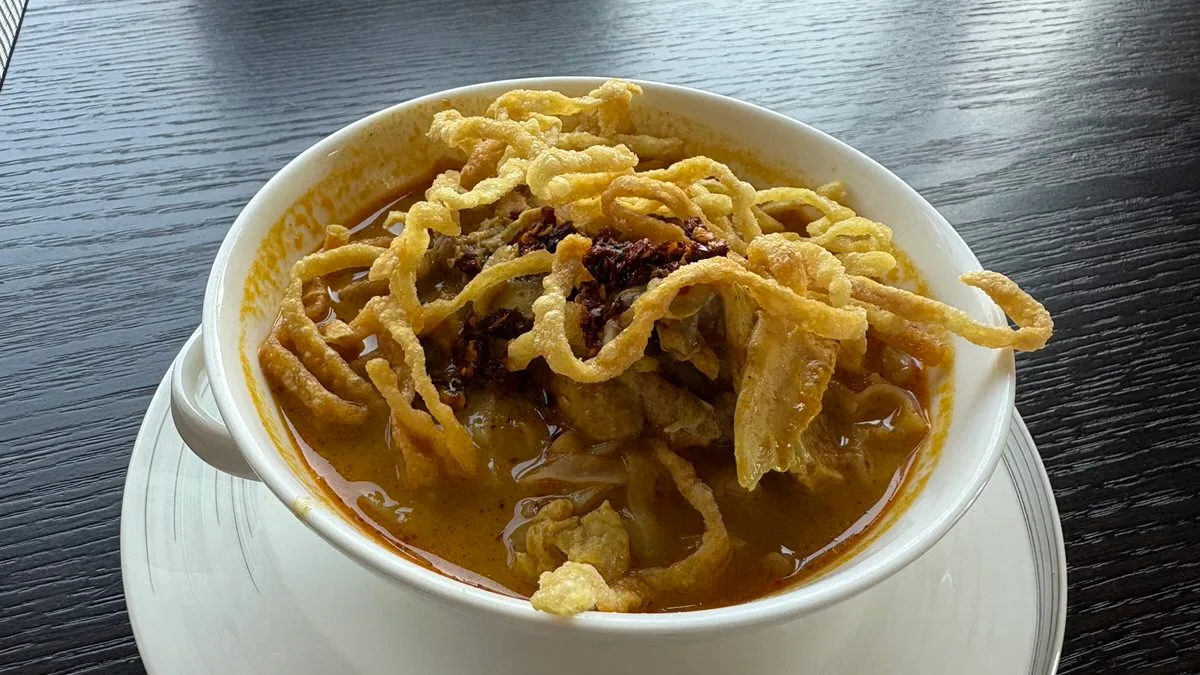
The Thai side of this breakfast buffet has a post of its own, from the next morning: our khao soi post.
What did less for us
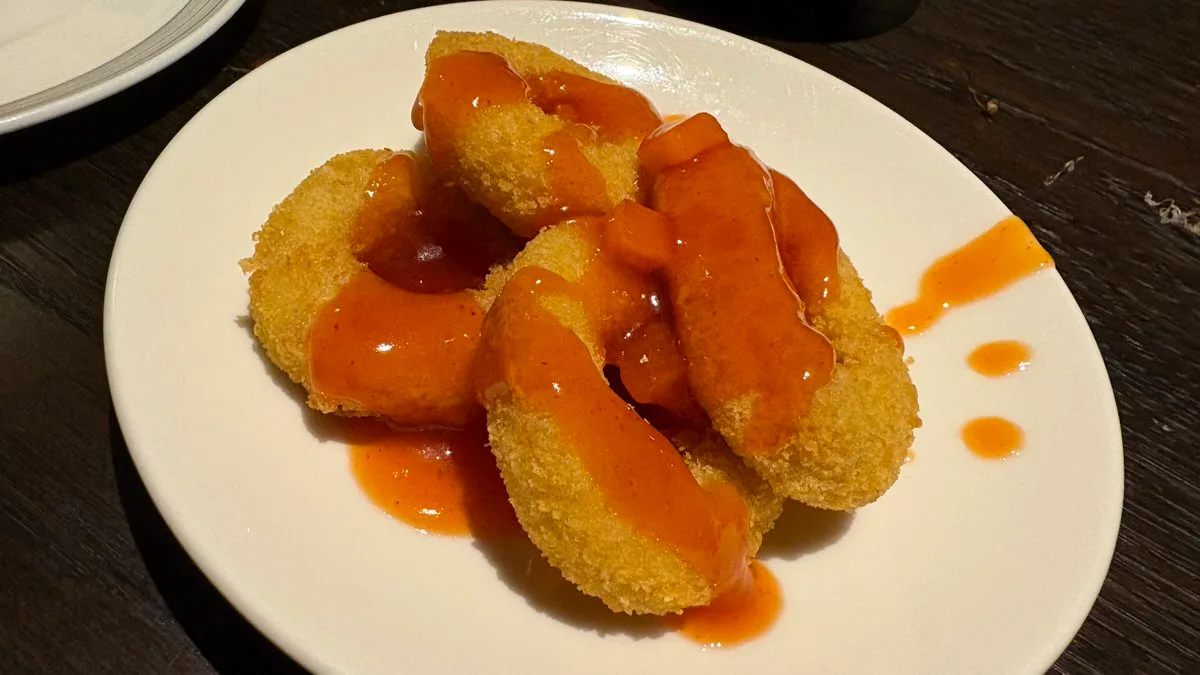
- Sweet & Sour Fried Chicken, from Liu: oddly ring-shaped pieces of chicken in a sweet-and-sour sauce with pineapple. One bite and we looked at each other: it tasted exactly like subuta, sweet-and-sour pork, with a soft texture close to a chicken nugget. “Would I want several, though? Hmm.”
- Quiche Florentine: it tasted fine, and we have no strong feelings about quiche. One piece between the two of us was enough.
- Quinoa Salad: it looked like a healthy grain salad, and the first mouthful was all coriander. We left about half.
The seat near the entrance
Until the day before, we had asked for a side-by-side seat by the window. That evening we were seated near the entrance instead, and my wife whispered, “The drinks come really fast at this seat.” It sits on the path the staff take between the kitchen and the lounge, so a glass that is nearly empty gets noticed, and “What would you like next?” comes clearly sooner than at other seats. The window has the view. The entrance has the refills.
Would we do it this way again
The okonomiyaki, yes. If it is on, order it, ready-mixed sauce and all, and keep a last plate for the red wine. The soba tasted like soba in Japan, natto worked on Thai rice, and the maki was more than good enough once it had soy sauce. The quiche was not worth a second piece for us, and the Liu name on the chicken earned a small question mark.
What we would repeat is the asking. My wife asked for the soy sauce and the large steamed rice in English, which neither of us is good at, and both came. So did the nam pla.
We drank a great deal that night and kept the snacking in check. As for what we talked about over all that sparkling wine, the memory is vague.
Practical bits
- When we saw it: our fourth evening in the Executive Lounge, on a five-night stay at Conrad Bangkok in April 2026. The okonomiyaki station had not appeared in the three days before; we didn’t check how often it runs.
- Cocktail time: 17:30 to 19:30 in the Executive Lounge on our stay (April 2026). We were booked on a floor that includes lounge access; we didn’t check what that room category costs.
- Okonomiyaki: seafood or vegetable, cooked to order, with okonomiyaki sauce and mayonnaise (ready mixed), bonito flakes, seaweed and red pickled ginger.
- Ask for: soy sauce (ours came in a small dish); steamed rice at breakfast, which was not on the buffet in April 2026 (“Can I have a large steam rice, please?” got us a large one); and nam pla.
- Also out that evening (April 2026): Mediterranean Chopped Salad, Quinoa Salad and a salad bar with edamame; lemon roll cake and coffee éclairs; passion fruit, green melon, pineapple and dragon fruit.
- Drinks on the lounge list (April 2026): Promesa Cabernet Sauvignon and Promesa Sauvignon Blanc, Louis Perdrier sparkling wine; Singha, Heineken and Asahi.
- Language: the buffet cards we photographed were in English. My wife asked for the soy sauce and the steamed rice in English.
- Smoking and dress code: we didn’t check.
Facts checked 2026-10-13. Prices, hours and menus are what we saw on our visit; they change. Nothing here was sponsored or comped.