Lungo Carnival Minami 2-jo, Sapporo: ten steamed oysters for ¥1,320, and why ours were small
Quick facts
- Gangan-mushi (10 oysters)
- ¥1,320 with tax, limited quantity
- Raw oysters
- ¥110 each with tax
- Nomihodai (2 hours)
- ¥1,980 or ¥2,530 per person with tax
- Otoshi (cover charge)
- ¥385 per person
- Walk from Dormy Inn Premium Sapporo
- About 1 minute
- Payment
- Paid by credit card
From our visit, Nov 2026
Genshiyaki Sakaba Lungo Carnival Minami 2-jo (原始焼き酒場 ルンゴカーニバル 南2条店) is on the third floor of a building a one-minute walk from the Dormy Inn Premium Sapporo. We ate there on Wednesday 4 November 2026, our first night of that Sapporo trip: a two-hour nomihodai each, seven dishes plus the otoshi, ¥11,737 for the two of us by credit card. That is about $78 at ¥150 to the dollar, the rate we use here.
The oysters were what we came for, and they let us down a little. The rest of the evening did not.
Why this branch
We had landed at New Chitose that afternoon, and somewhere on the train into the city the two of us talked ourselves into Lungo Carnival’s gangan-mushi: oysters steamed in a covered iron pot. We had eaten it twice before. In April it was ¥1,100 a kilo at the oyster shack in the Tanukikoji arcade (that evening is here), and in June ¥1,210 a kilo at the main branch (that one is here). Both times the oysters were big.
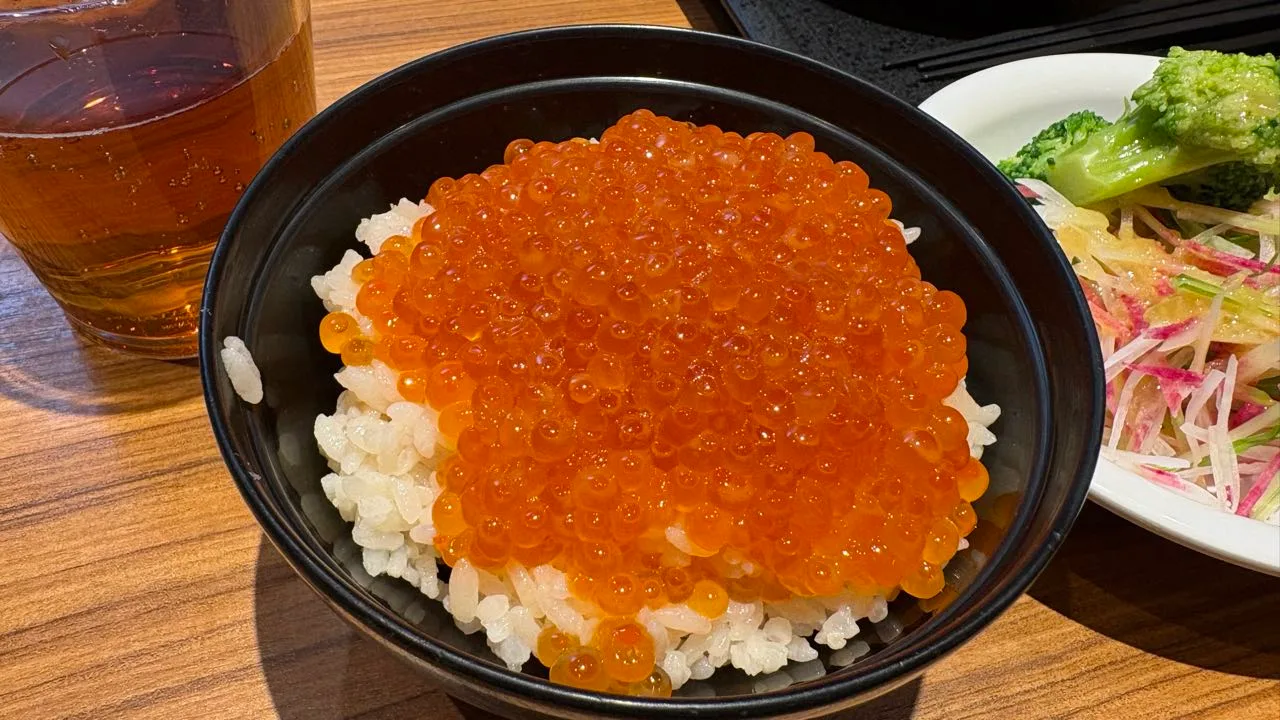
This time we wanted a Lungo Carnival we had not been to, and the closest one to our hotel was the Minami 2-jo branch, which opened in April 2024. We checked into the Dormy Inn Premium Sapporo, went to the hotel’s hot-spring bath and sauna first, and then walked over. It really is a minute. (We were already looking forward to the hotel’s breakfast ikura the next morning; that is its own article.)
The shop opens at 16:00. We got there at about 17:20, expecting other customers, and were the first ones in. We were seated at a horigotatsu-style table, a low table over a sunken floor for your legs, with a comfortable amount of space to the next one.
Ten oysters for ¥1,320, and every one small
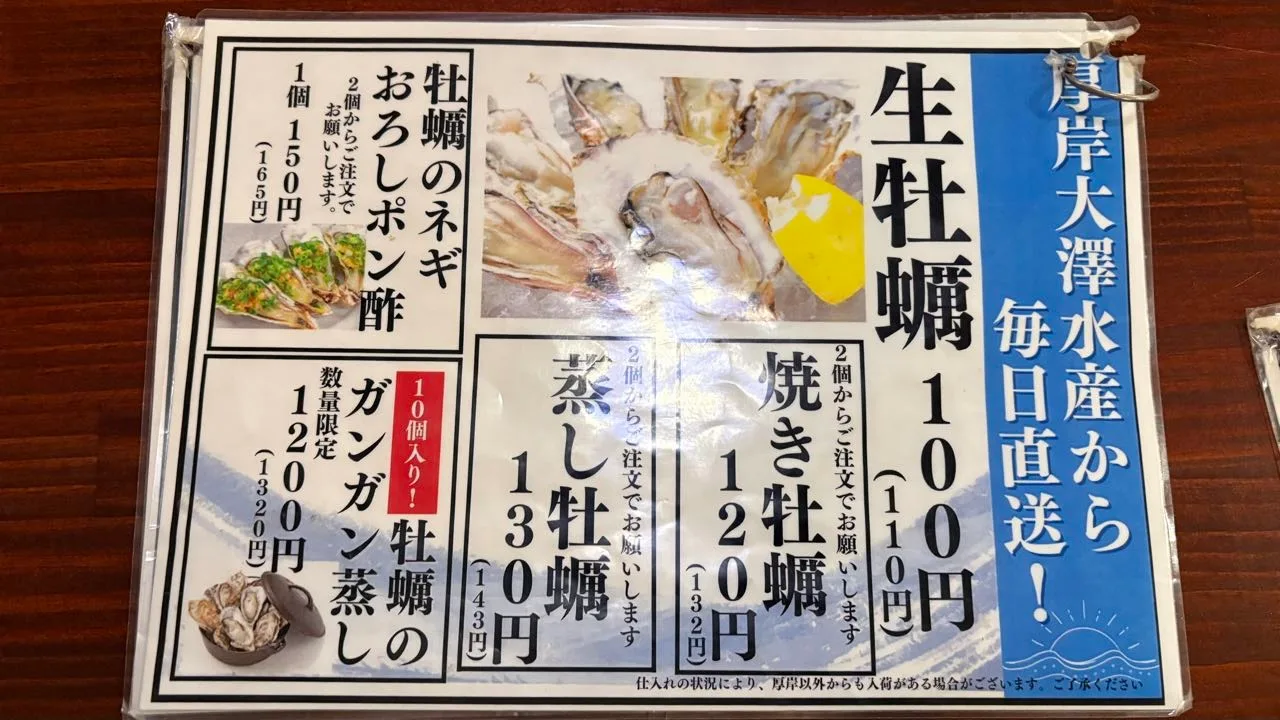
Here the gangan-mushi is not sold by the kilo. It comes as a pot of ten for ¥1,200, or ¥1,320 with tax (about $9), and the menu marks it as limited. A blue band down the right side of the oyster page says the oysters come direct every day from Osawa Suisan in Akkeshi, in Hokkaido. Small print along the bottom adds that, depending on supply, some may come from elsewhere.
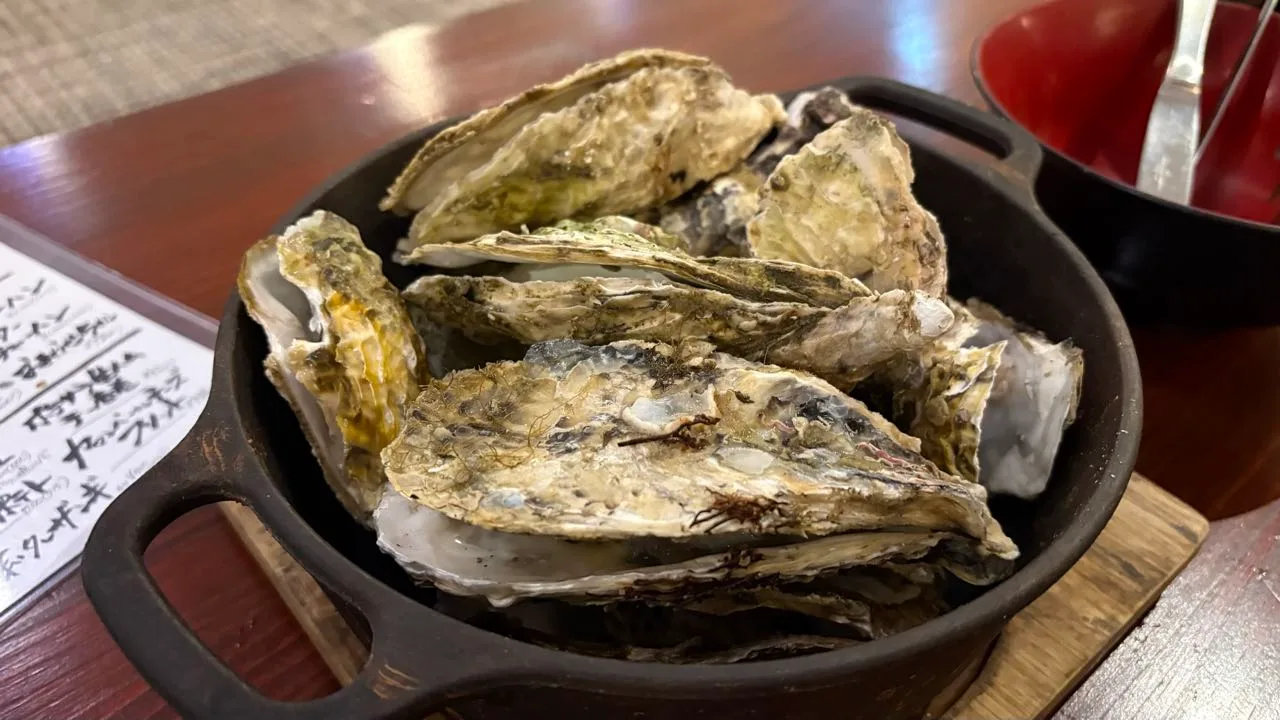
We ordered it over the first beer, and it arrived in a black iron pot packed with oysters in the shell. My wife opened the first one while it was still hot.
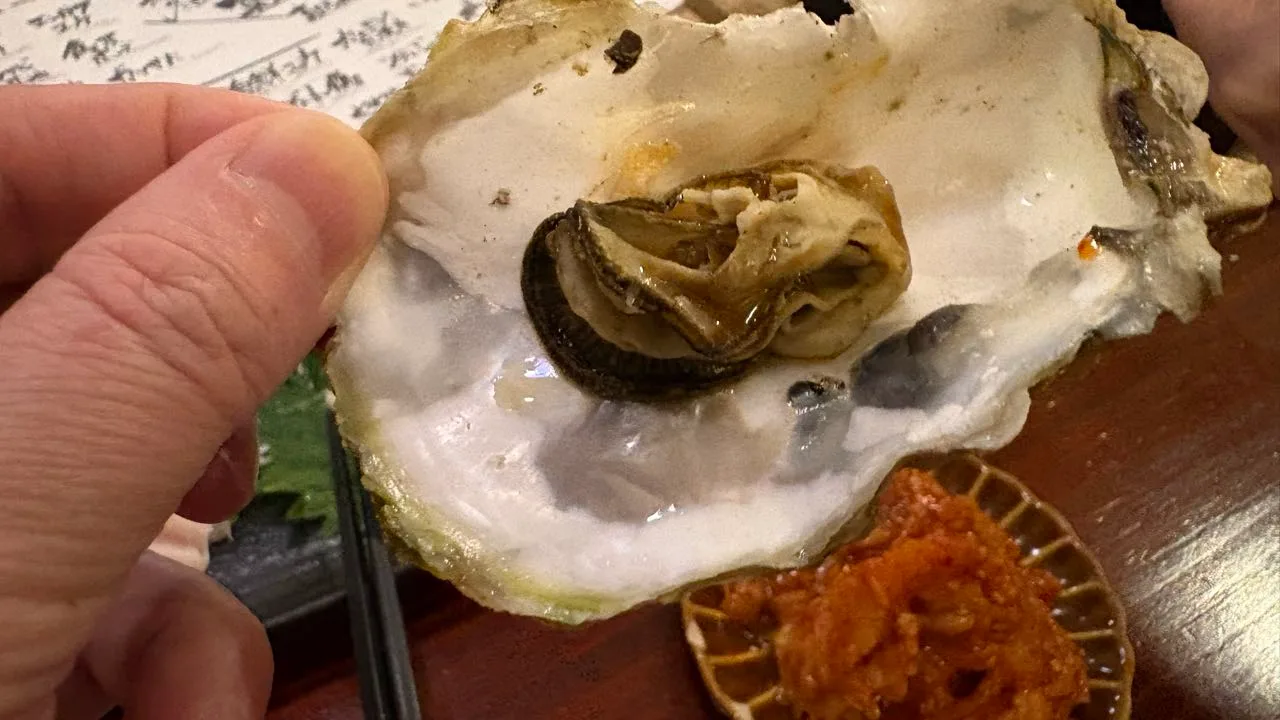
“Huh? Aren’t these small?”
They were. A big shell, and in the middle of it a small oyster. We tried the others. Small. In the end, every one of them was.
In April and June the oysters had sat heavy in the shell, and both times we had thought, this is a bargain. “Maybe it depends on the shop?” my wife said. We were both a bit deflated.
Ten for ¥1,320 is a little over ¥130 an oyster, so this is not a complaint about money. It is that we had been picturing the big ones since the train.
Why they were small, according to an AI
The next day my wife asked an AI assistant about it, with the photo: are Akkeshi oysters small at this time of year? The answer, in short:
- Akkeshi oysters ship all year, but their condition changes a lot with the seasons.
- In autumn, after spawning in summer, the meat is thin and firm, and the taste leans clean rather than creamy.
- Steaming makes an oyster shrink, so it looks smaller than it would raw. Early in the autumn, when the shells have grown and the meat has not caught up, the gap is at its widest.
- They fatten up again in winter, December to February, which the answer called the best time to eat them.
So, in its view, not the shop’s fault: the season and the steaming together. That is a chatbot’s explanation, not a fisherman’s, and the menu says some may come from outside Akkeshi. But it matched what was on the table.
The ¥1,980 nomihodai, and why the cheaper plan was enough
When the staff came to ask about drinks, they mentioned nomihodai, the all-you-can-drink plan. It was our first time at this branch, so they walked us through it. Two plans, both two hours: ¥1,800 (¥1,980 with tax) and ¥2,300 (¥2,530 with tax). The difference is sake. The cheaper plan includes three: Kunimare from Mashike, Oyadama from Asahikawa and Namara from Sapporo. The dearer one adds eight more.
We agreed three sakes would do, and took the ¥1,800 plan.
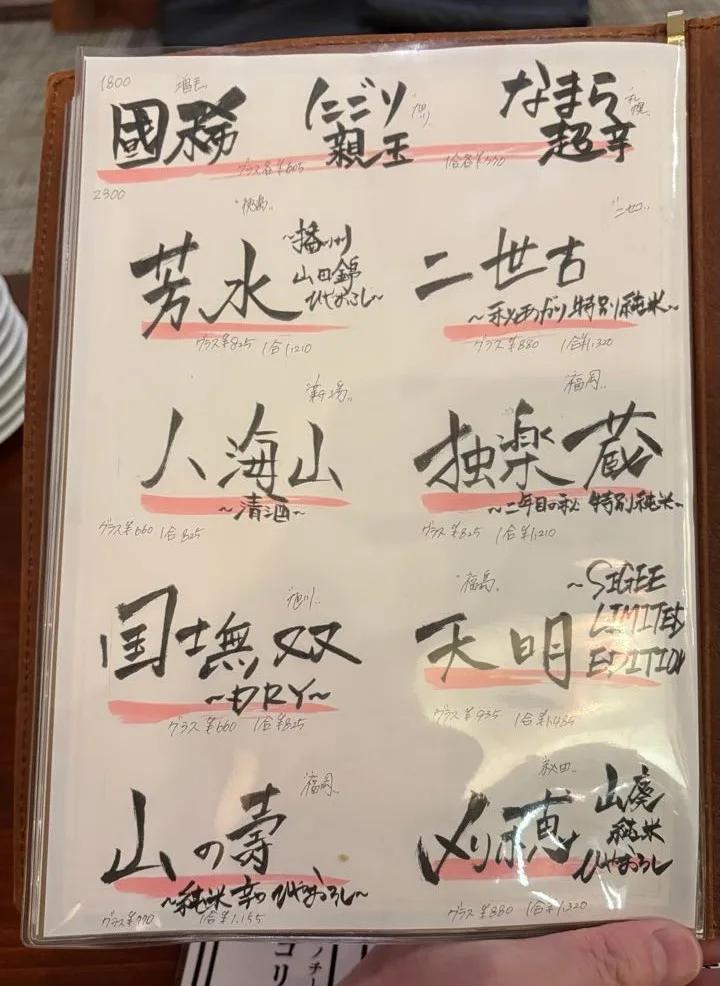
Between the two of us, over the two hours: two Suntory draft beers, four glasses of Kunimare “Hokkai Onikoroshi”, two of Oyadama nigori, two of Chitose-tsuru “Namara Junmai Karakuchi”, two mega highballs, one shio lemon sour (lemon sour with salt) and one homemade white pear sangria. Fourteen drinks. Ordered one at a time at the menu prices — draft beer ¥660, mega highball ¥715, ¥605 a glass for those three sakes — they would have come to more than twice the ¥3,960 we paid for the two plans.
Here you can order the next drink while the last one is still in front of you; some places make you finish first. So the glasses never ran dry, which is also how you end up drinking more than you meant to. Last order, per the menu, is 30 minutes before the end.
About five minutes before last order we asked for two more Kunimare, the sake we had started on, and they came straight away. Then the staff came round for last orders anyway. We asked what was popular. “The shio lemon sour and the homemade pear sangria.” We took one of each. So at the end there was a mega highball, a sour and a sake all going at once.
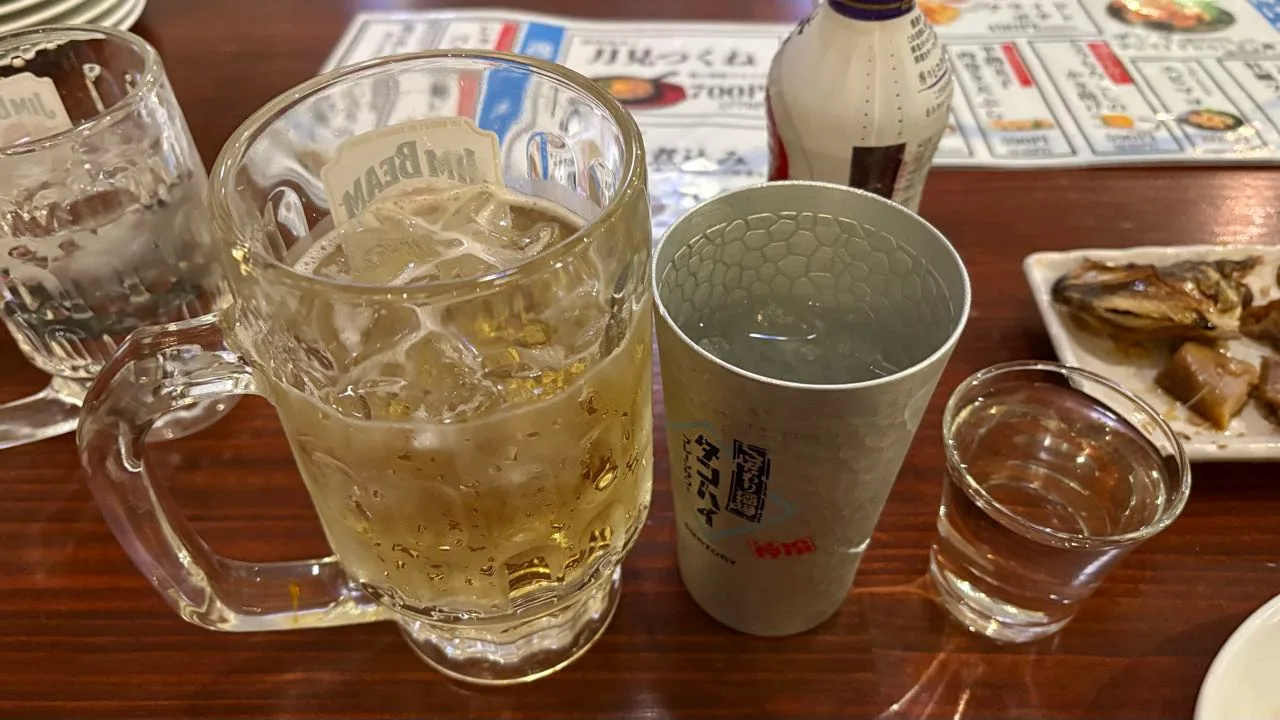
By then we had properly overdone it, and both of us left a little sake in the glass. Sorry to the staff.
Everything else on the table
Food is ordered online through a QR code, which may just be normal now. The otoshi, the small dish you did not order and pay for anyway, was tsubugai, whelk in the shell, ¥385 a head. Same as at the main branch in June.
Engawa yukke, ¥539, from the handwritten daily board: engawa (the fin muscle of a flatfish) in a Korean-style dressing with sesame, quite strongly seasoned. With beer it tasted fishy. “Let’s save this for the sake,” my wife said. Agreed.
Sashimi for two, ¥1,089: seven kinds, two slices each. One of us started on the shime-saba, vinegared mackerel, as the one most likely to be a problem, and it was: a little fishy, still not a favourite.
Oyadama nigori, the cloudy sake from Asahikawa, tasted a bit like amazake, the sweet rice drink. Not really to either of our tastes.
Menuke shioyaki, ¥1,089, salt-grilled genshiyaki from the daily board (genshiyaki is the house grill; how the main branch does it). A thick piece of fish with grated daikon. My wife went at it with chopsticks and it would not come apart. “So bouncy.” It was — springy, close to rubber, and filling. It could have done with a little more time on the fire.
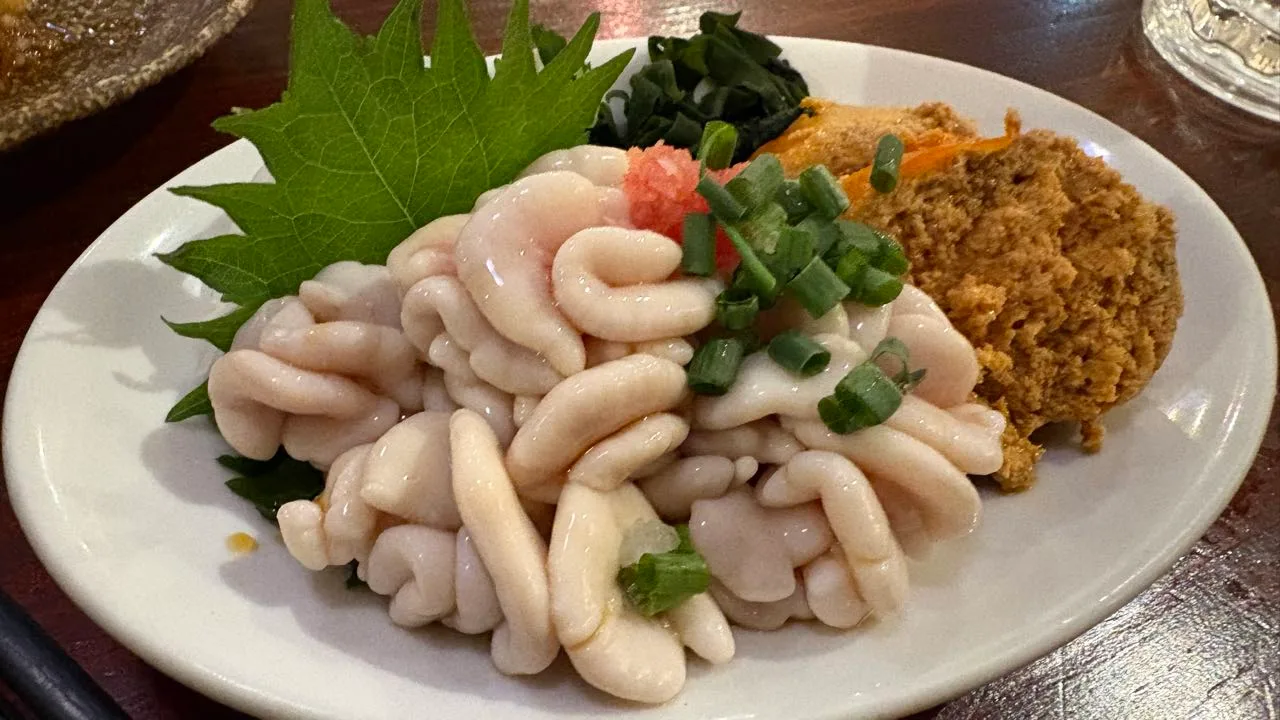
Matachi and ankimo, ¥1,430, ordered because the board said they were in season. Matachi is cod milt; ankimo is monkfish liver. The ankimo tasted like something familiar, and my wife named it first: “It tastes like canned salmon.” Exactly what the other of us was thinking. The ankimo one of us remembers from before was softer, closer to melting. The matachi was rich and creamy, and good, and it wanted sake: Chitose-tsuru “Namara Junmai Karakuchi”, a Sapporo sake.
Komochi nishin, ¥935: a whole herring with roe, off the genshiyaki list, well browned and quite large. Lots of small bones, and a belly full of kazunoko, herring roe. Pretty good. The two mega highballs went with it.
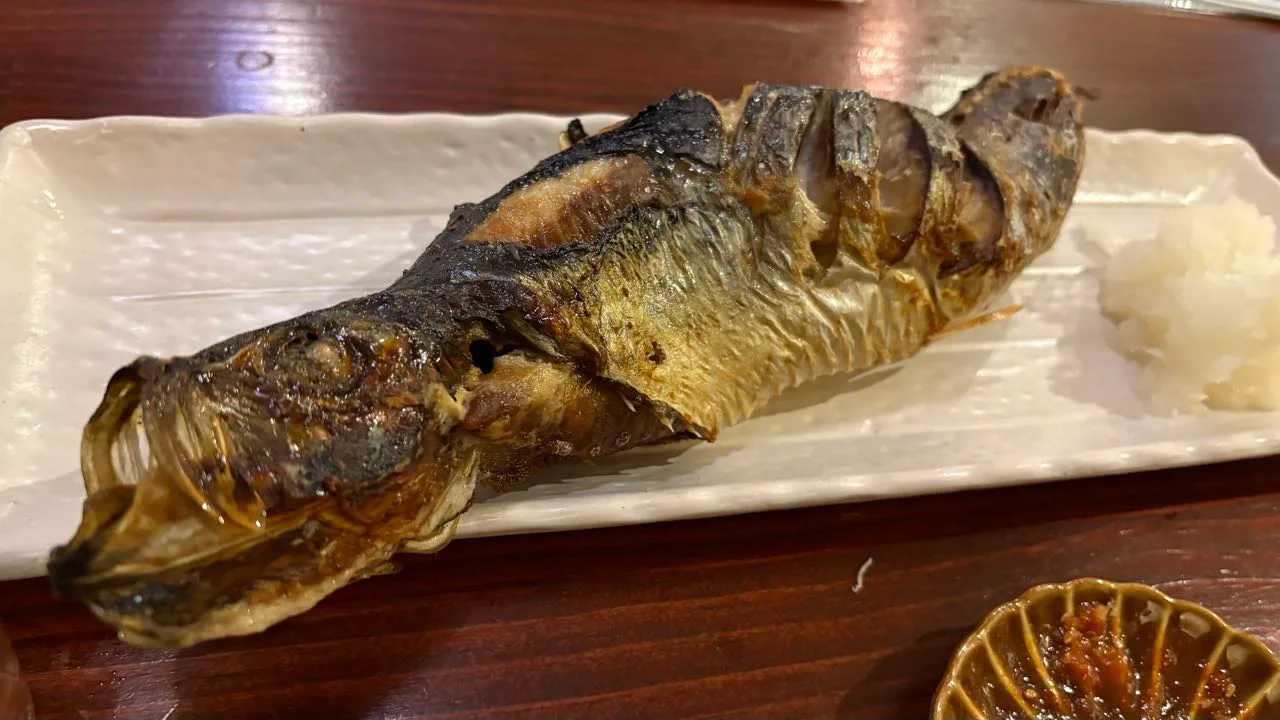
Hokke, half, ¥605, ordered on the grounds that it was a fish night, was the last thing to arrive.
What it cost
| What | Price (with tax, Nov 2026) |
|---|---|
| Otoshi (tsubugai) x2 | ¥770 |
| ¥1,800 nomihodai x2 | ¥3,960 |
| Menuke shioyaki | ¥1,089 |
| Engawa yukke | ¥539 |
| Gangan-mushi, 10 oysters | ¥1,320 |
| Sashimi for two | ¥1,089 |
| Matachi and ankimo | ¥1,430 |
| Komochi nishin | ¥935 |
| Hokke, half | ¥605 |
| Total, by credit card | ¥11,737 |
Food came to ¥7,007, the drinks plans to ¥3,960 and the otoshi to ¥770.
Would we go back
Yes. A minute from the hotel door, a sunken table with room around it, a ¥1,980 two-hour plan whose three Hokkaido sakes were enough for us, and a shop that lets you order the next drink before the last one is gone. We were both having a very good time by the end, and walked out floaty and content.
The oysters are the asterisk. If they are the reason you are going, the AI’s answer points to December through February. In November, we got big shells and small oysters, and a pot of ten that still cost only ¥1,320.
Practical bits
All from our visit on Wednesday 4 November 2026 unless marked otherwise.
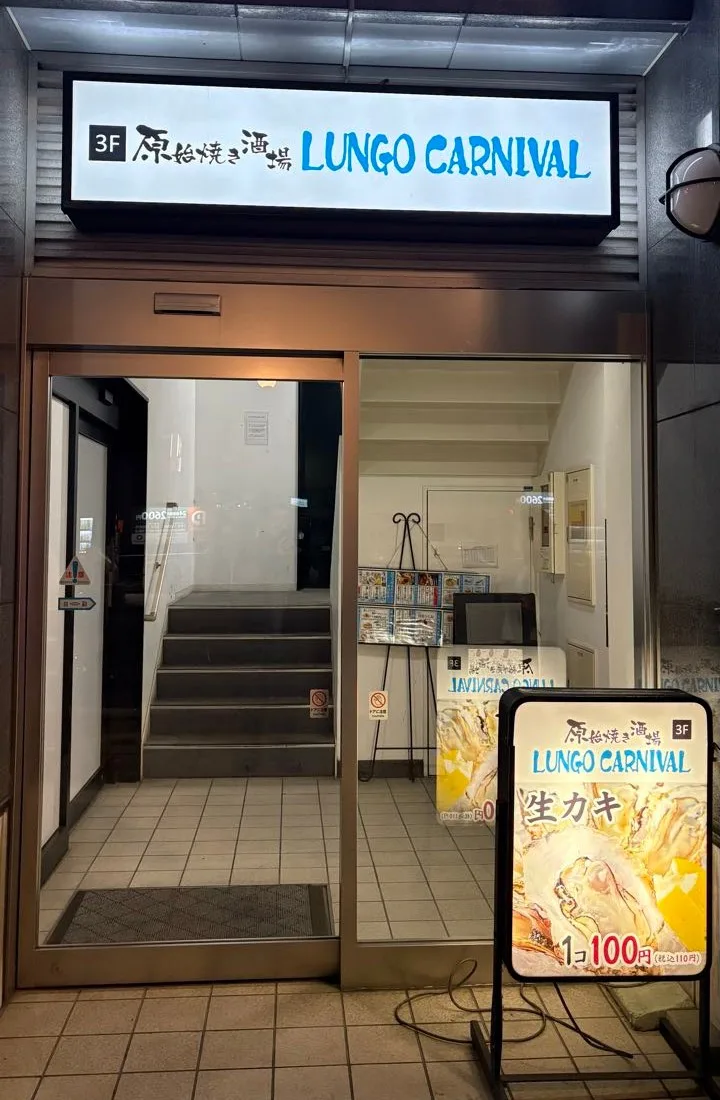
- Where: third floor; the street entrance has a lit sign marked 3F. A one-minute walk from the Dormy Inn Premium Sapporo.
- Hours: Tuesday to Thursday and holidays 16:00–22:30 (last order 22:00), Friday 16:00–23:00, Saturday and Sunday 15:00–22:00, closed Mondays, per a restaurant listing site checked 5 November 2026. Listings disagree on Friday’s last order.
- Busy? We were the first customers at about 17:20 on a Wednesday. We didn’t check how busy it gets later, or on weekends.
- Payment: we paid by credit card.
- Prices: the printed menus show the price before tax with the tax-included price in brackets; the bill used the tax-included figures. Otoshi ¥385 a head, as the menu states.
- Nomihodai: two hours, ¥1,980 or ¥2,530 a head with tax. Last order 30 minutes before the end, per the menu. Sapporo Classic medium bottles and All-Free (non-alcoholic beer) are not included, per a note on the menu.
- Oysters: raw ¥110 each; grilled ¥132 and steamed ¥143 each, two minimum; the ten-oyster gangan-mushi pot ¥1,320, limited.
- Ordering: food through a QR code. We didn’t check whether the ordering page has English.
- English menu: the paper menus we photographed, including the handwritten sake list and the daily board, are in Japanese. We didn’t check for an English version.
- Smoking: we didn’t check.
Facts checked 2026-11-17. Prices, hours and menus are what we saw on our visit; they change. Nothing here was sponsored or comped.