Adachiya Higashimachi, Naha: ¥1,000 senbero with refills paid in beer bottle caps
This article contains affiliate links to hotel booking sites; if you book through one we may earn a small commission at no cost to you. How that works.
Where we stayed: DoubleTree by Hilton Naha. Check rates: Expedia · Klook · Official site
Two senbero sets, a plate of fried moray eel and a grilled mackerel: ¥3,388 for the two of us at Adachiya Higashimachi (足立屋 東町店) in Naha, on Monday 19 October 2026. At ¥150 to the dollar, the rate we use here, that is about $23. We paid by card, and there was no otoshi on the bill (the small dish you don’t order but pay for anyway).
It was the first evening of the trip. The day had started in the lounge at Haneda and carried on with the meal on the plane, so the first thing after check-in at DoubleTree by Hilton Naha was a nap. It was around 17:00 when we woke up, and neither of us was very hungry. We went out anyway. Adachiya Higashimachi is close to the hotel, and we had come once before and given up: it looked like a long wait.
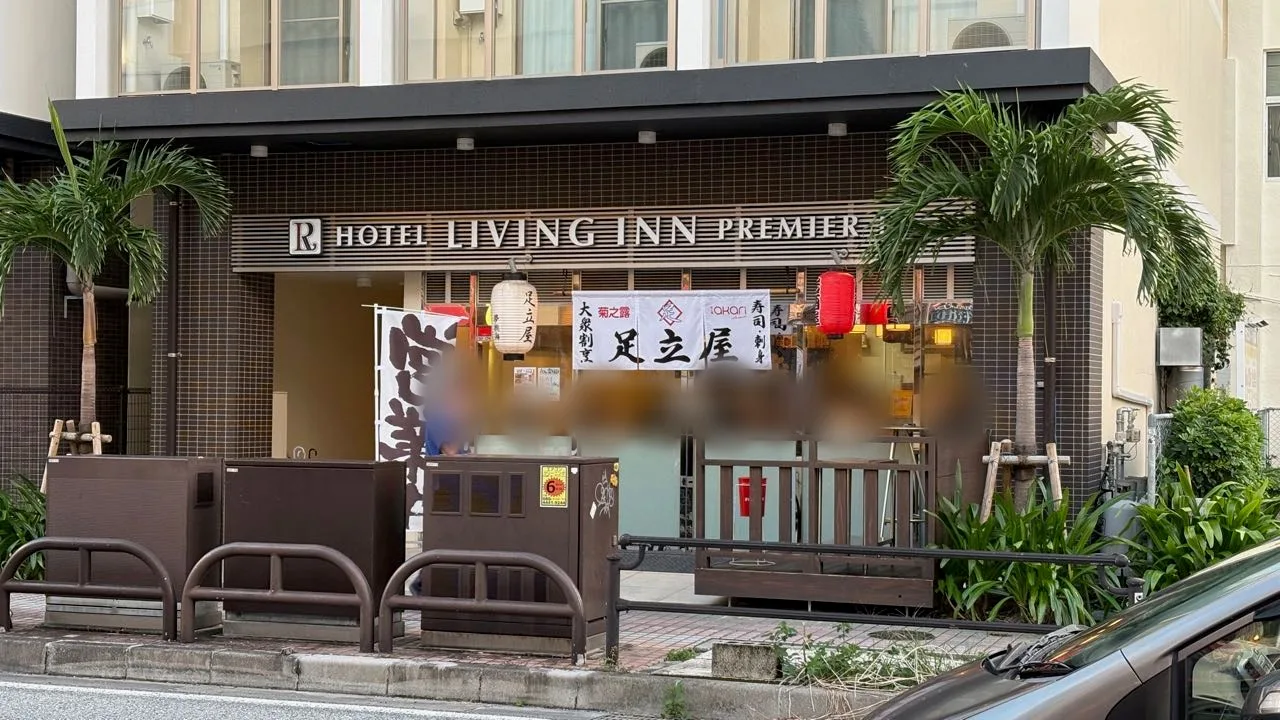
Kikunotsuyu Shuzo, the drinks maker that produced a collaboration can with Adachiya, introduced it in an announcement as “the popular izakaya where Okinawa senbero began.” The Adachiya in Makishi is a standing bar. This branch opened in June 2024 and is a different format: the noren curtain says taishu kappo (everyday Japanese cooking) and sushi and sashimi, and the menu has a sushi section.
All eleven places we’ve drunk at in Naha, with every bill, are written up separately. This is one counter, slowly: how the set works, what to pick, and the caps.
How the ¥1,000 set works here
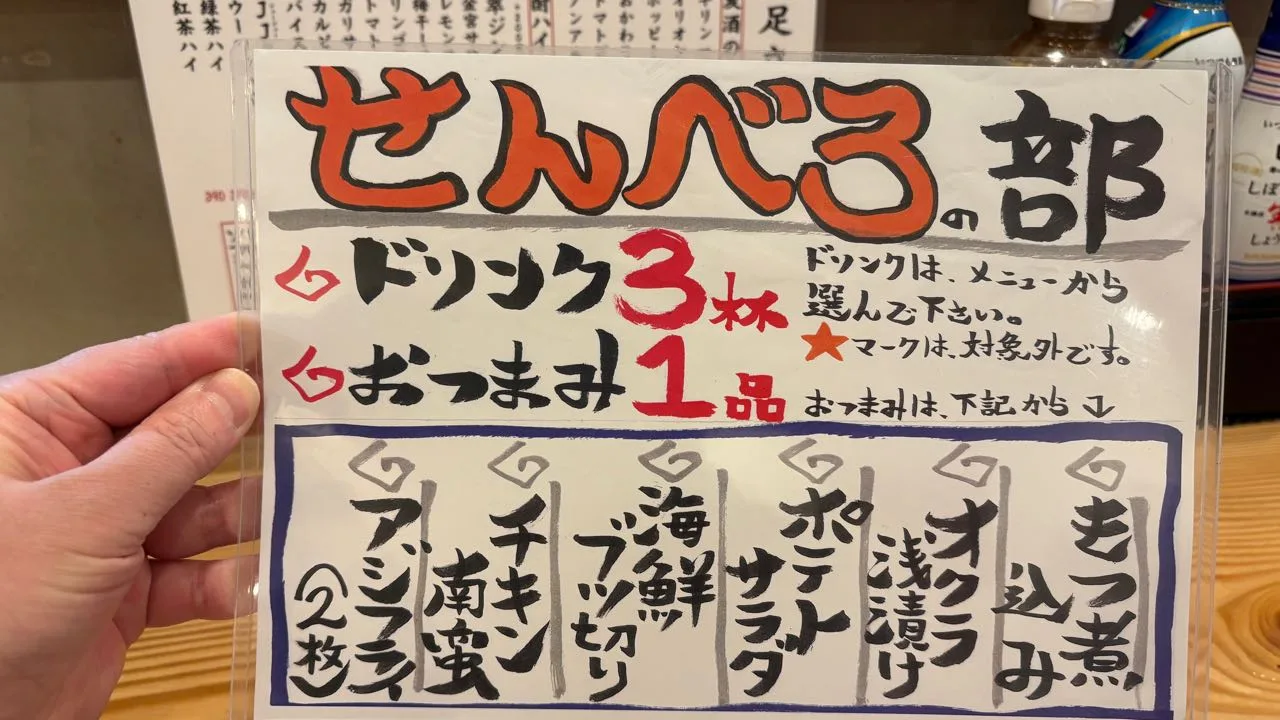
Senbero, from sen (a thousand yen) and berobero (drunk), is three drinks and one snack for ¥1,000 at Adachiya Higashimachi. Every price on the menus is before tax (it says so in small print, bottom left), so the set is ¥1,100 at the till. That was the price on our visit.
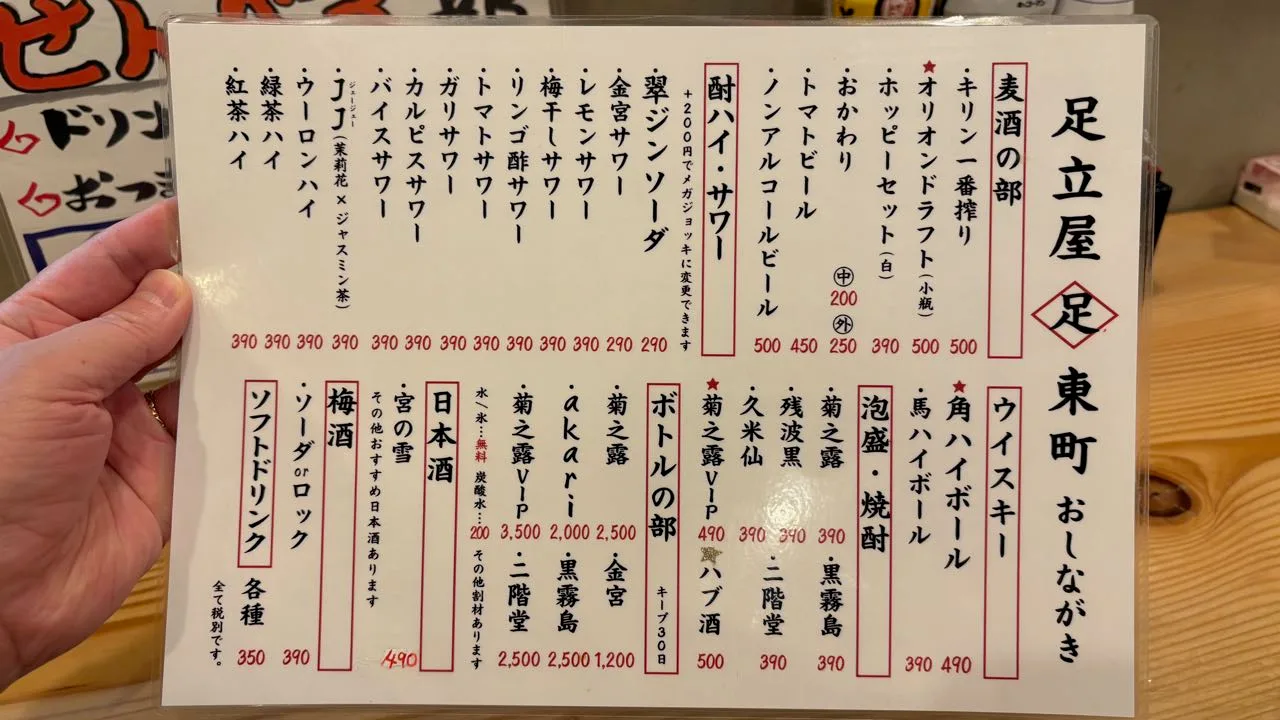
The rules are on a handwritten card at the counter: choose the drinks from the regular menu, and anything marked with a star is excluded. On the drinks menu the stars sat next to Orion Draft (a small bottle), the Kaku highball and Kikunotsuyu VIP awamori. Kirin Ichiban Shibori, ¥500 on its own, has no star, so that is what we both started with.
The snack is one of six: aji fry (two pieces of fried horse mackerel), chicken nanban, kaisen butsu-giri (raw seafood cut into chunks), potato salad, lightly pickled okra, or motsu nikomi (offal stew).
The arithmetic is easy to like. For the second drink, one of us had Miyanoyuki sake, which is ¥490 on its own. Add the ¥500 Ichiban Shibori and two drinks have nearly covered the ¥1,000. The third drink and the snack ride along.
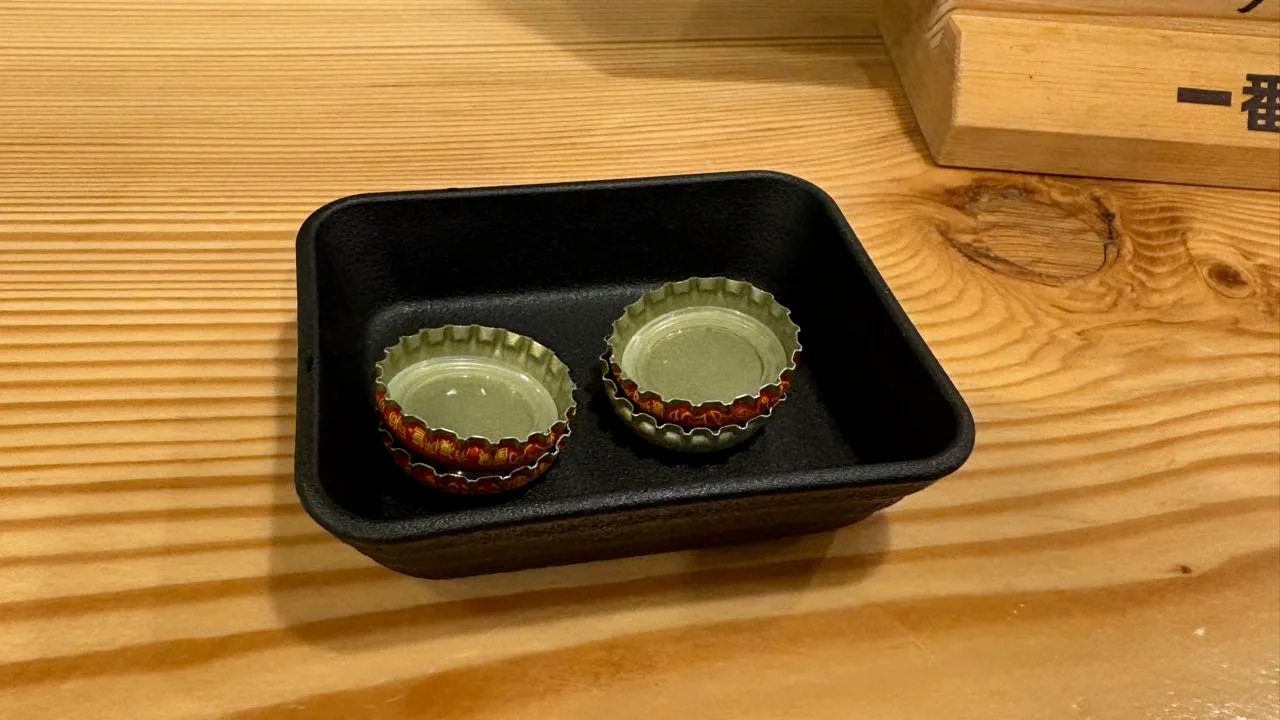
The bottle caps
We arrived at about 17:30 without a reservation, and the room was close to full. When we said there were two of us and no booking, the answer came back in a soft Okinawan lilt: “Let me check the seats.” As luck had it, there were counter seats free, and we were in straight away.
The order was asked for the moment we sat down, presumably because most people here order senbero. We grabbed the senbero card in a hurry and asked for two.
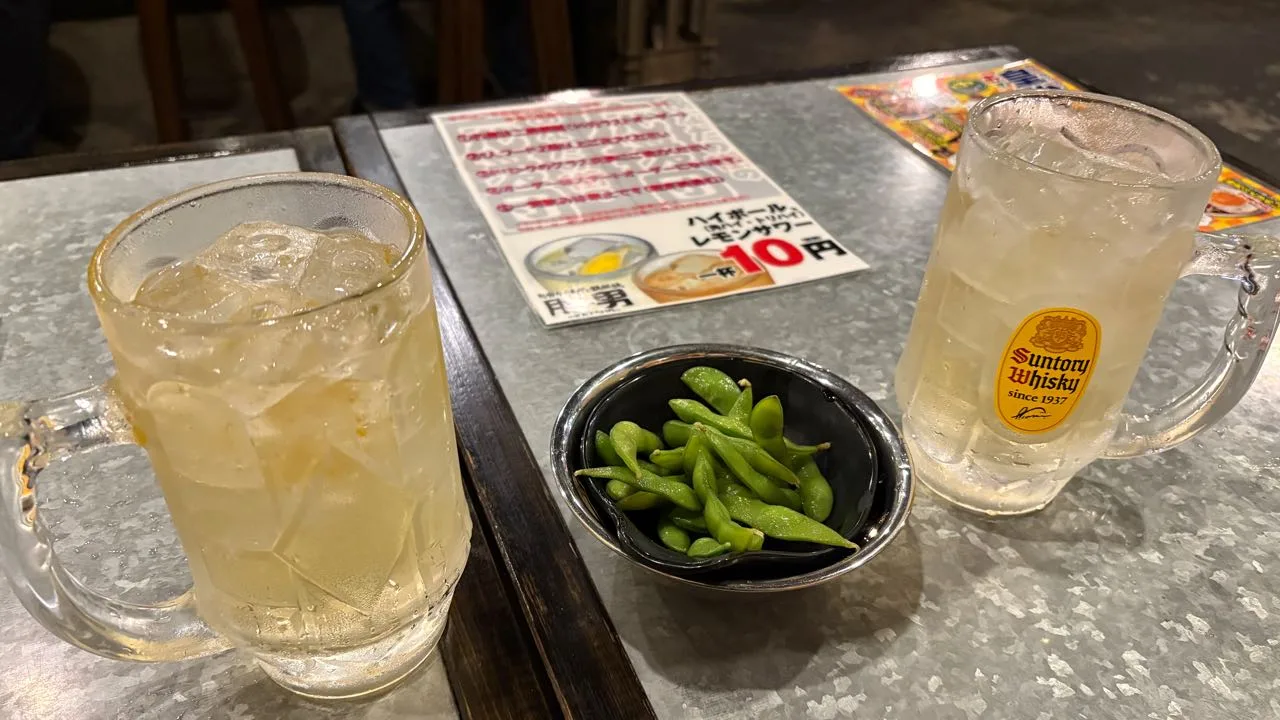
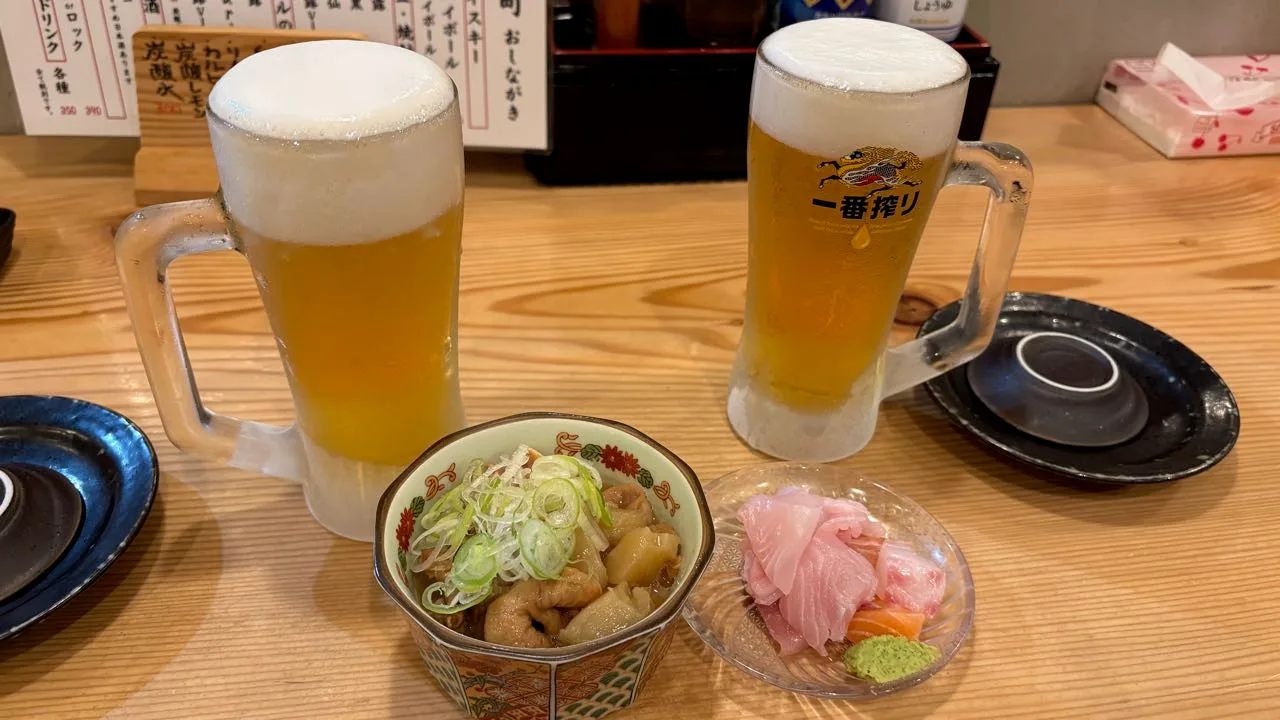
The beer came fast: Ichiban Shibori in frosted mugs, a proper size with a proper pour. With it came a small black tray holding four beer bottle caps. These, we were told, are how you order the next drinks. Two sets make six drinks; two were already on the counter; four caps. Each cap works as a voucher for one refill.
What we picked from the six
The motsu nikomi, and then, after asking the staff for their recommendation, the kaisen butsu-giri. Both arrived quickly.
Going by the price, the set’s motsu is presumably the small one, ¥390 on the regular menu (the large is ¥590). For a small, there was a lot of it, under plenty of green onion, and the seasoning was right. My wife put it simply: “That’s it. That’s how motsu-ni should taste.”
The kaisen butsu-giri was close to ten pieces of mixed raw fish, salmon among them, cut in uneven sizes and not dressed up at all. Trimmed neatly and garnished, that much fish would easily pass for a plate over ¥1,000. It tasted fresh. Here it came with three drinks, for ¥1,000.
Adding moray eel and a ¥390 mackerel
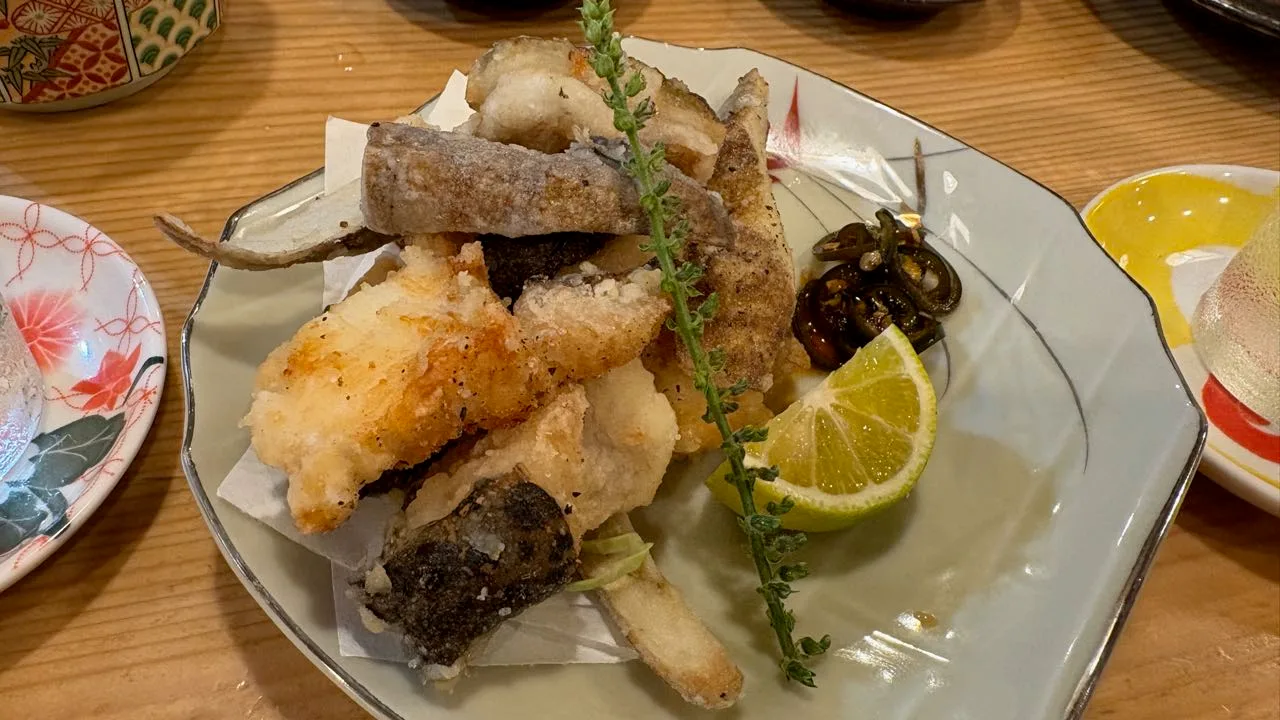
Two snacks were not quite enough. The blackboard of the day’s recommendations had utsubo no karaage, fried moray eel, marked as local, for ¥690. The staff recommended the hakkaku ichiya-boshi (an overnight-dried fish, ¥980, marked rare), but we had eaten hakkaku before in Sapporo, so the eel it was.
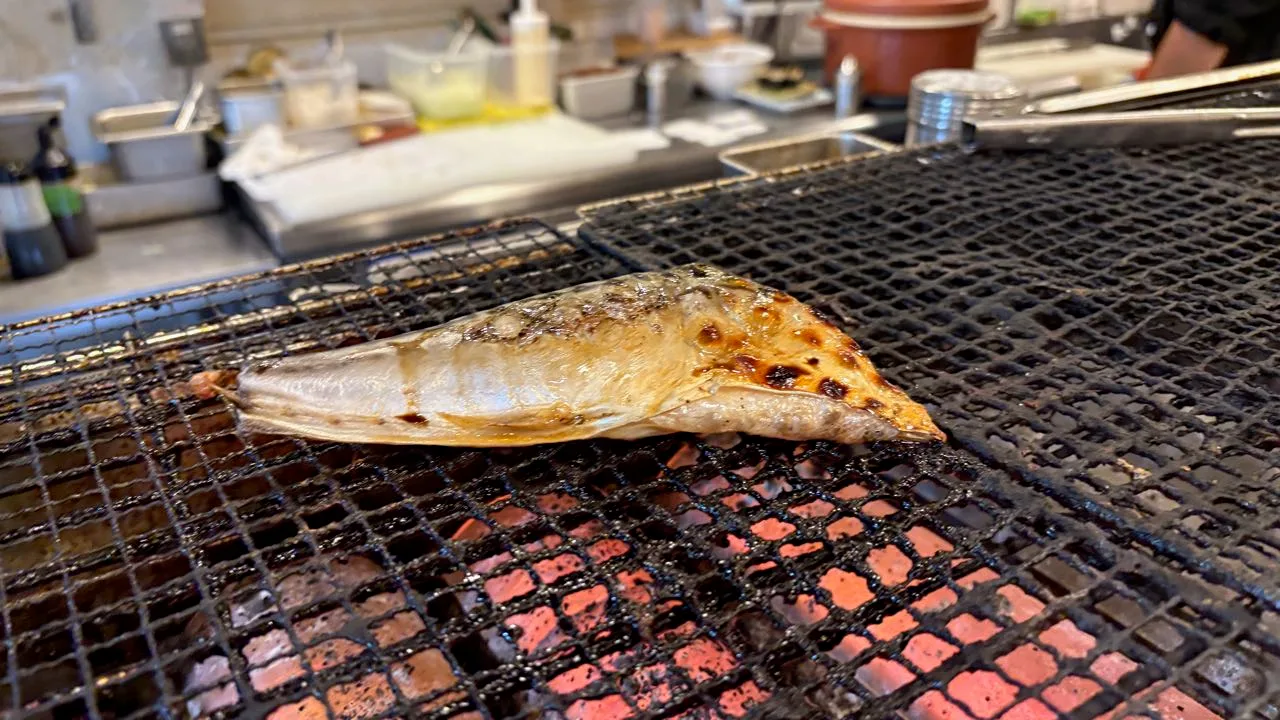
From the grill section of the menu came abura-saba, fatty mackerel, ¥390. It goes on the wire grill right in front of the counter, and it is big for ¥390. What was on the grill before it, probably unagi kabayaki (¥600 on the menu), looked small to us; fine if all you want is a taste of eel.
The mackerel took its time. The moray eel arrived while it cooked, and moray eel was a first. Some bites were gelatinous, all collagen, some were firm white flesh, some were mostly bone: a lot of textures on one plate. The fried burdock that came with it was good too. When the mackerel came, it lived up to its name, rich with fat and grilled just right.
Glass by glass
For the second round, one of us had the Miyanoyuki, a sake whose label says umakara, savoury and dry: no odd edges, just good. For the third, the same one of us moved to awamori, Zanpa Kuro on the rocks, the first awamori in a while, and it tasted pretty good. My wife ordered an Uma highball (馬ハイボール, ¥390 on the menu) without knowing what it was. What the uma, horse, refers to never became clear; it was a good highball all the same.
The bill
The drinks and the food ran out at about the same moment, which is when we asked for the check.
- Senbero (three drinks and one snack), ¥1,000 × 2
- Utsubo no karaage, ¥690
- Abura-saba, ¥390
¥3,080 before tax, ¥3,388 with it, by credit card, 19 October 2026. Nothing else on the bill. Both of us were surprised at how low it was, and both of us felt, for no particular reason, a bit happy about it.
Would we go back
Yes. We enjoyed the evening a good deal, and it came to ¥3,388. The set bought full-size drinks and a stew that tasted the way motsu-ni should, the drinks and the set snacks came fast, and the two extra plates were ¥1,080 together before tax.
A second stop: PUCNA HICONA
By then my wife was content and full. One of us wanted a little more to drink and eat, so we went on to PUCNA HICONA (プクナ ヒコナ), a wine-and-aged-steak counter that was already on the list. It is said to have moved to Naha from Asagaya in Tokyo. About eight seats at the counter, and one person, it seemed, running the whole thing.
We said we had eaten already and wanted steak and wine. The menu is read by QR code, and the wine list is long enough that going through it felt like work, so we asked for something a bit unusual. A few were picked out for us, and from those we took an Albanian Merlot (ENOFAMA Merlot 2024) and a Spanish Rioja (Marqués de la Concordia Rioja 2023), ¥1,000 a glass. The glass changes with the wine here. Both smelled and tasted a little different from the Bordeaux we usually drink, in a good way.
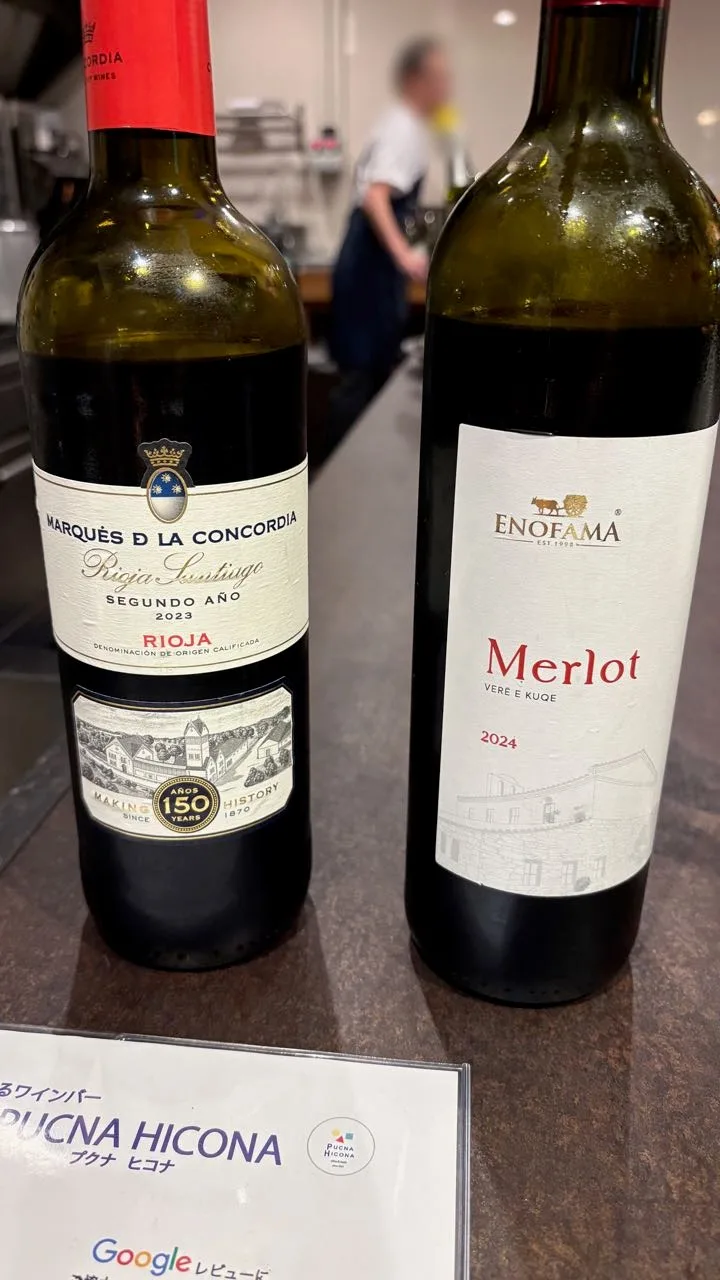
The kitchen is the other side of the counter, so we watched the steak being made. It is ¥3,800, listed under the Kobe Takami beef heading on the sign outside. It went into a frying pan, then was wrapped in foil and left for a while in what may have been an oven, finishing in its own heat, perhaps. It was not a big portion, but it was right for how full we were. Even the lean part let go of fat when bitten: fatty Japanese beef, and good with the wine. Vegetables and tofu on the side.
¥5,800 by card, which made the evening ¥9,188 (about $61) for two places. Would we go back to PUCNA HICONA? If the chance comes up. As a glass and a plate after somewhere else, the portion was the right size for that night.
Practical bits
Adachiya Higashimachi
- Where: 11-17 Higashimachi, Naha, on the ground floor; the sign above the entrance in our photo reads Hotel Living Inn Premier. It is close to DoubleTree by Hilton Naha, but we didn’t time the walk.
- Hours: 17:00 to 23:00, per the shop’s Instagram and its Tabelog listing (checked October 2026). The days come from Tabelog only: Monday to Saturday, closed Sunday (and the next day when Sunday is a public holiday). The Instagram doesn’t list a closing day. The Instagram says senbero is available any time it’s open; a Tabelog review from May 2026 says until 18:00. We ordered at about 17:30, so we can’t settle it.
- Reservations: we walked in without one at about 17:30 on a Monday and got counter seats in a nearly full room. Tabelog lists reservations as accepted.
- Paying: our credit card was fine. Menu prices are before tax; no otoshi.
- Ordering: staff take the order at the counter. The senbero card, the drinks menu and the blackboard in our photos are in Japanese only. Whether there is an English menu, we didn’t check.
- Smoking: Tabelog lists it as non-smoking throughout; we didn’t note it ourselves.
- Time limit on senbero, how many tourists: we didn’t check.
PUCNA HICONA
- Where: 1-9-23 Izumizaki, Naha, ground floor. About eight counter seats.
- Hours: 18:00 to 23:00 (food last order 22:00), plus lunch 11:30 to 14:00 on Fridays; closed Tuesdays, per its Tabelog listing (checked October 2026).
- Wine: the sign outside says glasses start at ¥700 and that solo diners are welcome. Our two reds were ¥1,000 each. Paid by card.
- English menu, smoking: we didn’t check.
Facts checked 2026-11-02. Prices, hours and menus are what we saw on our visit; they change. Nothing here was sponsored or comped.