Hilton Fukuoka Sea Hawk Executive Lounge day 3: Egg Royale, tonchan, and a one-hour warning
This article contains affiliate links to hotel booking sites; if you book through one we may earn a small commission at no cost to you. How that works.
Day three of five at the Hilton Fukuoka Sea Hawk, August 2026. The shape of the day is fixed by now: breakfast in the Executive Lounge, a long nothing in the room, the gym, the rock bath, cocktail time. What changes is the food — and this day added two things that were not on any menu card.
We hold Hilton Diamond, which is how we are in the lounge at all. The room and the first evening are in the night-one piece, the breakfast counter is here, and night two was the Western menu.
Today’s Plate: Egg Royale
The first thing we check on the way in is the dish-of-the-day sign, which the lounge labels Today’s Plate in English. That morning, Egg Royale.
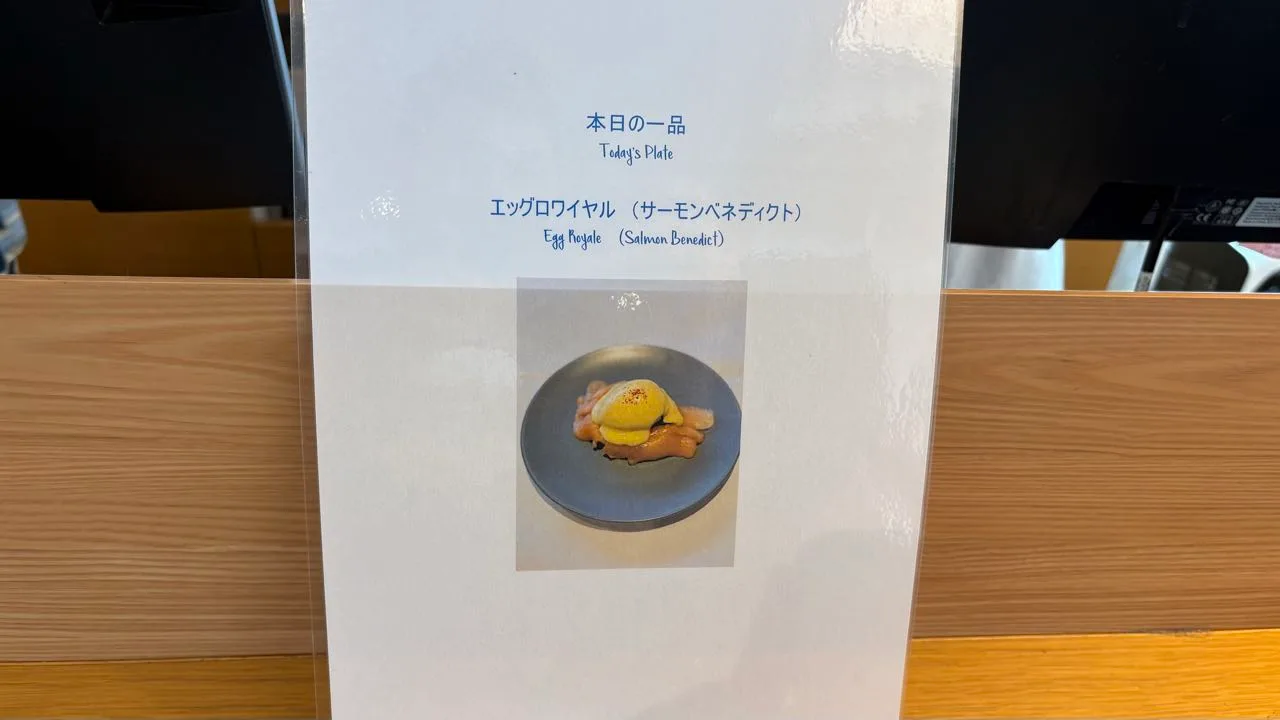
“Salmon Benedict” in brackets underneath. As always we ordered one between the two of us: it is brought to the table, and one is plenty when you are also going to eat rice.
Then a staff member we had not seen on the previous days came over and, it turned out, remembered us from our stay last year. Not just that we had been here: that we had ordered fried eggs.
“How would you like your fried eggs?”
So we said yes, and asked for soy sauce — the raw material for fried egg and natto on rice. The salad bar shifts a little each day: okra and broccoli this morning, a new shiso dressing. Then the Egg Royale, looking like the photograph on the sign.
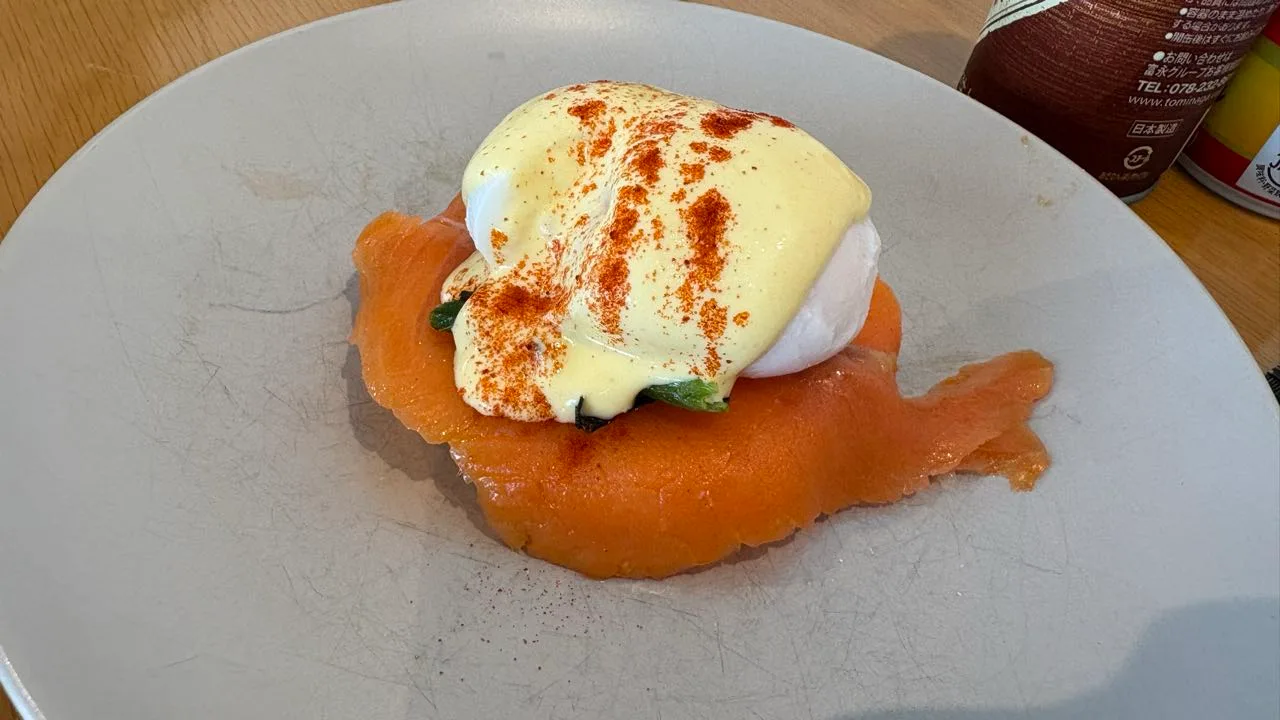
An English muffin at the bottom, smoked salmon over it, then the poached egg, hollandaise and paprika powder, cut in half between us. One of us is not especially keen on smoked salmon, and both of us ended up with the same expression: yes, this is what that tastes like.
“I think I prefer a normal eggs Benedict,” my wife said. One of us thought the same, and would go further — eggs Benedict has never really landed: thin flavour, a hollandaise that does not taste of anything you can name. It is on hotel breakfast menus everywhere, so clearly the world disagrees.
The soy sauce was not soy sauce
The fried eggs arrived with a little jug of something dark. One mouthful in: not soy sauce. Vinegared soy sauce.
We tried it anyway — white, yolk, rice — and no. A fried egg wants plain soy sauce. Which left one egg sitting under the wrong condiment, so we said something.
“This is vinegared soy sauce. We’d like soy sauce.”
“Ah, I’m sorry. We’ll make the fried eggs again as well,” came the reply, apologetically enough that we felt bad about mentioning it.
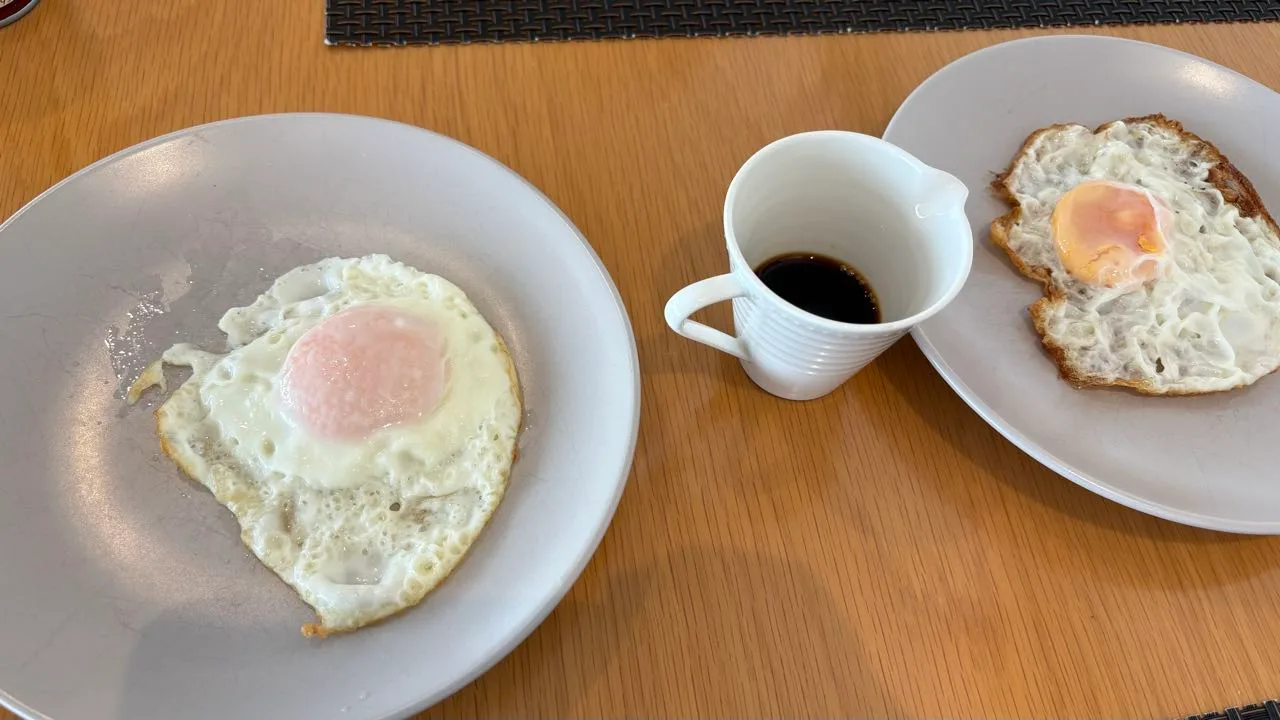
The replacement came back fried hard, the white brown and crisp — made in a hurry, we assume. A fine egg, and the wrong one for putting on rice under natto. My wife worked that out before anyone said it.
“It’s fine, I’ll eat this one.”
And then: “It’s good anyway.”
The rice that came out of all this
So the egg that had escaped the vinegar went on the rice. Break the yolk, drip soy sauce in, and stopping there already gives you tamago kake gohan. Do not stop. Put the natto on top.
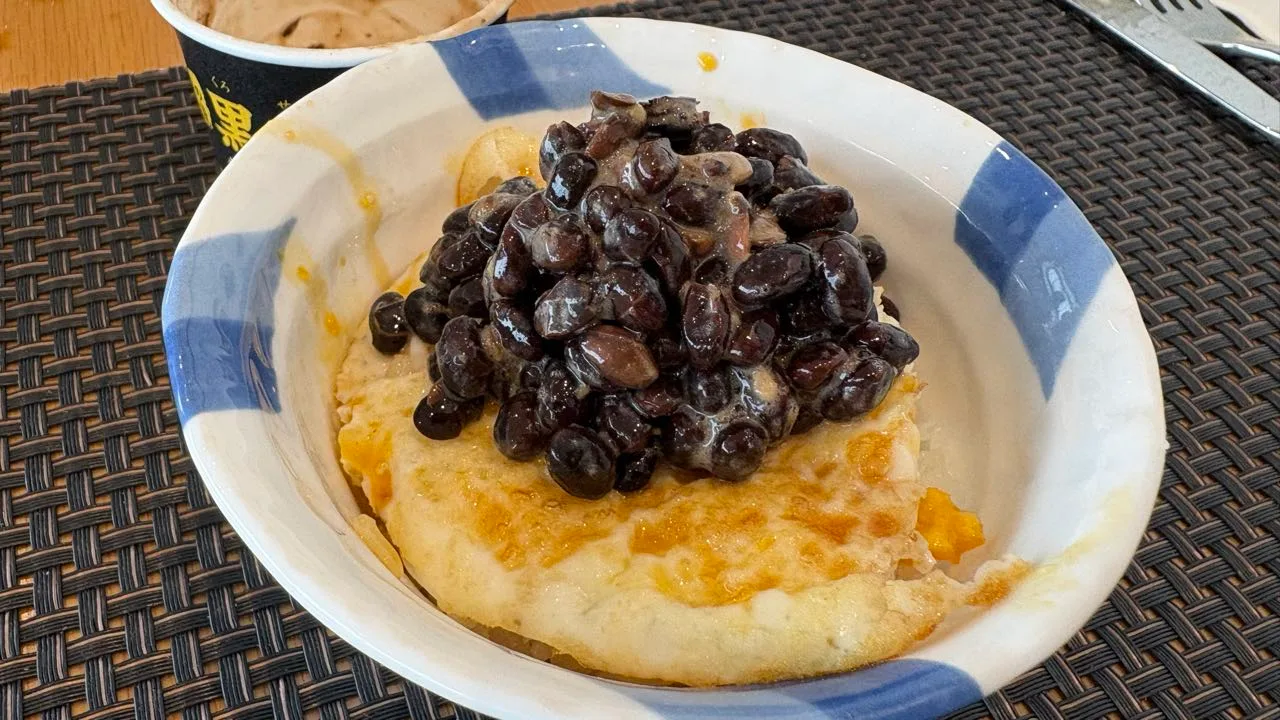
The natto here is Kurosengoku, a black soybean, dark and shiny in the bowl. The plain natto rice from the morning before had been good; this had the flavour of tamago kake gohan running through it as well. The conclusion at the table: this has to happen every morning. Grapefruit, orange and pineapple to finish.
“If it gets crowded, one hour”
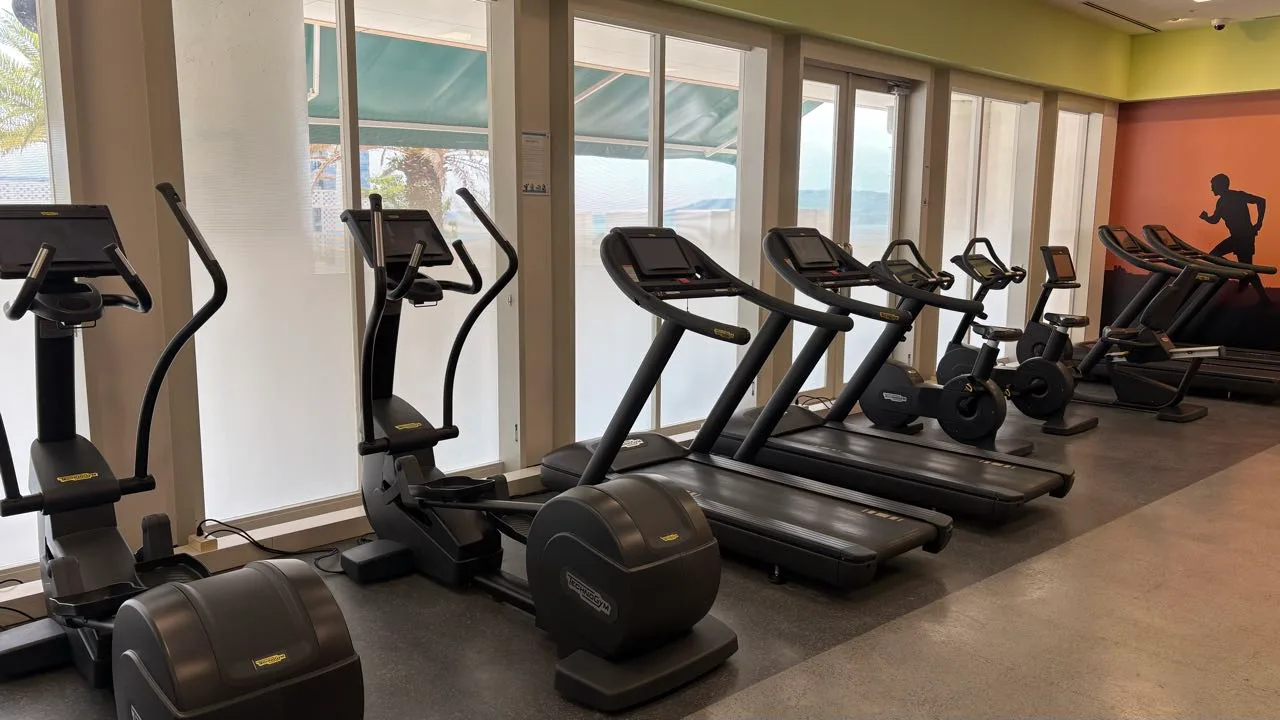
The afternoon: the room, then the gym, less busy on this day than the one before. The weight machines had left proper soreness behind, so no weights — close to fifty minutes of walking and running on a treadmill instead, our way of preparing to drink. Then the rock bath.
Cocktail time had been fairly full the previous night, so we went in early to get a seat. From the door it looked quieter. Then we sat down, and a staff member said:
“If it does get crowded, we may have to ask you to keep it to one hour.”
We both, apparently, pulled a very sad face, because the next thing said was: “Only if it fills up completely. It’ll be fine, I’m sure.”
An hour of drinking. We normally drink for at least four hours a day, so the arithmetic was upsetting and it showed. It never came to that; nobody moved us. But if you are counting on a long evening up here, this is a real thing a member of staff will say to you at the table.
Night three is the Japanese set
The four hot dishes had turned over completely again. Night one was Japanese, night two Western, and night three Japanese but sharing nothing with night one:
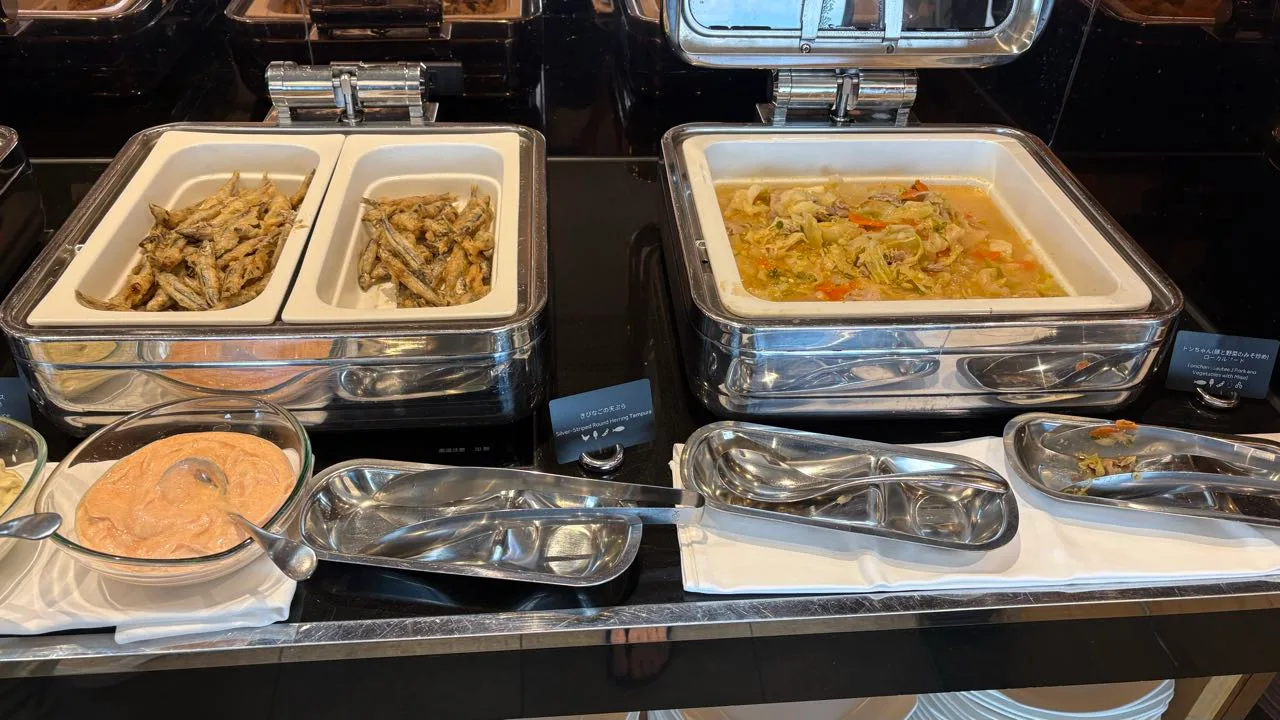
- Tonchan (トンちゃん) — pork and vegetables stir-fried with miso, cabbage and carrot in quantity, a lot of sauce. The card carried an extra line: Local Food.
- Kibinago tempura (きびなごの天ぷら) — the card’s English: Silver-Striped Round Herring Tempura.
- Fried chikuwa with seaweed (ちくわの磯辺揚げ) — in green nori batter.
- Negima-jiru (葱鮪汁) — Japanese Leek and Tuna soup, the only dish kept over a flame in its own pot.
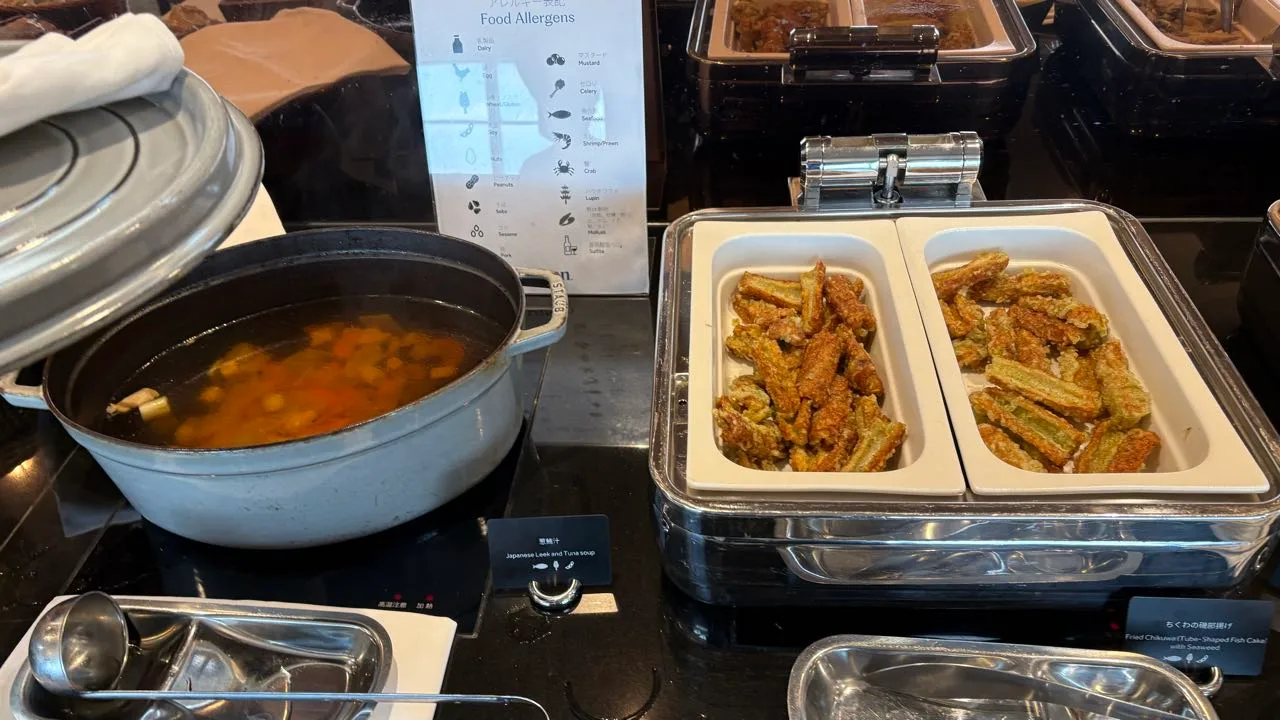
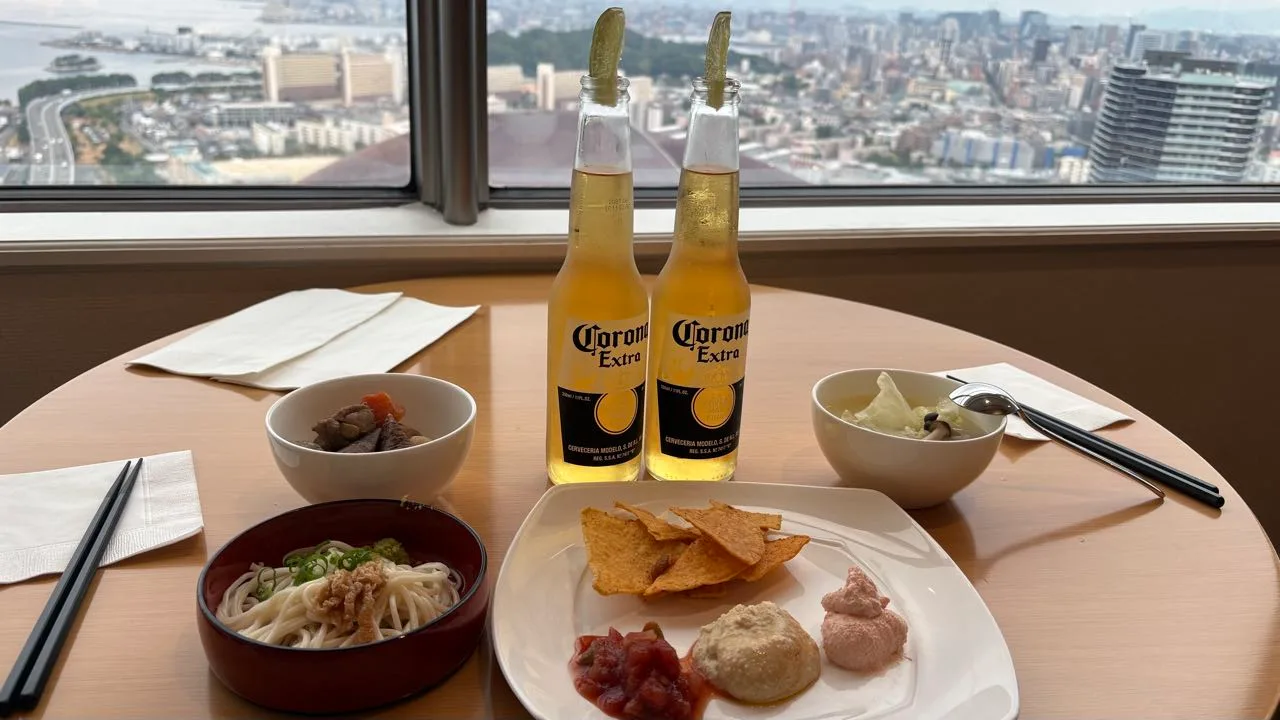
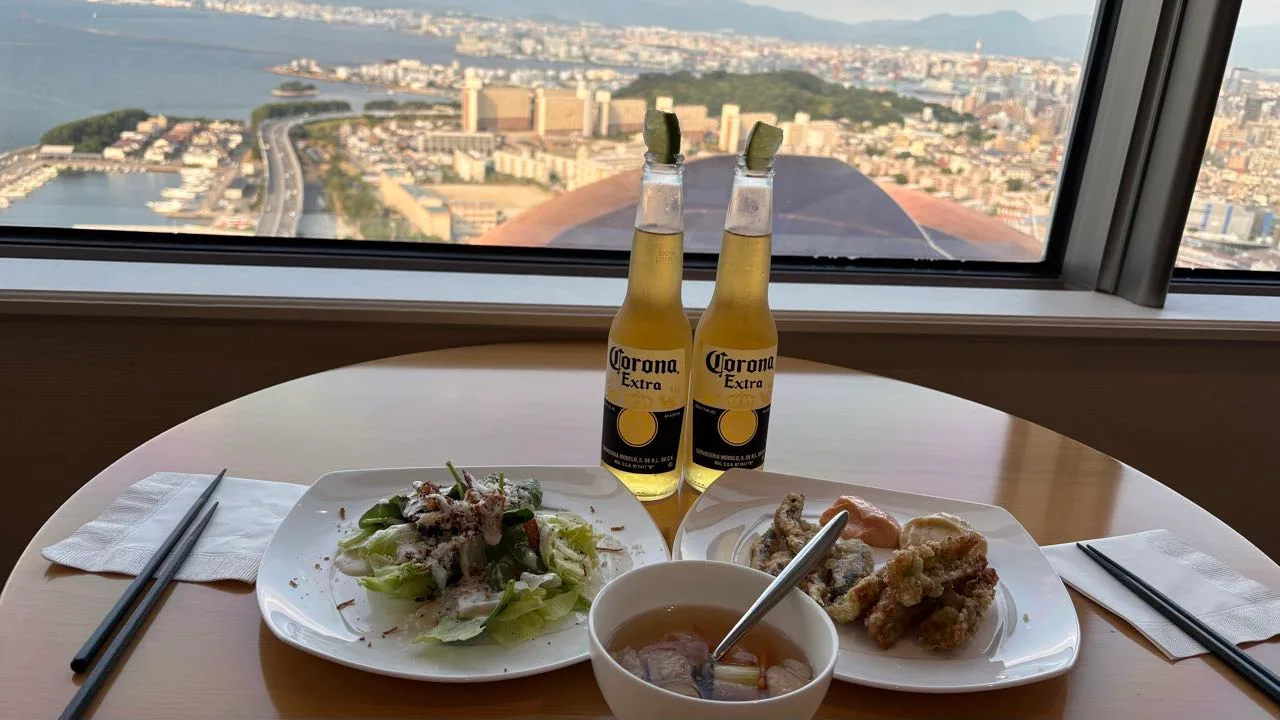
First trip to the counter: the usual build-your-own Caesar salad, plus the soup, the chikuwa and the kibinago. To drink, Corona — lime in the neck, straight from the bottle, the same beer we drank a lot of in Mexico. Light, and it stays out of the way of food. The Caesar got a heavy hand with the pepper, the only way we make it. “Nice,” said my wife. Then she tried the soup.
“Oh, this tastes good. The dashi is good, and the tuna has fat on it. It feels like they’re using a really good cut.”
She is right: a refined, quietly good soup, with enough tuna to chew.
The kibinago got a shorter review. “Tastes like shishamo,” said my wife. “Things like this all taste about the same, don’t they,” came the reply. Possibly this means we have blunt palates. Two sauces were set out for the tempura, yuzu mayonnaise and mentaiko mayonnaise; one of us preferred the yuzu, for the smell.
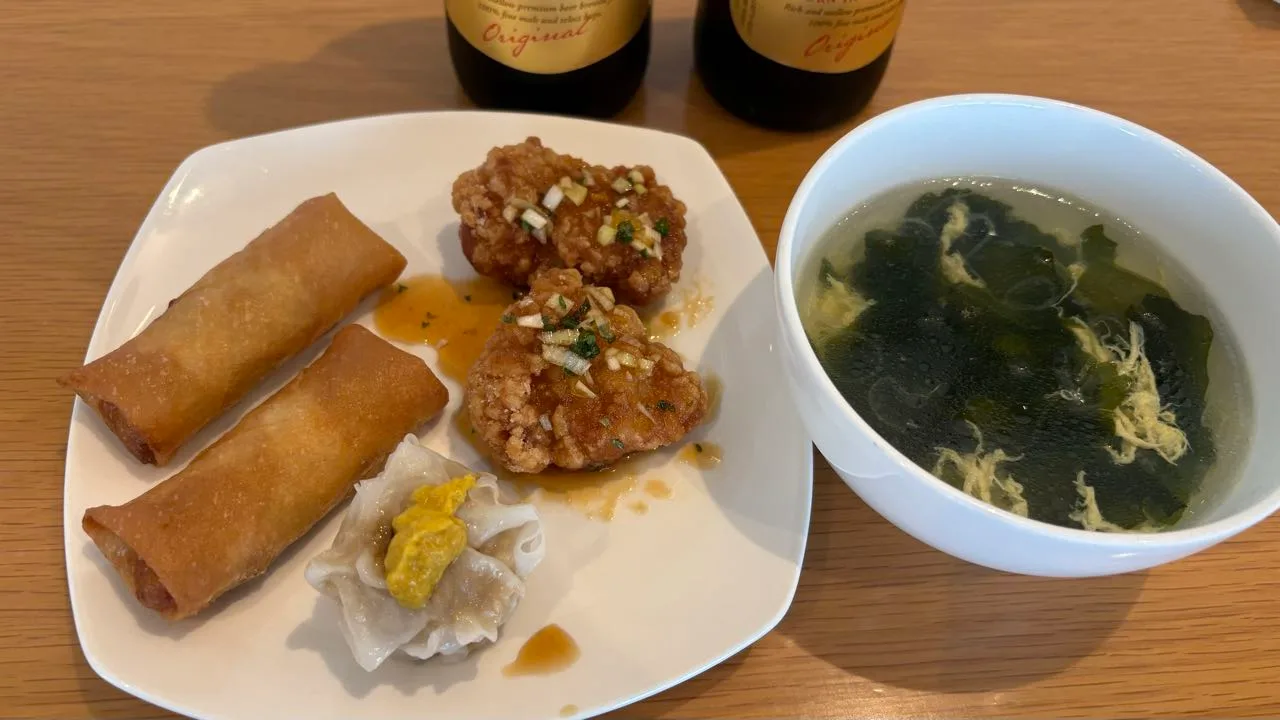
The fried chikuwa is exactly fried chikuwa, a completely good izakaya snack. Two of the four dishes are deep-fried, though, and it is very easy to keep going.
The whites change one bottle at a time
Beer finished, we went to look at the white wine. There was a new bottle in the ice: a blue, fresh-looking label reading LA GRANDE BLEUE.
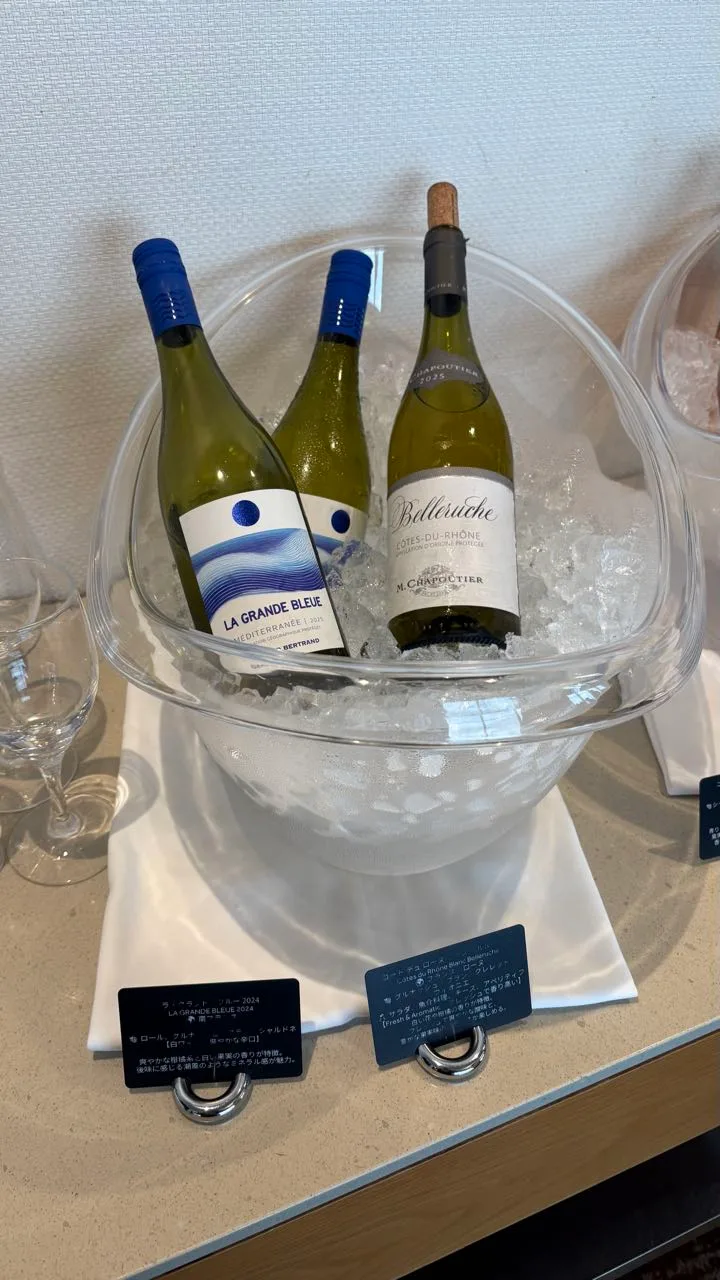
Two whites again: LA GRANDE BLEUE Méditerranée 2025 from Gérard Bertrand, and Côtes du Rhône Blanc Belleruche 2025 from M. Chapoutier. Watching from the first night, the pair is not replaced wholesale: one white changes each day, the other stays. The reds were the same as the night before, Familia Gascón Malbec 2024 from Mendoza and Terre de’Priori Chianti from Tuscany.
With the white we took tonchan and tortilla chips, and all three dips. The tonchan is strongly flavoured: ginger through it, which lifts it, but the miso makes it properly salty — a good thing to drink with, and a thing to think about the following morning.
Of the dips, the mentaiko sour cream is the one to know about. The first taste is a question mark; the second is cured cod roe in cream, and then it will not leave you alone. The hummus tastes faintly of soybean — “it tastes of kinako, but it’s good,” said my wife — and the tomato salsa has a real amount of heat in it.
Later, with red, we went back for the soup and more tonchan; the earlier tray had been short on meat, and the refill had plenty of thin-sliced pork, which suited the meat eater among us.
One more thing worth doing here: toast a slice of the baguette, butter it, and spread the mentaiko sour cream on top. Baguette and butter alone is already good; with mentaiko, also good. Then cake and pineapple — the pineapple here is very sweet, and we eat it morning and evening — more red, more snacks, and the last glass was white again.
Would we do this again
Yes, and the reason is the turnover: three nights in, three completely different sets of four hot dishes, and a new white every evening. A five-night stay here is five different dinners without leaving the building, and the bill inside the hotel on this day was ¥0 again — breakfast, cocktail time, nothing extra for the gym or the rock bath.
Honestly, though: the Egg Royale was not for us, so if the dish of the day is your reason for going up, it is a lottery. The tonchan is the dish we kept going back to, and salty enough that we thought about the next morning. And the one-hour sentence is real, so treat 17:00 as the time to be there rather than a suggestion.
The part we cannot put in a list is the staff member who knew, a year later, that we take fried eggs — and the same team remaking one because a jug of vinegared soy sauce got mixed up with the plain kind.
Practical bits
- Cost: ¥0 for breakfast and ¥0 for cocktail time in August 2026, both included with Executive Lounge access. We get in on Hilton Diamond status.
- The one-hour thing: staff told us that if the lounge filled up completely, they might ask each party to keep it to one hour. It did not happen to us; whether it is ever applied, we didn’t check. Going in early is the only lever you have.
- Cocktail time opens at 17:00, per our first night here. We went in early because the previous evening had been busy; how full it got later, we didn’t check.
- Breakfast dish of the day: signed “Today’s Plate” in English, changes daily, brought to the table rather than taken from the counter. One plate between two worked.
- Eggs: made to order, and staff asked how we wanted them. What came alongside was vinegared soy sauce — if you want plain, say so, and know it may get the egg remade.
- Language: hot-dish cards are Japanese with English underneath (“Silver-Striped Round Herring Tempura”, “Japanese Leek and Tuna soup”). The tasting notes beside the wines are Japanese.
- Rotation: four hot dishes, replaced every night — Japanese, Western, then a different Japanese set. One of the two open whites changed daily.
- Gym and rock bath: nothing extra paid for either. The gym was less busy than the afternoon before. Opening hours, smoking, and whether anything can be charged to the room: we didn’t check.
Facts checked 2026-09-04. Prices, hours and menus are what we saw on our visit; they change. Nothing here was sponsored or comped.