La Vista Hakodate Bay breakfast buffet: the all-you-can-pile ikura bowl, and how to eat it
This article contains affiliate links to hotel booking sites; if you book through one we may earn a small commission at no cost to you. How that works.
We spent two nights at La Vista Hakodate Bay in March 2026, and we went for three things: a good breakfast, a hot spring bath, and drinking somewhere near the front door. We did almost no sightseeing, as usual. The buffet lets you spoon salmon roe onto rice with no limit, the bath runs straight from the source, and the izakaya are a few minutes’ walk. That was enough of a plan for a whole trip.
Two nights, two seafood izakaya — and we came out of them agreeing on something we did not expect to conclude in Hakodate, which is that we would rather have the fish grilled.
The taxi from Hakodate Airport was ¥4,590 (about $31) on the meter, at ¥150 to the dollar, the rate we use here. A full-size van pulled up for the two of us, and we hesitated long enough for the dispatcher to tell us the fare is the same whatever turns up.
The ikura, and the mistake we made on morning one
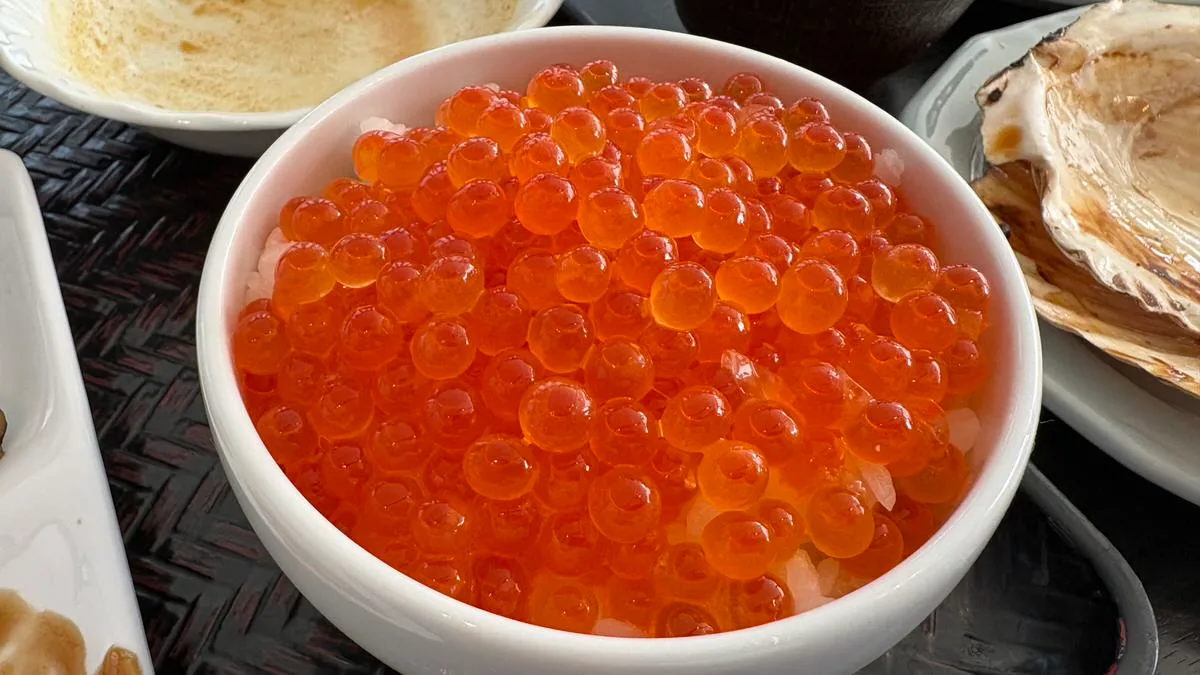
Breakfast is in a room called Kita no Banya, and the draw is a tub of ikura — cured salmon roe — that you help yourself to, next to the rice and a crab rice dish.
The first thing that registers is the size of the grains — bigger than the ikura we buy back home, and not by a little. So we built the bowl we had been imagining: a modest amount of rice, a great deal of roe.
That was the mistake. The ikura is properly salty, and salt runs through plain rice faster than we had budgeted for. We went back for rice on its own. There was still roe left. Both of us ended up putting away three bowls of rice on ikura alone, and by then breakfast was over as a project.
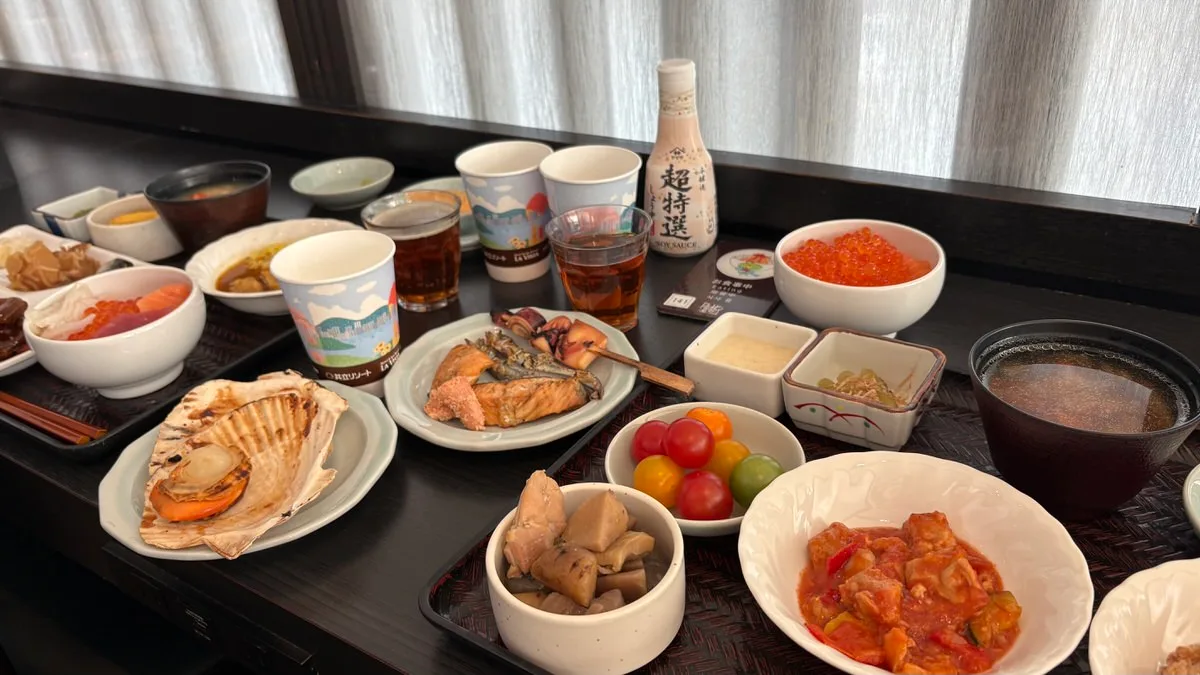
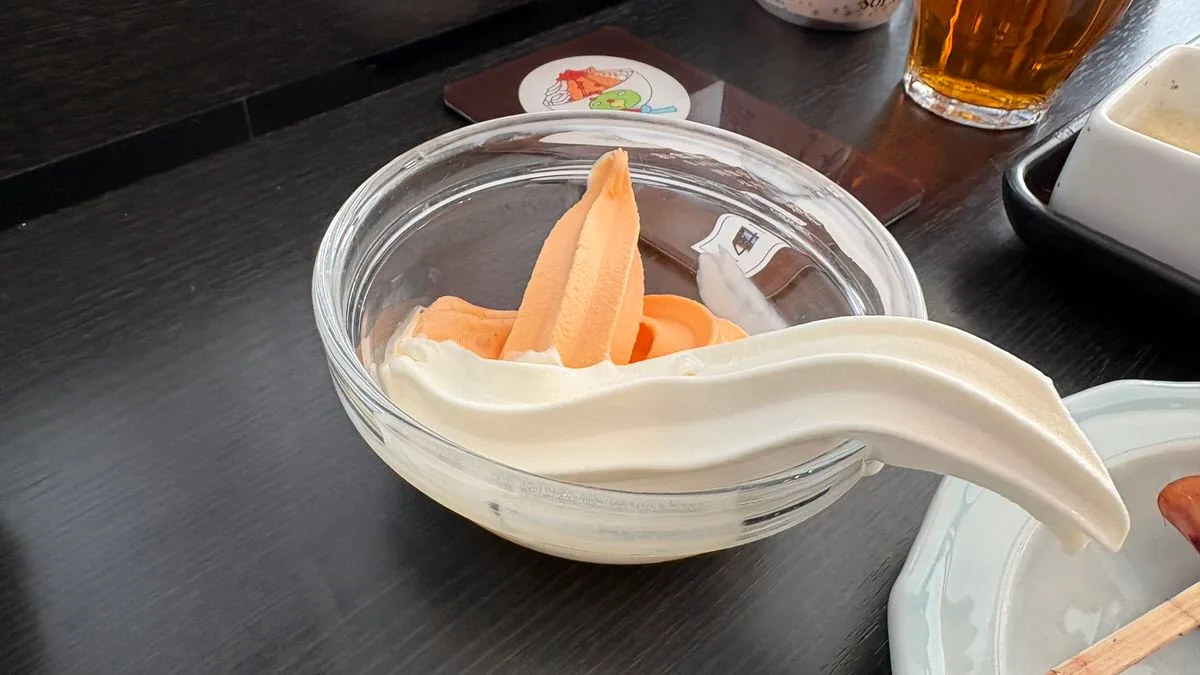
On the first morning we took a little of most of the rest: zangi, the Hokkaido style of fried chicken; soup curry; ikameshi, squid stuffed with rice; grilled scallops; grilled salmon; squid on skewers. Dessert was pudding and soft serve in melon and milk — the milk one tasting like a dairy farm, better than buffet soft serve usually is.
Then the salt caught up with us: the rest of the morning went on oolong tea and lying in the room. The afternoon: a walk to the red brick warehouses, the bath, and three rounds in the sauna to work off the carbohydrates.
Morning two, and my wife’s fix
On the second morning we switched to a shortlist: fewer things, chosen on purpose.
At the grill station the scallops from the day before had been replaced by shrimp and bamboo shoot — the shrimp firm, the bamboo shoot sweet and crisp. We went back for both.
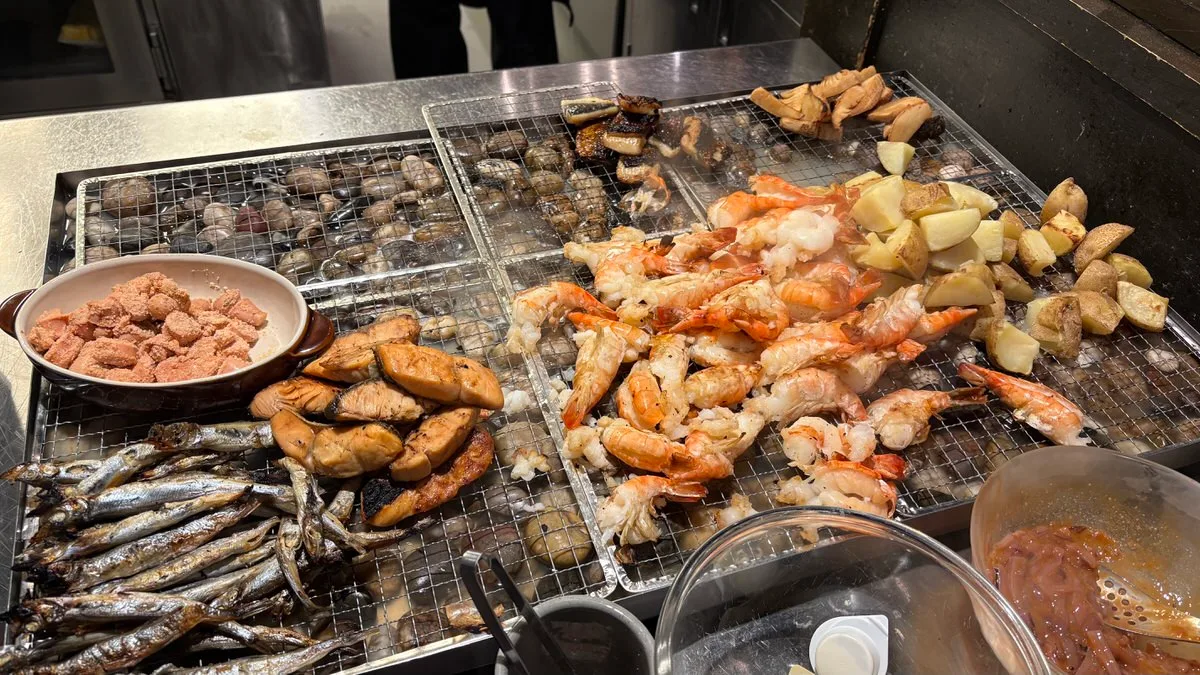
Two other things earned the detour. A simmered dish labelled kasube, taken because we could not place the name; a look-up said skate wing — crunchy cartilage, more fat than you would guess, good. And the shredded crab off the top of the kanimeshi, which we had taken for plain crab. It is cooked with dashi, and it carries.
And then the ikura, where my wife worked out what had gone wrong.
“Putting the roe straight onto hot rice warms it up, and I think it loses something.”
So: roe in one bowl, rice in the other, the rice left to cool for a moment, the two eaten alternately rather than together. Less of both than the day before.
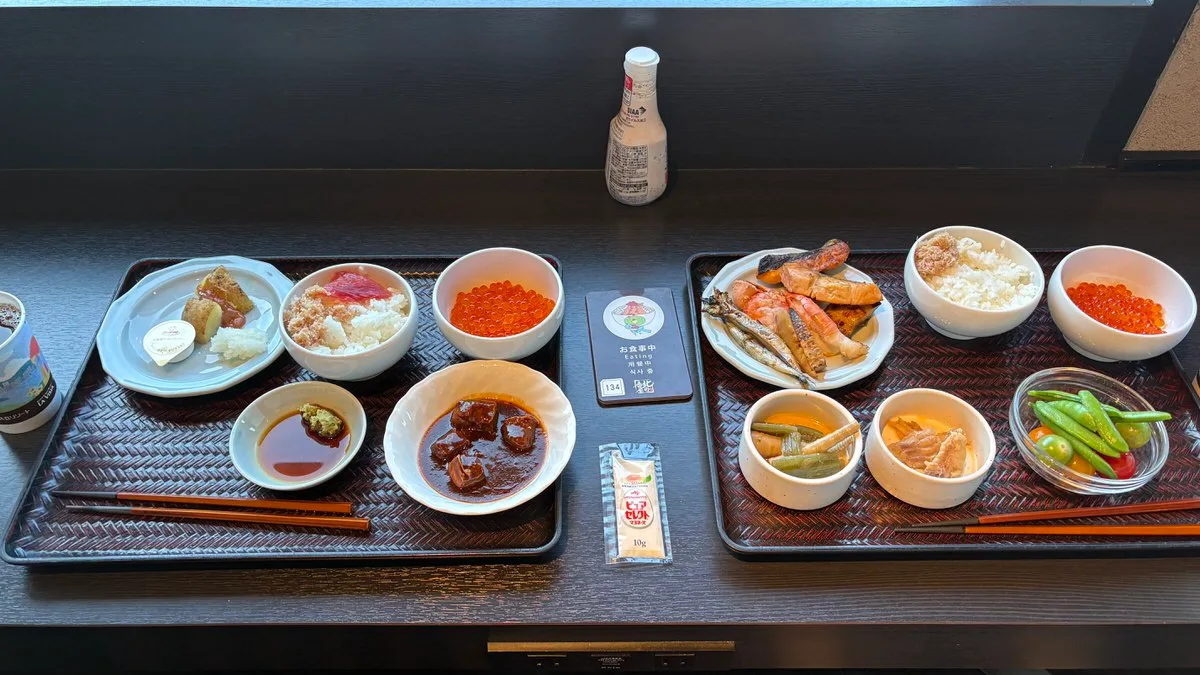
It worked. Cold roe against warm-but-not-hot rice kept the temperature gap that collapsed on morning one, and the second breakfast was a clear step up. We still went back for more rice, and finished with the milk soft serve, better swirled.
Two izakaya nights, and why we ended up ordering everything grilled
The first evening, after the sauna, we walked about three minutes to a seafood izakaya called Kaiju. Large live tanks in the room, with crab, flounder and scallops in them.
A Sapporo Classic draft is ¥700. The otoshi — the small dish that arrives unordered and is charged for — was crab dressed with mayonnaise. Not a fancy way to serve crab, and exactly the right start.
With the tanks right there we spent on live squid sashimi, ¥3,800 (about $25). We had expected Hakodate squid to be firm; it was soft and sweet. A look-up said that at this time of year it is yariika, spear squid, not the surumeika we had in mind — smaller, and more delicate for it.
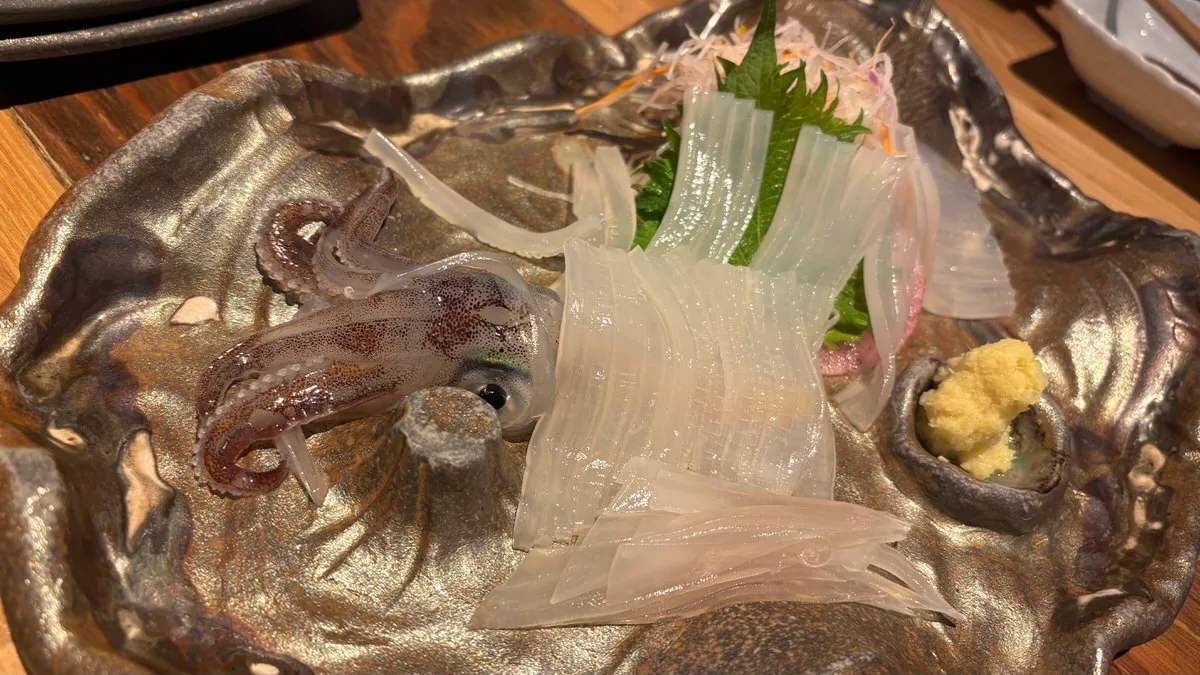
The sashimi assortment, ¥2,290, comes with two slices of each fish even at a single portion; a white cube we could not place was octopus head, per the staff — crisper than raw legs, so boiled, we assume.
Then we had the legs of that squid fried as tempura, and that is where the evening turned. One bite each, and we looked at each other.
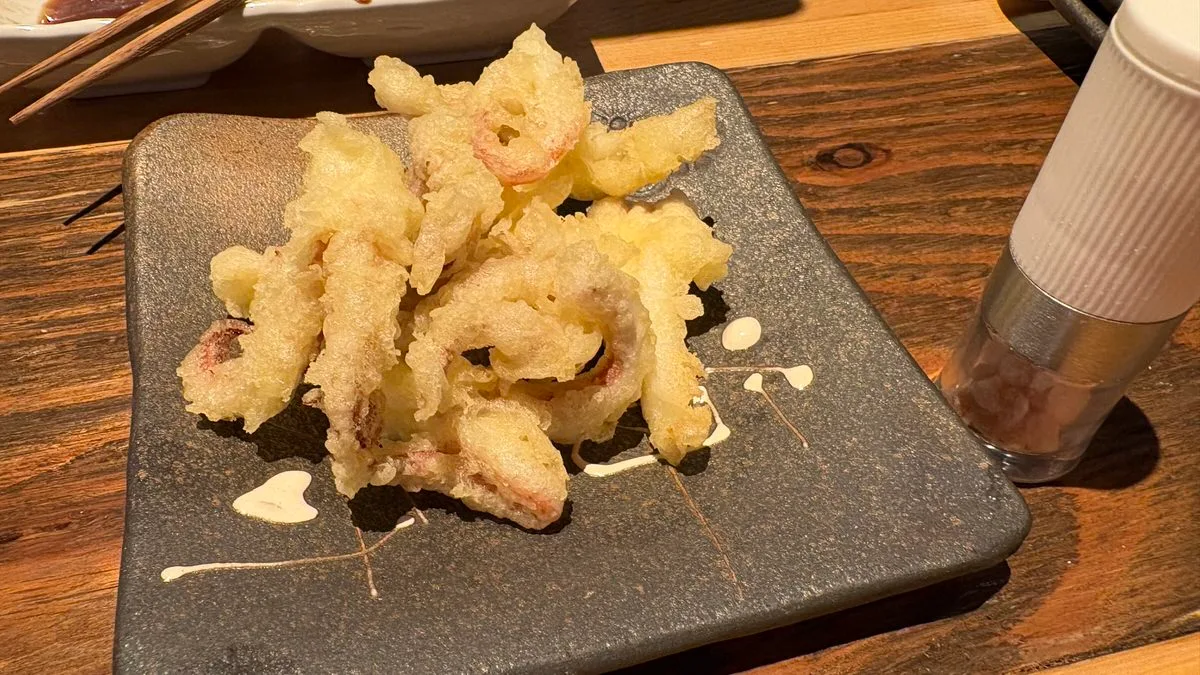
Both of us eat raw fish more happily than we used to. But something hot — off a fire or out of a fryer — reassures us in a way raw fish does not, and on raw white fish we agree: without fat there is not much flavour. Fish and meat, we would rather have them grilled. So we ordered grilled botan shrimp, three for ¥1,280, and ika-goro teppanyaki, squid liver on a hot plate, ¥1,350.
The shrimp you eat whole, dodging the whiskers. The squid liver is all funk and hard salt and it steals sake; two tokubetsu junmai at ¥990 each went down over it, after a 90ml pour of a Hakodate-only junmai ginjo called Gasubari, ¥920. We finished on shochu sodas — corn (¥750), then Nikka barley (¥620) — with a grilled scallop halved for us (¥1,380) and charcoal-grilled Shiretoko jidori chicken (¥1,160).
Over the chicken, my wife said the quiet part. “Isn’t this better if you buy a thigh at the supermarket and do it under our own grill on high?” We had been thinking the same thing.
The bill for two came to ¥21,150 (about $141) including tax. Good food, real tanks. Still, we walked back saying that ¥20,000 spent back home might have bought better drinking. The people around us were eating crab; we looked at the price and did not, which may be the whole explanation.
Night two: the phantom fish that wasn’t
The second evening we went one minute from the hotel to Miyabiya, cheaper and looser — closer to a family restaurant than Kaiju.
The otoshi was potato salad and matsumae-zuke with shiso seeds in it, and the aroma of those seeds was so good — my wife said so first — that we rationed it through the beer (Perfect Classic, medium glass, ¥700).
Then the kue sashimi, ¥2,000, sold as the phantom fish. It tasted like ordinary white fish. The phone told us to look for the springy texture and the sweet fat that comes out as you chew, and to use salt rather than soy sauce. We tried the salt. The flesh was just hard, and chewing brought up something fishy rather than sweet.
“Maybe kue is still too advanced for us.”
Chutoro, ¥1,800, was better — more fat, closer to what we like — but sinewy, and faintly fishy too.
The crab cream croquette, ¥980, was full of crab and properly hot, and tasted much like the supermarket ones back home. That became the theme of the night.
Then the recommendation: half a toro hokke, grilled, ¥1,580. It arrived smelling like an aged steak taken a step further — the word that came to mind was dishrag. A look-up said flatly that a dishrag smell in hokke is a quality problem, not aging. Not bad enough to be inedible, and we did not want to waste it, so we ate the whole thing.
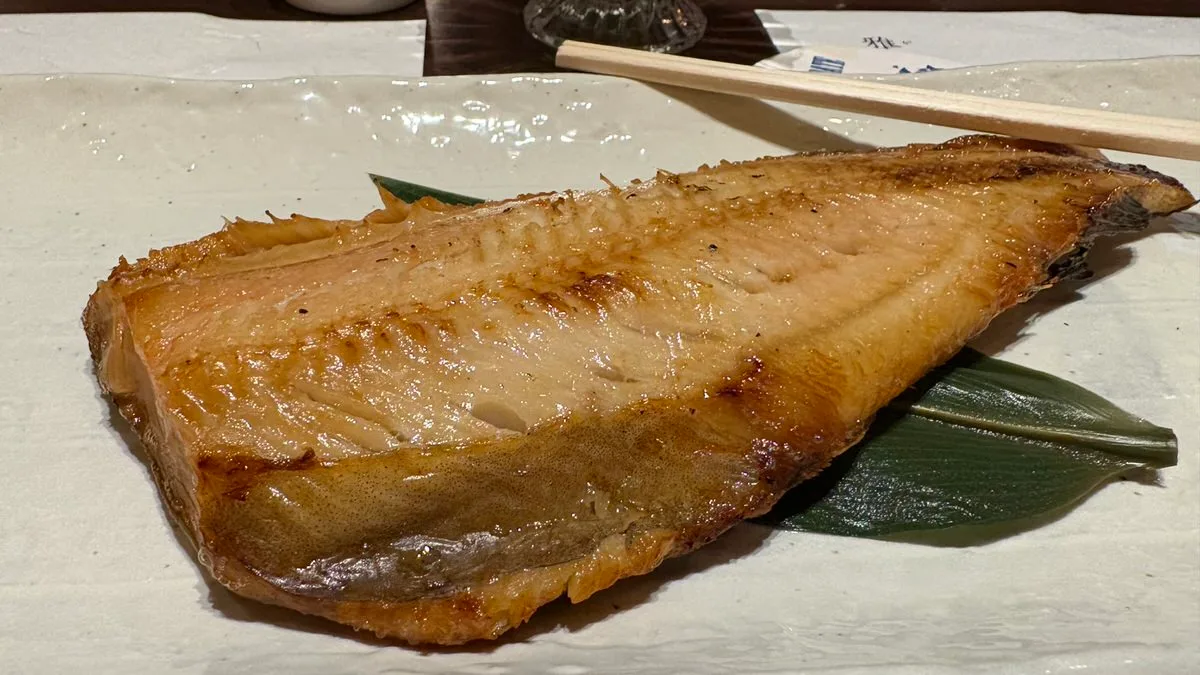
The sake we ordered afterwards to clear our palates (Hakodate Bugyo junmai ginjo, one go, ¥950) was not to our taste either. An earlier pour — Otokoyama Risshun Asashibori, unpasteurised and undiluted, ¥1,500 — was clean and easy and exactly what we like.
The best thing on the table cost ¥500 — house-made komochi kombu, herring roe on kelp, salted just right and popping between the teeth. That and the otoshi were what Miyabiya was for. The bill: ¥14,641 (about $98) including tax.
Would we go back
To the hotel, yes, mostly for that breakfast. The ikura is bigger than what we can buy at home, the bath and sauna do their job, and it is a short walk to somewhere to drink — roughly our whole specification for a hotel.
The izakaya are the honest part. Both were fine. Neither made us feel that Hakodate had bought us something we could not get closer to home, and one served a fish with a smell. If we come back we will do the thing we flinched at and order the crab out of the tank — we suspect that is the meal we skipped.
On the raw-versus-grilled question, two nights of expensive fish only made us surer. Grill it.
Practical bits
- Breakfast is at Kita no Banya inside the hotel; the ikura is self-serve with no limit. We did not check what it costs on its own.
- Take rice and roe in separate bowls — warm rice under cold roe is what made our first bowl worse than our second.
- The bath is a large public bath with a sauna, hot spring water run lukewarm and straight from the source. We used it on both of the first two days.
- Kaiju, about a three-minute walk: seafood izakaya with live tanks. Draft beer ¥700, live squid sashimi ¥3,800, sashimi assortment ¥2,290, grilled botan shrimp (3) ¥1,280, grilled scallop ¥1,380. Bill for two, sake and shochu included, ¥21,150 including tax. We did not note the otoshi price.
- Miyabiya, about a one-minute walk: cheaper and more casual. Beer ¥700, kue sashimi ¥2,000, chutoro ¥1,800, komochi kombu ¥500, grilled hokke ¥1,580. Bill for two, ¥14,641 including tax.
- English menus, card payment, smoking rules and reservations at either izakaya: we didn’t check.
- All prices are what we paid in March 2026, tax included where stated.
The last thing we did was pick at a cold bento on the flight home with a glass of sparkling wine. Ikura until we could not move, a sauna, and two dinners worth complaining about together — most of what we go anywhere for.
Facts checked 2026-08-18. Prices, hours and menus are what we saw on our visit; they change. Nothing here was sponsored or comped.