Sapporo Prince Hotel breakfast buffet: what the renovation took away, and what came back
This article contains affiliate links to hotel booking sites; if you book through one we may earn a small commission at no cost to you. How that works.
We have stayed at the Sapporo Prince Hotel often enough that the woman at the breakfast desk knows us. We book it for two things: the hot spring bath, and the breakfast buffet in Grandeur, the all-day restaurant on the first floor. Breakfast is included in the room rate.
In April 2026 we had five nights here. On our previous stay Grandeur was closed for renovation and breakfast was served in an annex, so this was our first morning in the new room. We went down excited and came back up quiet. Then we returned in June, and it had changed again — which matters if you pick hotels by their breakfast.
What was gone
Four things used to get us out of bed here: grilled komai, a small northern cod; salmon chanchan-yaki, cooked with miso; chep-ohau, an Ainu fish soup my wife had every morning; and the seafood-bowl corner, where you piled on as much ikura as you liked.
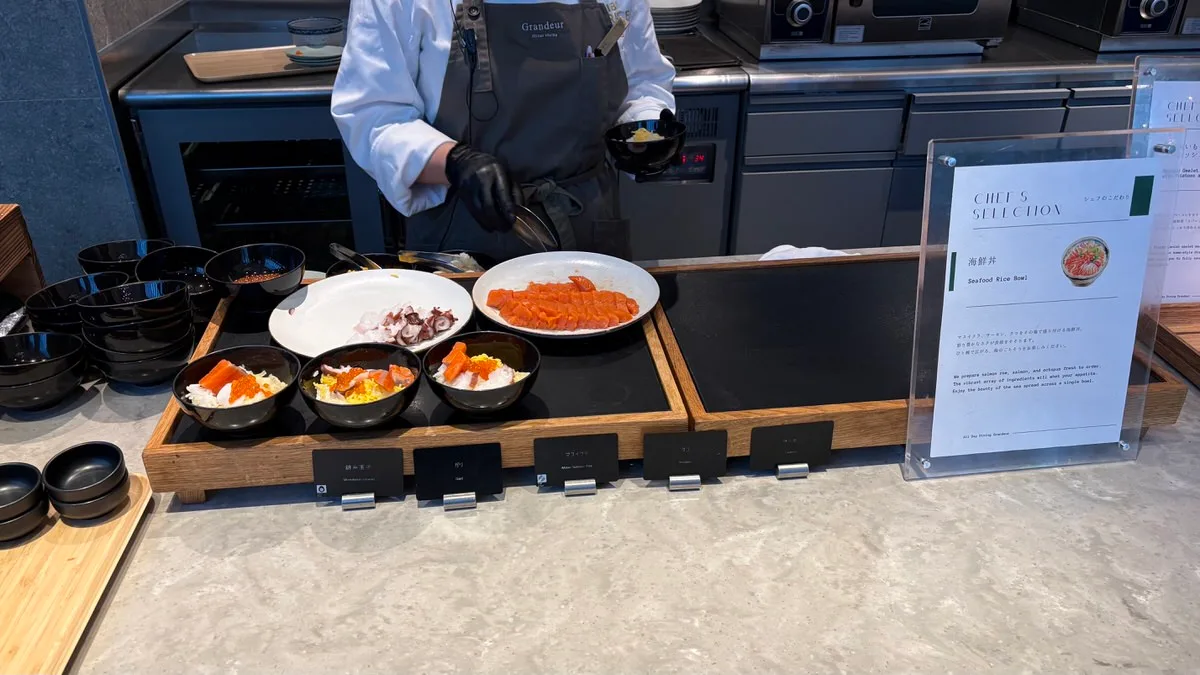
That first April morning, the komai was not there. Neither was the chep-ohau — we looked over the live kitchen once more to be sure. “It could be made with hokke, or komai, or whatever fish they bought,” my wife said. “Why drop it?” The seafood bowl survived, but a chef builds it for you now, which ends the pile-your-own-ikura arrangement.
Two more gaps. My wife stopped in front of one: “The soft serve machine is gone.” And there was no egg station — one of us used to have a fried egg made to order and build a rice bowl with natto and that egg on top. We asked the live-kitchen staff whether a fried egg was still possible. One word: no.
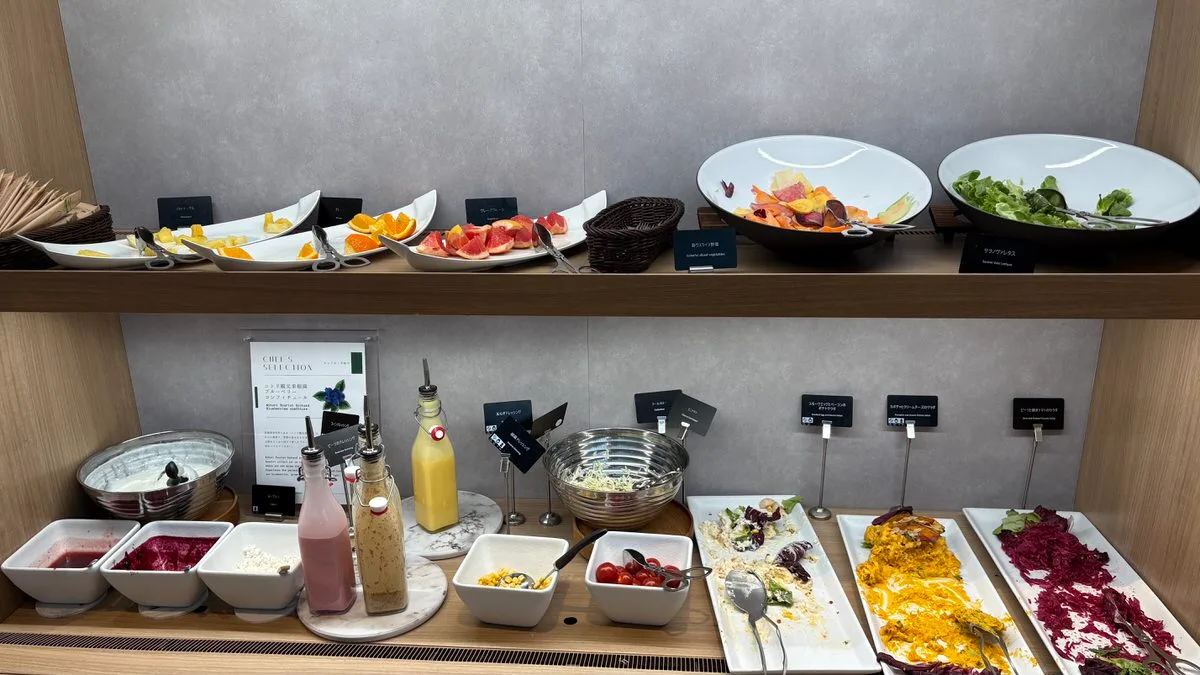
The salad corner had lost the seaweed, broccoli and okra, and gained potato salad, kabocha salad, and beetroot with roasted tomato. Four dressings: sesame, corn, beetroot, onion.
My wife’s verdict after one lap: “They have downgraded this quite a bit.” We wondered whether the renovation had eaten the budget — a guess, nothing more.
What is actually on it
April 2026, as we saw it. A bar counter at the entrance holds milk, tomato juice, Katsugen and coffee, and sparkling wine in the morning has survived — we have still never had a glass, because we save everything for the evening.
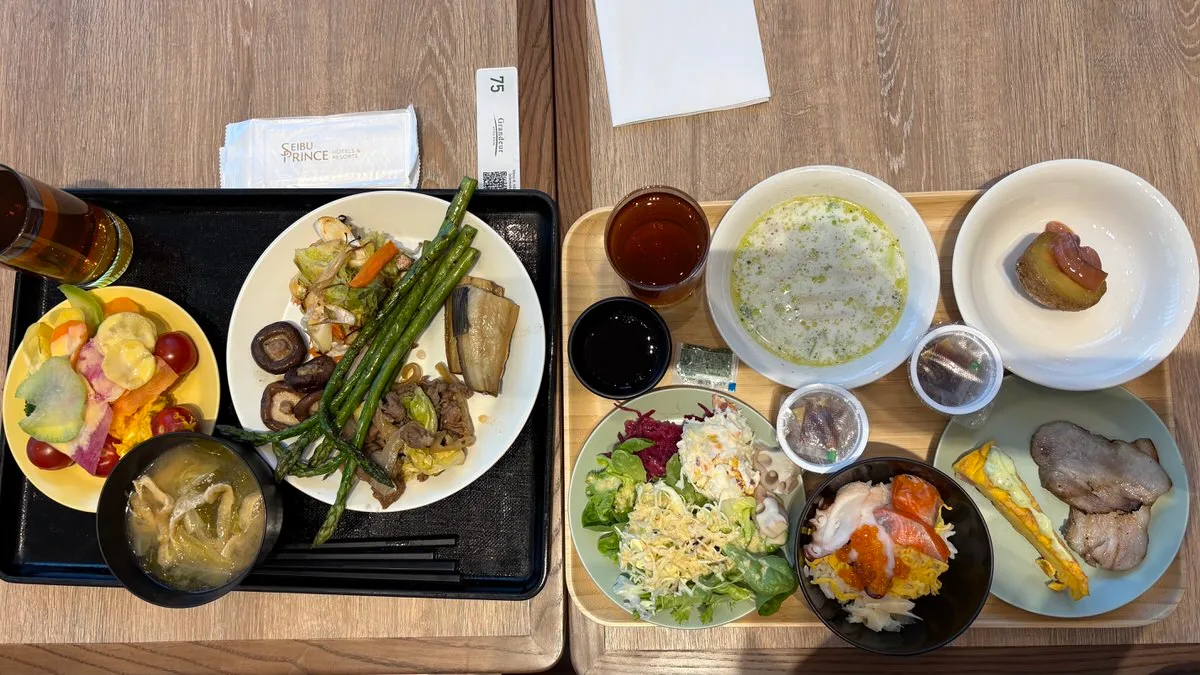
At the live kitchen: asparagus grilled in a heap, Hokkaido bacon and shiitake beside it, miso ramen, the chef’s-selection seafood bowl (salmon, octopus, shredded egg, gari, a little ikura), a large croissant, pudding, açaí smoothie. On the hot counter, jingisukan — grilled lamb — plus grilled hokke and the chanchan-yaki that did survive. Behind that, a rice-portioning machine, things to put on it (the nagaimo pickle we remembered is still there), natto, rice porridge, and miso soup of cabbage and abura-age with tororo kombu to add yourself.
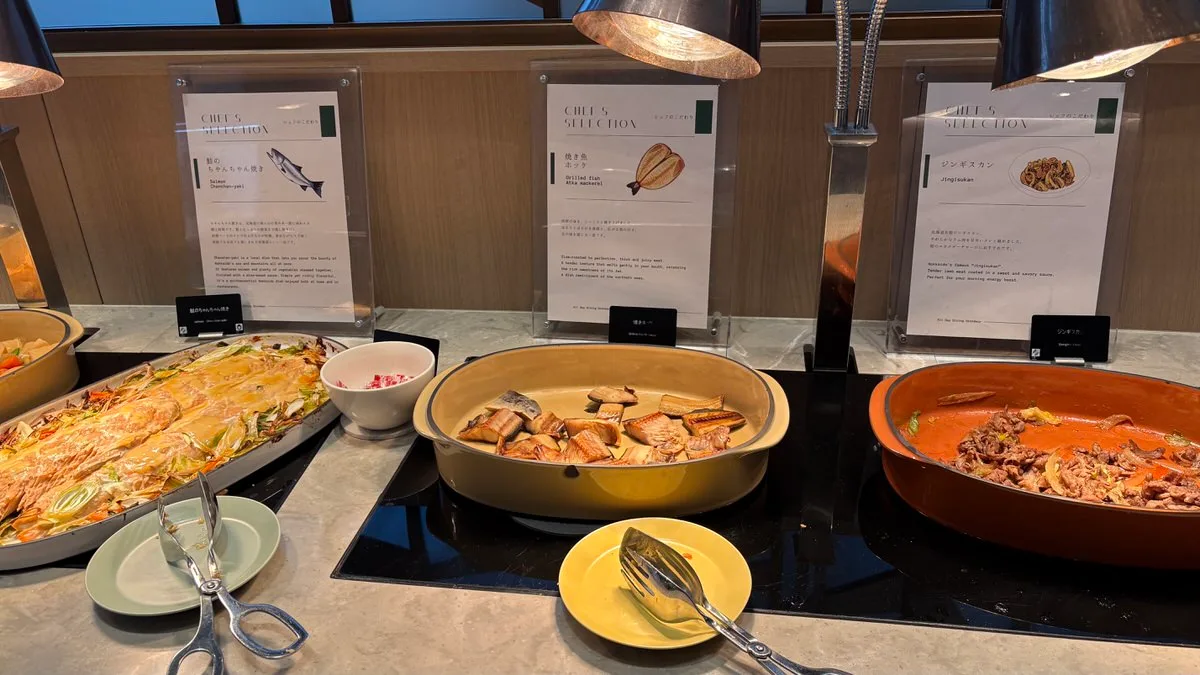
We guessed the hot dishes rotate daily, and the next morning confirmed it: nikujaga became simmered fuki and ganmo, the hokke became mackerel, the jingisukan became a pork bowl, the miso soup changed. Finding the pattern cheered us up more than it should have.
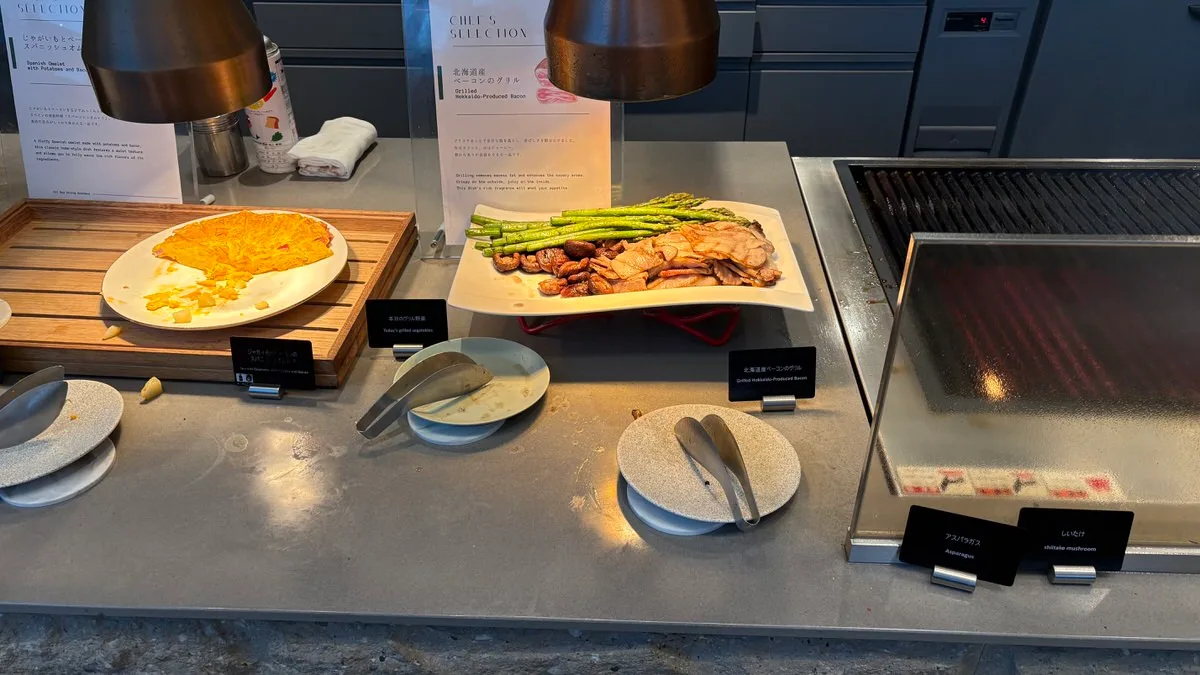
What we liked: the asparagus, thick and crisp, and expensive if you order it in a restaurant here. The bacon was grilled hard and salted well, though my wife finds heavy pork fat difficult and was lukewarm. Her corn dressing tasted exactly like a bottle we sometimes buy and use at home. The chanchan-yaki and the jingisukan were reliably good — in the old, fish-heavy lineup we rarely bothered with the chanchan-yaki, and with fewer favourites left it will be our default. The hokke was clean, with no off smell, but the grilled hokke at the La Vista in Hakodate, where we had stayed shortly before, was a better piece of fish.
We tried the new miso ramen and the big croissant once each; the croissant made us both tilt our heads — “is this sandwich bread?” — and we did not plan to take either again. We still wanted the chep-ohau.
The ikura bowl, and the question we made ourselves ask
At that counter we only really care about the ikura: eat the salmon and octopus out of the way, then make the small heap of roe last.
Too little. And we had come from a Hakodate breakfast where the ikura was large-grained and unlimited, which did not help.
Then my wife said, quietly: “Tomorrow, shall we ask the chef for a bowl with just ikura?” We are not people who ask for special orders. But giving up the ikura bowl was worse, so the next morning one of us walked up to the live station and asked.
“Yes, of course.”
About three spoonfuls. Not unlimited, but unmistakably an ikura bowl. Over the next mornings we pushed — “a little more, please” — a slight increase, then five spoonfuls by the fourth morning. On the last morning, a different member of staff: “Sorry, we don’t do ikura bowls.” Four days of careful negotiation back to zero, on the way to the airport. You have to ask, and in April the answer depended on who was standing there.
Two months later, it had changed again
We were back in June 2026, braced for the same breakfast. It was not the same breakfast.
Porkchop — a pork dish we had not seen there before — had appeared, and Hokkaido salmon rolled in yuba where the chanchan-yaki used to be. Two grilled fish instead of one, salmon and mackerel. Tarako from Funka Bay among the rice toppings, korokke of Touya potatoes fried to order with small buns beside them for a korokke burger, and the miso ramen moved out to a help-yourself station. Still no fried eggs and no omelette, but an oeuf en cocotte in crab and tomato cream. The corn dressing survived. At the seafood counter the “kaisen-don” sign seemed to have gone; the little plates naming each topping were still there, as in April.
We had put all of our feelings about the ikura into the hotel’s guest questionnaire, and we have no idea whether that is why anything changed. What we know is that before we could get the question out, the staff member at the station — the same person who had made the bowls in April — said, “Ikura bowl, right?” and built a large one. We added tarako, then went back for more rice.
Where we drank, both a short walk away
An April day here is not complicated. The gym is ¥1,000 per person per day — ¥2,000 for the two of us, more than we will pay to walk on a machine — so we walked around Tanukikoji instead. The hot spring bath costs the same, and that one we pay every time: the unit bath in the room is not somewhere you can sit and do nothing.
Tap Room BEER KOTAN Sapporo Odori came out of a Google Maps search for craft beer: third floor of the Parade Building at Minami 2 Nishi 3, in Tanukikoji. The brewery is in Kamifurano, the only town in Hokkaido growing hops commercially; the name is “hop” plus the Ainu word kotan, village (company site, checked July 2026).
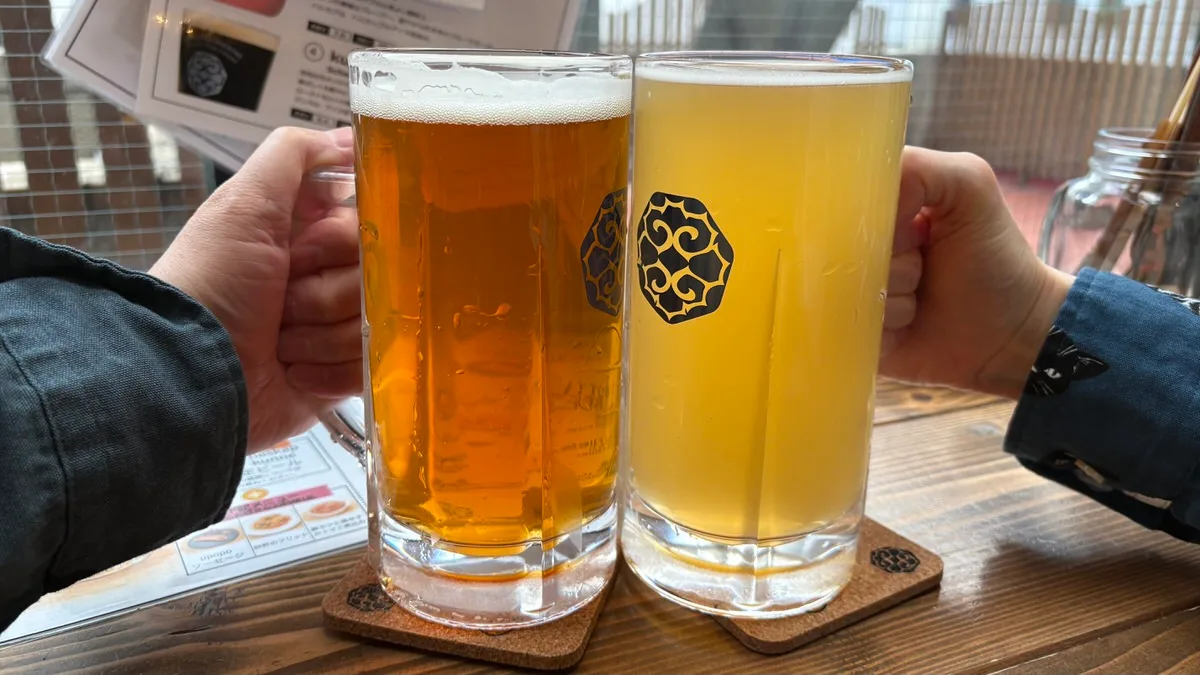
Monday to Thursday, 17:00 to 19:00, they run a set: any beer in a 630ml mug plus one dish, ¥2,000 (about $13, at ¥150 to the dollar, the rate we use here). We both took it — the Umemigachi ume saison and the nonno pale ale.
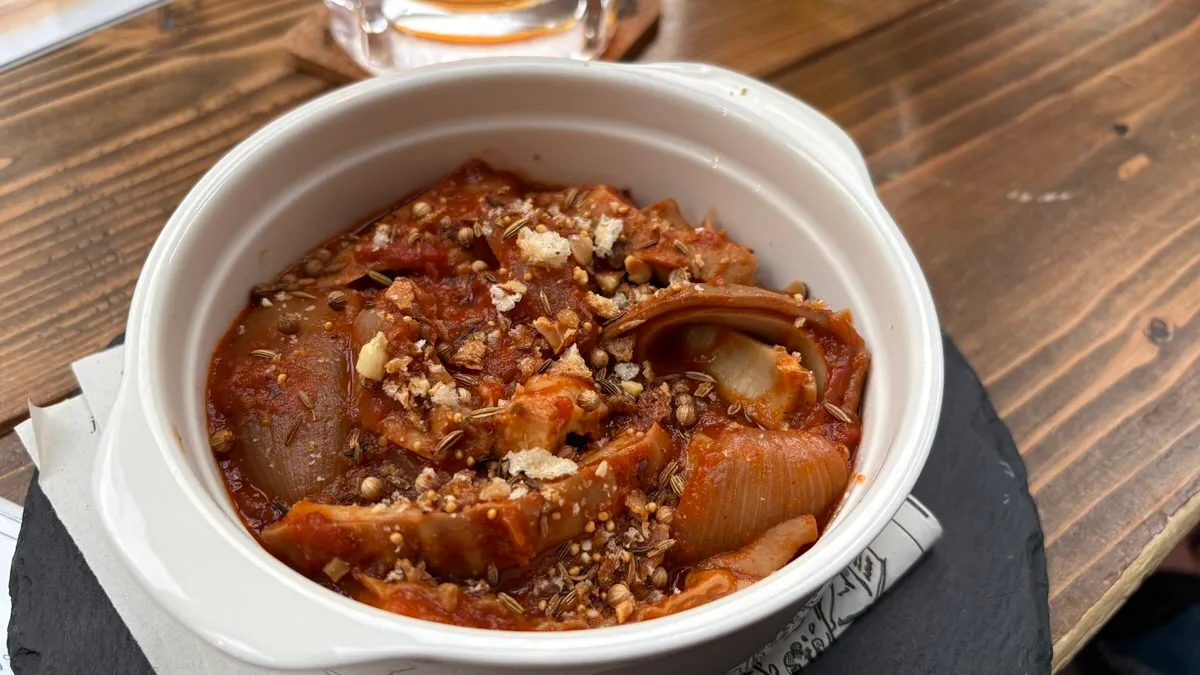
The set dish is one of three: upopo sausage (¥980 alone), gizzard fritto (¥880), or pork motsu stewed with chilli and tomato (¥880). All count as ¥750 inside the set, so the sausage is the value pick; we took the stew and the gizzards, because those are what we like.
Then grilled pork sagari (¥1,380) in a sizzling skillet, a second round of haskap fruit ale and BEER KOTAN IPA at ¥850 each, and fish and chips of Hokkaido seasonal fish (¥1,280) — red-fleshed, so we decided it was cherry salmon. Bill: ¥8,360 (about $56), the set saving the two of us ¥1,000.
Beer Club PALS, our standing second stop, is on the third floor of the M’s Building at Minami 3 Nishi 7 behind a sign you can walk straight past. Six taps and no fixed lineup — a beer changes whenever a keg blows (their site, checked July 2026) — plus inventive Chinese food. We drank SYNCHROHAZED (Streetlight Brewing, Sapporo; black hazy IPA, 7.5%) and Shin Asahi-oni IPA (Onidensetsu, Noboribetsu; west coast IPA, 7.5%). The otoshi — the small dish you did not order and pay for anyway — was smoked gizzard, ¥660 for two. We tried the new Hong Kong yakisoba with shrimp-roe powder (¥880), then ordered the egg fried rice (¥820) anyway.
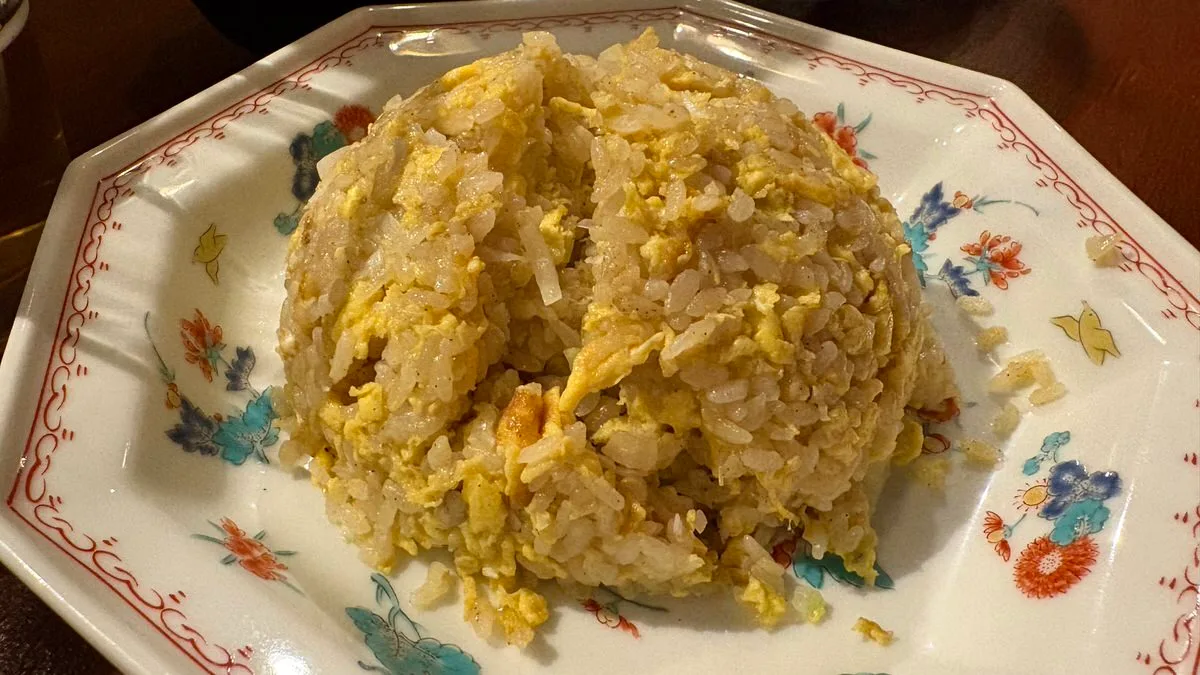
Bill: ¥7,340 (about $49). The evening came to ¥15,700 (about $105) for two, and somewhere in the beer the morning had stopped mattering.
Would we stay here again
We did — in June, same hotel — and we will keep doing it. But be clear about what you are booking. The April breakfast was worse than the one we had been coming for, and we said so. The bath is a paid extra. What makes the place work for us is the combination: breakfast included, a hot spring to sit in after a walk, and enough beer a few minutes away that no day needs planning. If you are choosing a Sapporo hotel on breakfast photos, note that this one changed twice in the two months we saw it, and the version you find may be neither of the two we ate.
Practical bits
- Breakfast is included in the room rate, at Grandeur on the first floor; hand your room key to the desk (April 2026).
- No made-to-order egg station in April 2026 — we asked, and a fried egg was not possible. June 2026: still no fried eggs or omelette, but an oeuf en cocotte in crab and tomato cream.
- Ikura bowl: not self-serve. Ask at the live kitchen. In April the answer depended on who was working; in June it was offered before we asked.
- Hot spring bath ¥1,000 per person per day, gym the same, both on top of the room rate (April 2026).
- BEER KOTAN’s weekday set — Monday to Thursday, 17:00 to 19:00, 630ml mug plus a dish, ¥2,000 — was on the menu on 21 April 2026.
- PALS: third floor, inconspicuous sign, card fine on our June 2026 visits. A booking site lists a reservation-only daytime drinking plan (checked July 2026).
- English menus, smoking rules, and evening reservations at either bar: we didn’t check.
The last thing we did on that April stay was ask for one more ikura bowl and get turned down. We went back anyway.
Facts checked 2026-08-18. Prices, hours and menus are what we saw on our visit; they change. Nothing here was sponsored or comped.