Nepalica, Sapporo: a clay-pot biryani finished at the table, and ¥14,800 for two
This article contains affiliate links to hotel booking sites; if you book through one we may earn a small commission at no cost to you. How that works.
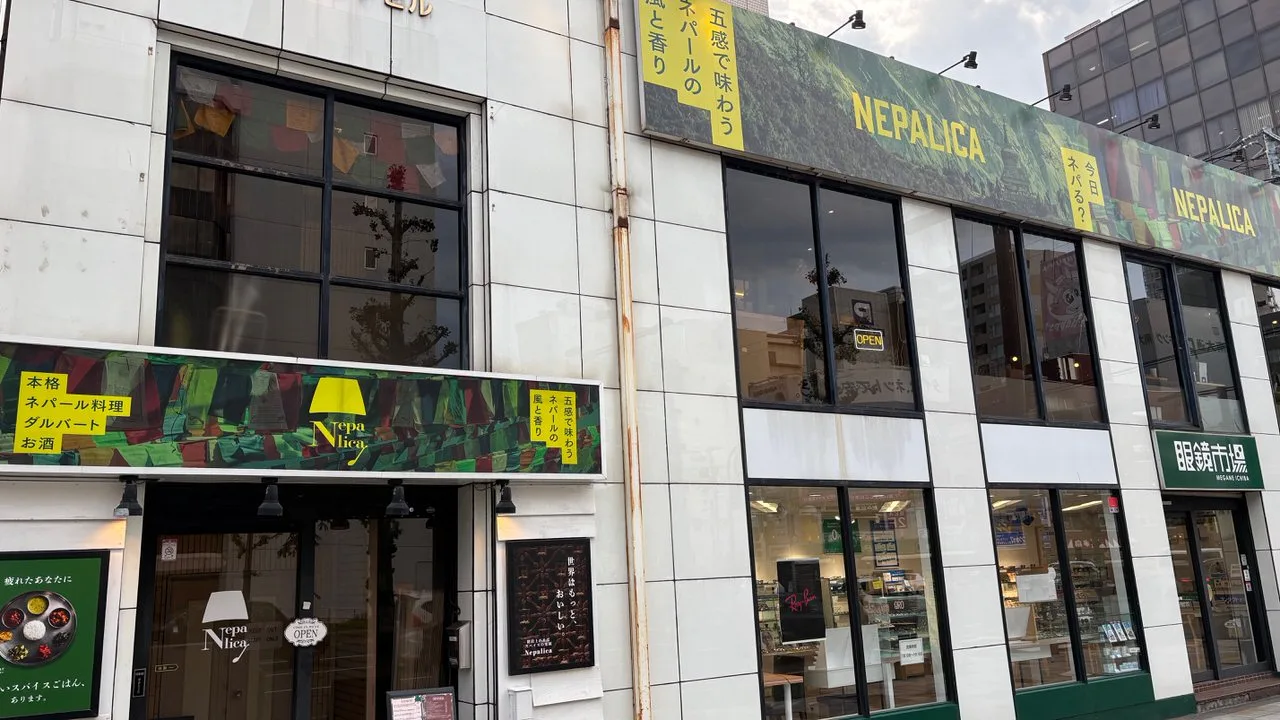
Nepalica is on the second floor of a building at Minami 1 Nishi 11 in central Sapporo, close to the Sapporo Prince Hotel, where we were staying. We had walked past it on the way to Hokkaido Jingu, and again on the way to Hokkaido University. “Nepali food, in Sapporo?” was the whole of our thinking, and it kept us outside for days.
On 17 June 2026 we went up the stairs, because both of us happened to want Nepali or Indian food on the same evening. Dinner for two came to ¥14,800 (about $99) on a card, at ¥150 to the dollar, the rate we use here.
The walk that made us hungry
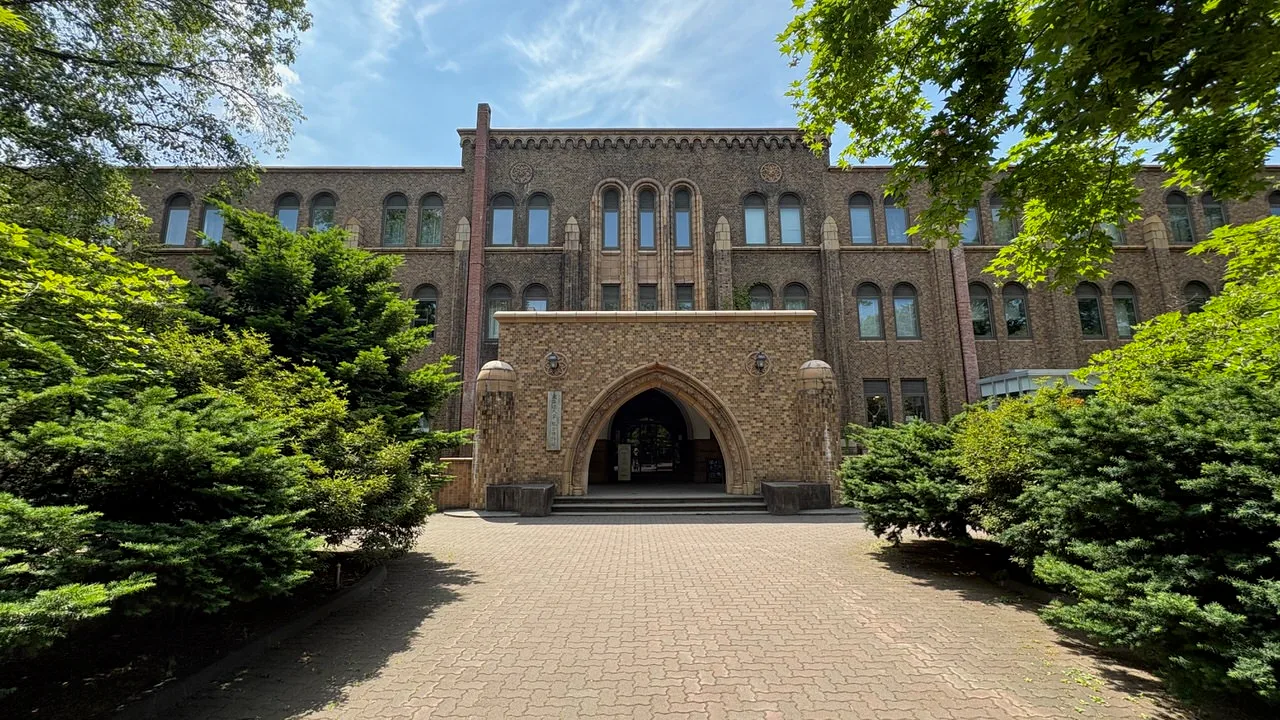
The day started with a fourth straight morning at the hotel buffet, which is its own story. Then we asked Gemini where to go, and it argued for the Hokkaido University campus: open to the public, green, “like a giant park”. The university co-op, said to sell things you cannot buy elsewhere, decided it.
It is 30 to 40 minutes on foot from the hotel, and the campus is enormous. We photographed the Clark statue and a couple of buildings that looked to us like something out of the Taisho era, then went into the Hokkaido University Museum because it looked quiet. Admission is free, and inside it smells like an old school. Dinosaurs of Hokudai, a mounted polar bear, a Kamuysaurus skeleton, a replica narwhal tusk, a mammoth — and then the thing that held us longest, a rig in the medical faculty’s booth for trying keyhole surgery. Forceps in each hand, eyes on a monitor, move the black rubber rings from here to there. Both of us tried; neither of us was any good; we stayed with it anyway.
The co-op goods, when we reached the Elm no Mori information centre, were not worth the walk — and then the whole distance home again. Good exercise, we agreed, in the tone people use when they mean it and regret it. A soak in the hotel’s onsen, and then dinner, chosen for being close.
Inside, at five o’clock
Two members of staff at the top of the stairs, both speaking fluent Japanese. It was around five, nobody else had arrived, and we were told to sit where we liked.
We read up on the place afterwards. It opened on 3 October 2024, so it is still new. Someone had been taken enough with a Nepali chef’s home cooking — fifteen years in a hotel in Nepal, ten more in Sapporo restaurants — to build a restaurant around it. What the shop says it is doing is home cooking from Nepal, not the pattern common in Japan of Nepali staff serving naan and butter chicken. The chef works with twenty-five spices, and the shop’s line is that in Nepal spices are medicine as well.
The menu takes a while. The signature is momo, the Nepali steamed dumpling. There was a card about pairing the lamb curry with wine. And there was a reward biryani set, dinner only, Wednesdays and Saturdays only, ¥7,980 (about $53) for two. It was a Wednesday, so we stopped reading.
What came out first
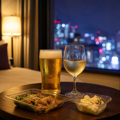
Sapporo Classic on draft, ¥560 a glass, and a toast.
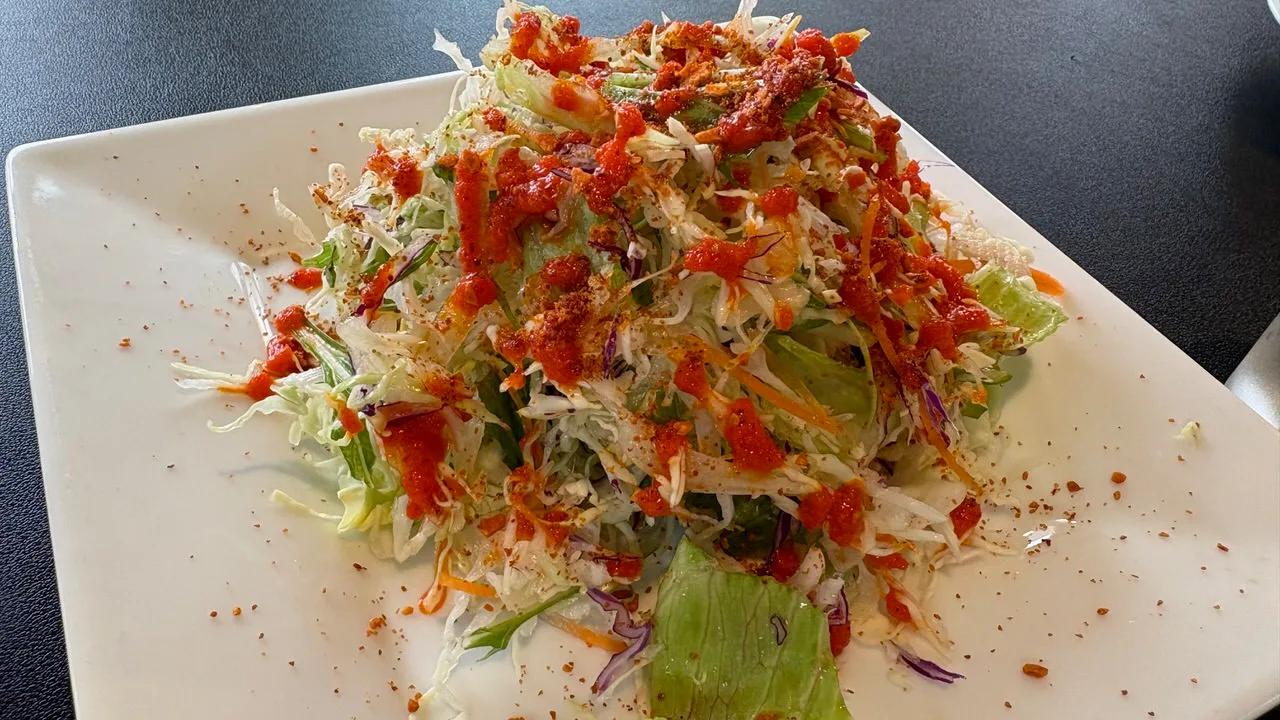
Spiced nuts first: peanuts with enough spice on them to count as a course rather than something to pick at. Then a green salad under the house-made carrot dressing, properly hot as well as spicy, tasting of somewhere else. My wife worked through it steadily.
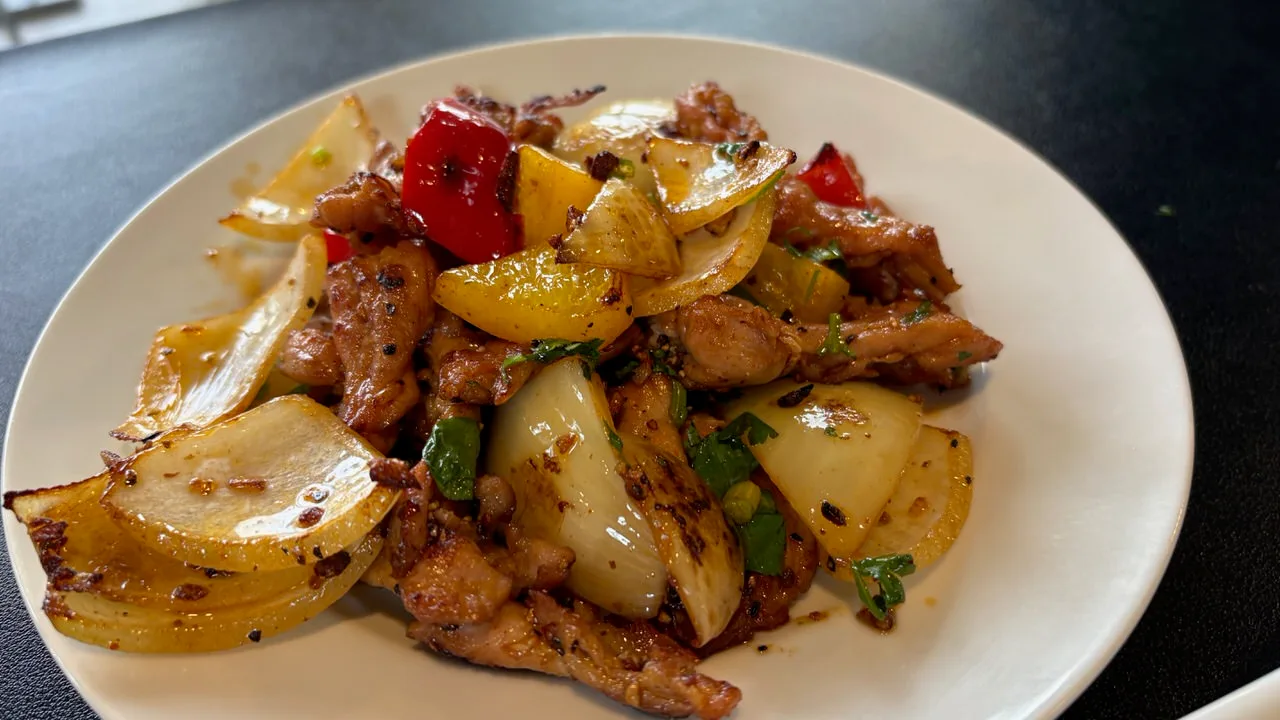
Then seseri — the neck meat of the chicken — stir-fried with onion and red and yellow peppers. Garlic, spice, salt level judged right; my wife said so too. The problem was the coriander, which came through strongly. We go to Mexico often enough that we had both assumed we were over coriander for good, but coriander in Japan seems to smell stronger, so we went back to an old habit and pushed it to the side of the plate. Underneath, the dish was very good, and everything so far had been spicy in the way that makes you order more.
The momo
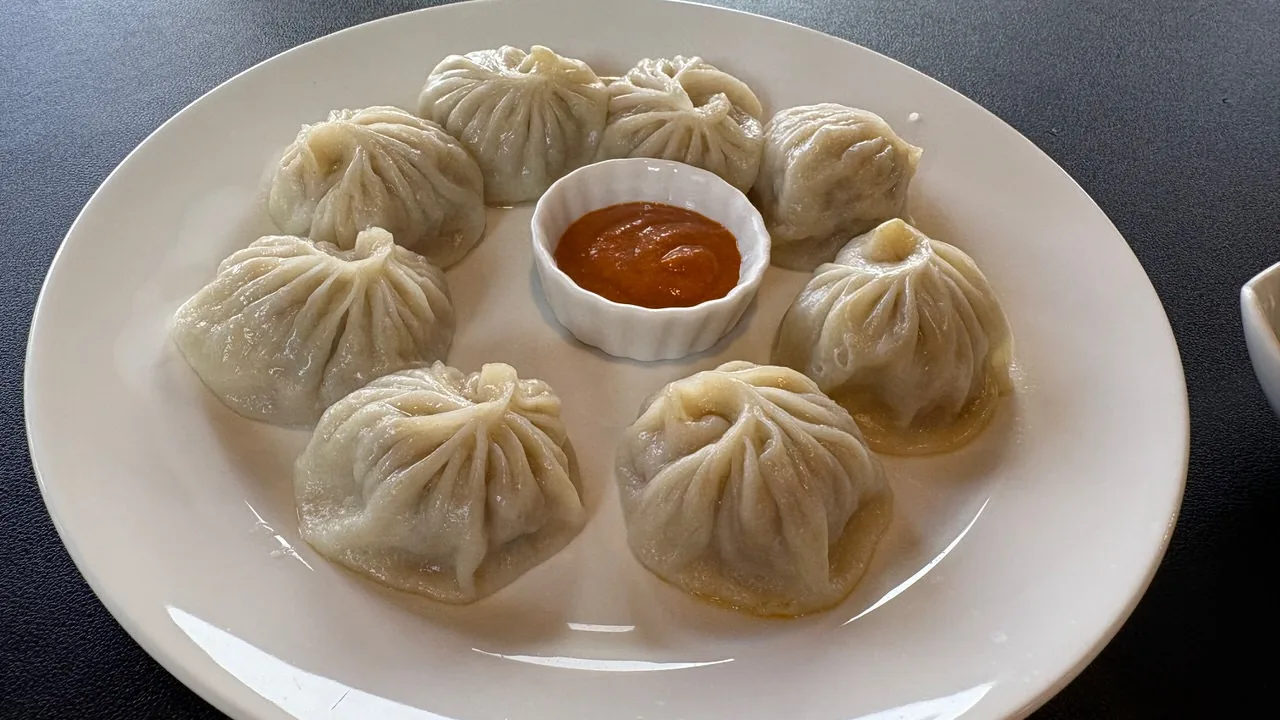
Eight of them on a plate around a small dish of red-orange sauce. You dip. The heat is real and it is not gyoza heat — a different set of spices doing the work — and there is soup inside as well, so there is something of the xiaolongbao about them. One of us has not eaten much momo, but one of us came away thinking these sat well above the level we knew. The wrappers are made in the shop, and they are the chef’s own first recommendation.
A white each, then a cold red
The beer went early, so we moved to white by the glass, ¥600 each: an Australian Semillon Chardonnay and a Spanish one from the Sauvignon Blanc side, a glass of each. The Australian is probably the dearer, and came with a firm oak smell and a sweetness behind it. The Spanish was lighter and easier to drink. Between the two of us, the Spanish won.
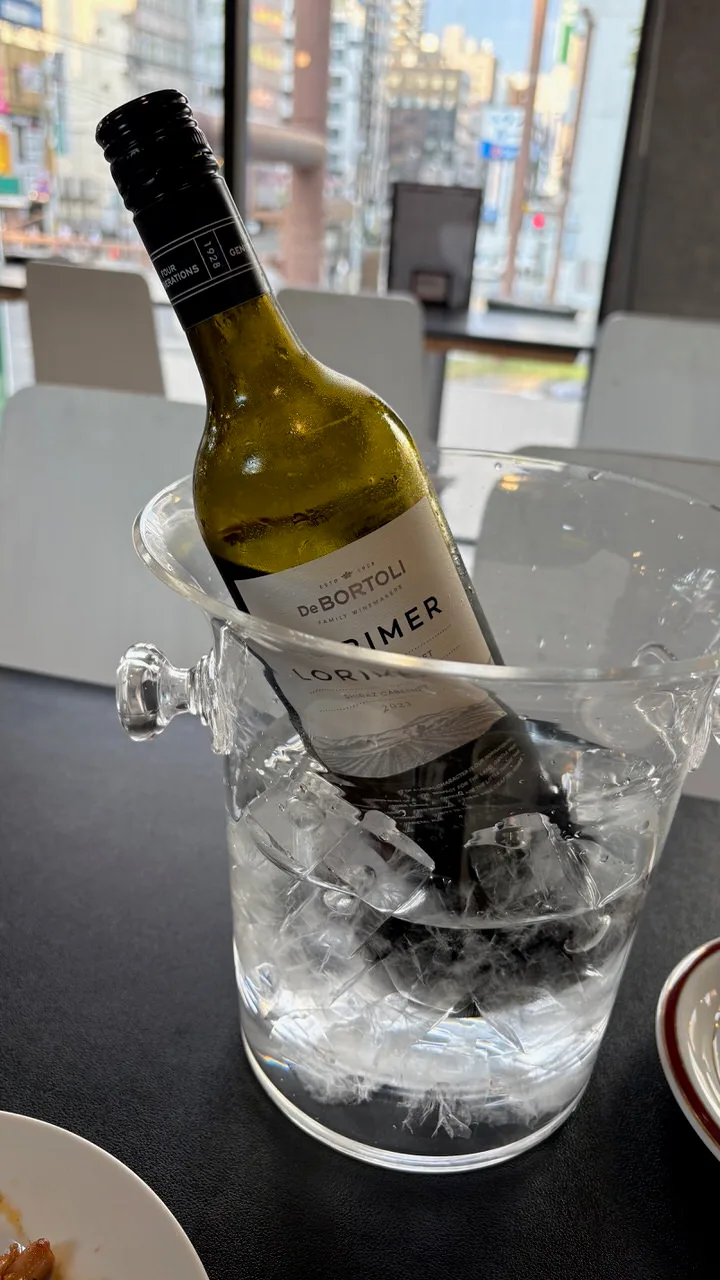
The white went early as well, so we called for a bottle of red: De Bortoli’s Lorimer Shiraz Cabernet, Australian, ¥4,500. It came very cold, standing in the ice-water bucket a white or a sparkling would normally be sitting in. Chilled red is how they serve it here.
Eight minutes, then three
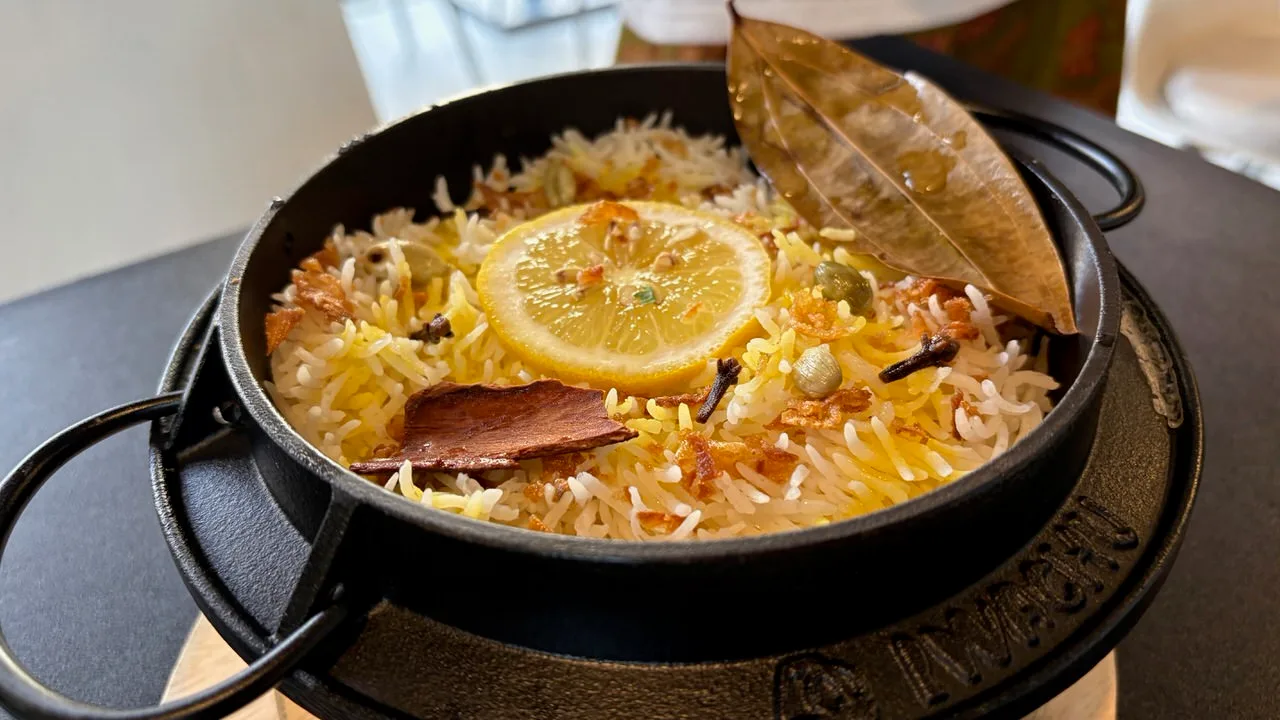
The biryani comes in a clay pot and is finished in front of you: a gas ring carried to the table, eight minutes over a low flame, then three more resting with the lid weighted down by a hand in an oven mitt.
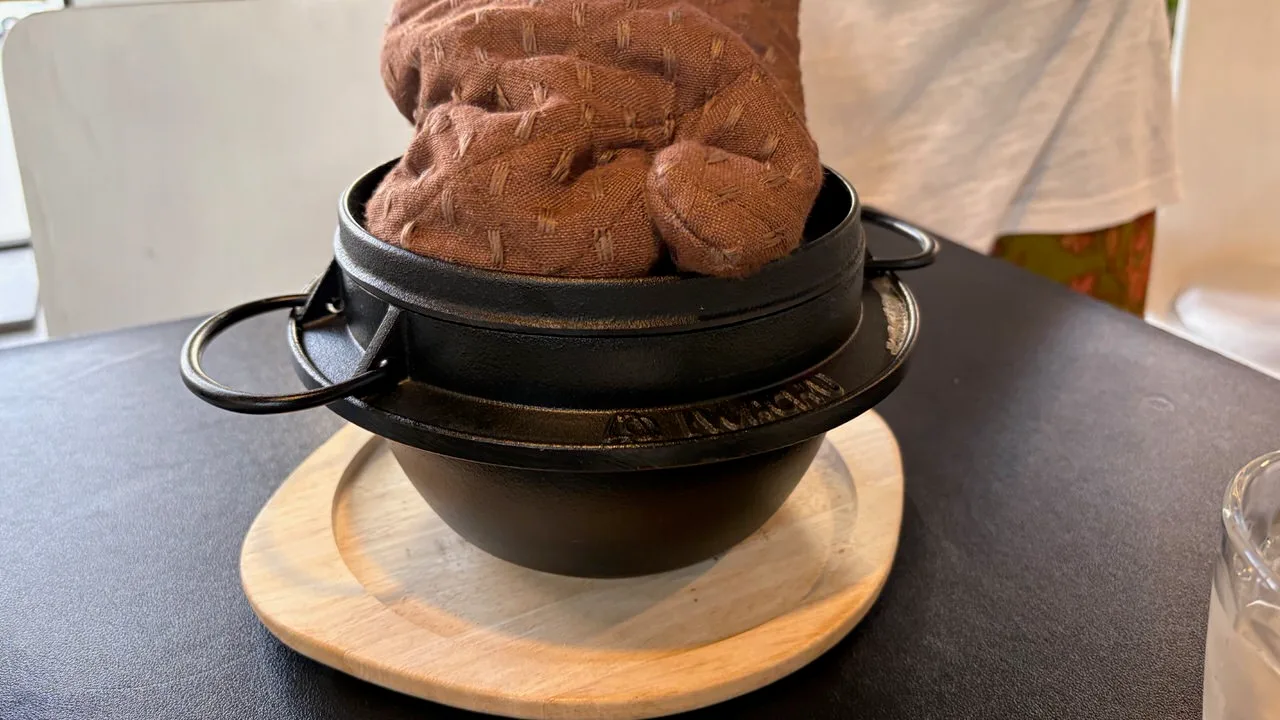
Under the lid: basmati rice, a slice of lemon on top, bay leaves, a piece of cinnamon bark, cloves, cardamom, fried onion through it. Red onion and coriander came alongside. A member of staff mixed it for us, and there was coriander through the rice as well.
One of us found it survivable — the same person who years ago would have picked out every leaf first. Some tolerance has been built. My wife’s is coming along too, but not that far; she ate with a face on.
The chicken was well seasoned, the rice on the mild side. Good, though one of us was left with the sense that better biryani exists.
It is also a lot of food. By the time we spooned out the last of it we were full and the pot had cooled, and cold biryani smells much more of coriander. What had been survivable stopped being survivable, and my wife pushed on out of duty.
“Next time we should ask them to go easy on the coriander and order à la carte,” one of us said. The momo and the seseri had been seasoned so well that the rest of the thought was obvious: the lamb curry has to be good.
Hot and sweet
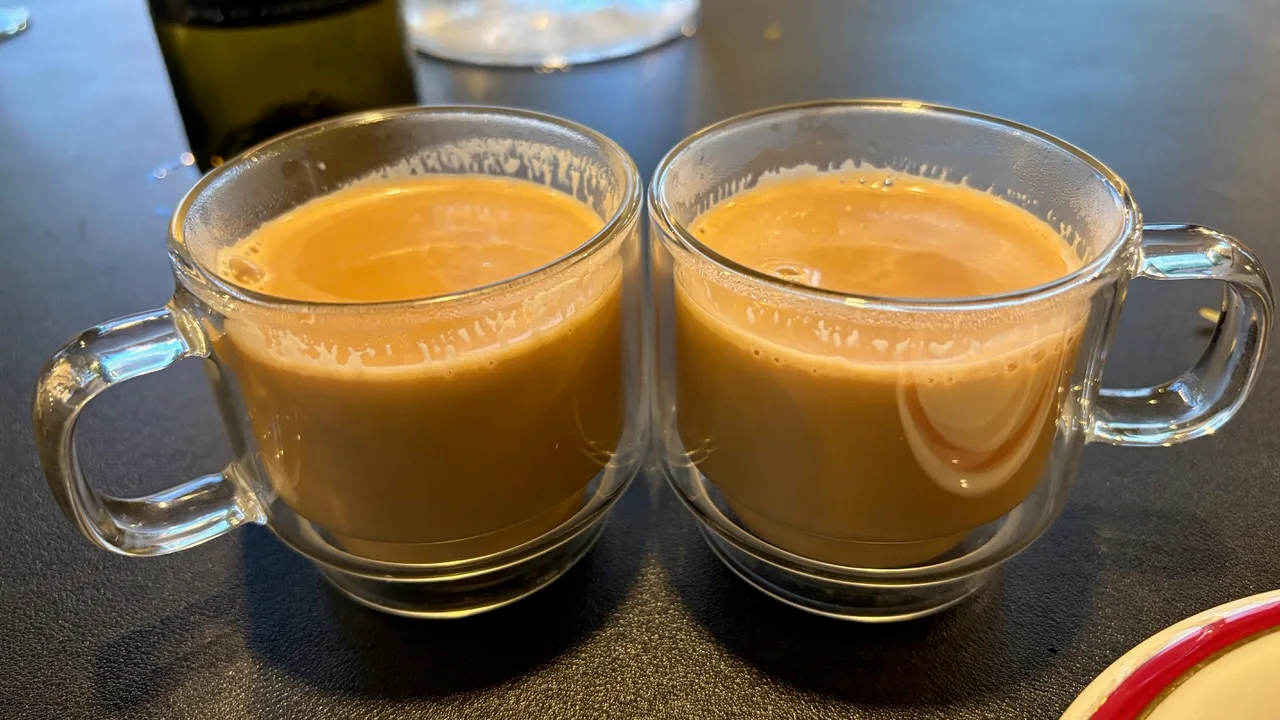
The set ends with hot chai. My wife drank first and filed a report: “Hot and sweet. Be careful.”
Hot, and sweet. Hotter than expected. Ending an evening on sweet tea is not something we usually do, but we took our time over it and called it there.
Would we go back
Yes, and we know what we are ordering.
The thing to know first is the coriander, which is in the seseri, in the garnish and right through the biryani. If coriander is fine with you, none of this applies. If it is not, the set is the wrong order — go à la carte and ask. The menu we photographed lists extra coriander as a ¥200 addition and the coriander yakisoba as available without it, so the question is one the kitchen has met before.
Was ¥7,980 for two worth it? For the momo, the seseri, the salad and the pot going on the burner at the table, yes; the seasoning is handled by someone who knows what spice is for. For the biryani itself, less so — the rice was the quiet part of a loud meal. Next trip we take the same table and order the lamb curry.
Practical bits
- Nepalica: Minami 1 Nishi 11, Chuo-ku, Sapporo, second floor; the awning at street level carries the logo and the stairs go up from there. nepalica-sapporo.com. Opened 3 October 2024.
- Hours: listings we checked in July 2026 said lunch 11:00–15:00, dinner 17:00–22:00, closed Sundays and public holidays — but they disagreed with each other, so check before you go. We arrived around 17:00 on a Wednesday in June 2026.
- What we paid, 17 June 2026: biryani set for two ¥7,980; Sapporo Classic draft ¥560 × 2; white wine by the glass ¥600 × 2; the De Bortoli Lorimer bottle ¥4,500. Total ¥14,800 for two, and a card was fine.
- The biryani set: Wednesday and Saturday dinners only. The menu we photographed in June 2026 also priced it at ¥5,600 for one, ¥11,800 for three and ¥15,500 for four. Ours ran to spiced nuts, green salad, the seseri stir-fry, eight momo, the clay-pot biryani and hot chai.
- À la carte, from the same menu: momo ¥880 for six, ¥1,300 for nine, ¥1,660 for twelve; the rich simmered lamb curry ¥1,350 small, ¥2,080 large; extra coriander ¥200. Prices as photographed on 17 June 2026, and they change.
- English menu: we didn’t check. What we were handed was in Japanese, and the staff spoke fluent Japanese with us.
- Reservations and smoking: we didn’t check either. We walked in at about five and had the room to ourselves.
- How busy: empty when we arrived, early on a Wednesday in June. We left too early to say what it does later.
- Hokkaido University Museum: free admission, on the Hokkaido University campus, which is 30 to 40 minutes on foot from the Sapporo Prince Hotel. On our visit in June 2026.
Facts checked 2026-08-19. Prices, hours and menus are what we saw on our visit; they change. Nothing here was sponsored or comped.